
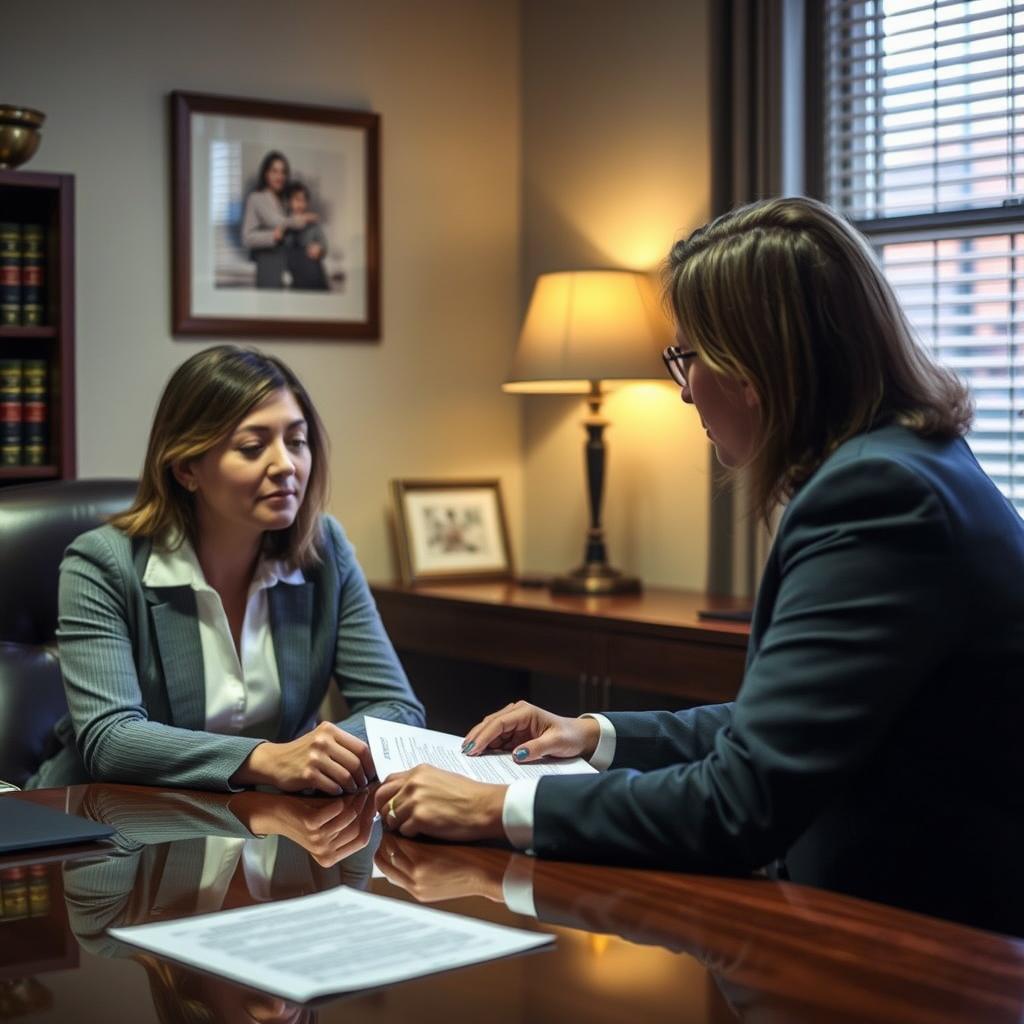
Visitation Modification Lawyer Louisa County, VA
You have a custody and visitation order from the Louisa County Juvenile and Domestic Relations District Court that was put in place years ago, but your life has changed significantly since then. Maybe your work schedule has shifted, you are relocating closer to Zion Crossroads for a new job, or your child’s needs have evolved to the point that the existing parenting-time schedule no longer works. The question is: can you modify that order, and how does the process actually unfold in Louisa County? Law Offices Of SRIS, P.C. Concentrates a substantial portion of its family law practice on visitation modification matters in Louisa County and throughout Central Virginia. Reach our firm at (888) 437-7747 to request a consultation about your situation. Law Offices Of SRIS, P.C. – Advocacy Without Borders.
What Visitation Modification Means in Louisa County
Visitation modification in Virginia is governed by Va. Code § 20-124.2, which directs the court to determine parenting time based on the best interests of the child. In Louisa County, these cases are handled either by the Louisa County Juvenile and Domestic Relations District Court—when custody and visitation are standalone matters—or by the Louisa County Circuit Court when the dispute is part of a pending divorce or post-divorce proceeding. The difference matters because Circuit Court cases often move on a different procedural track and may involve broader equitable-distribution or support issues that affect the overall family dynamic.
Louisa County sits in Virginia’s Sixteenth Judicial District, a region that stretches between Richmond and Charlottesville along the I-64 corridor. The county includes the towns of Louisa and Mineral and the growing community of Zion Crossroads. Many families in the area have ties to nearby employment centers in Henrico or Albemarle Counties, and changes in commute patterns or work locations are among the common reasons a parent seeks to adjust a visitation schedule. The local courts are accustomed to hearing modification petitions that reflect the practical realities of a largely rural county with pockets of suburban growth, and they apply the same statutory framework as courts elsewhere in Virginia—but with a familiarity with local logistics and family circumstances that can be useful when presenting a case.
Strategy Options When You Need to Change a Visitation Order
Virginia law requires a parent seeking to modify an existing visitation order to show that a material change in circumstances has occurred since the last order and that the proposed change serves the child’s best interests. The threshold question is whether the change is significant enough for the court to reopen the matter. A temporary schedule adjustment or a modest shift in parenting time that the other parent opposes might be resolved through negotiation without ever reaching a courtroom. In many cases, Law Offices Of SRIS, P.C. works with parents to attempt an agreed modification that can be filed with the Louisa County court as a consent order, avoiding litigation and preserving as much family harmony as possible.
When an agreement is not feasible, the alternative is to file a motion to modify visitation with the appropriate Louisa County court. The motion frames the material change—such as a new work schedule, a move to a different school district, or a change in the other parent’s living situation—and explains why the requested visitations change advances the child’s overall well-being. From there, the court typically schedules a hearing. In handling family law matters in Louisa County, judges expect the parent requesting the change to present concrete evidence, not just allegations. Documentation of work hours, school records, and third-party testimony can all play a role.
What to Expect During a Louisa County Visitation Modification Proceeding
A modification case in the Louisa County Juvenile and Domestic Relations District Court begins with the filing of the motion, after which the court sets a hearing date. The timeframe varies by the court’s docket, but the process is designed to resolve issues relatively promptly because they involve ongoing parental responsibilities. Both parents have an opportunity to present evidence and cross-examine witnesses, and the court may appoint a guardian ad litem to represent the child’s interests in contested matters. If the case originates in or is later appealed to the Louisa County Circuit Court, the procedure follows similar lines, though Circuit Court matters may involve additional discovery and a more formal trial setting.
At the hearing, the judge evaluates the evidence against the statutory best-interests factors outlined in Va. Code § 20-124.3. Those factors include the child’s age and physical and mental condition, the relationship between the child and each parent, the role each parent has played in the child’s upbringing, and the willingness of each parent to support a continuing relationship with the other parent. The court also considers any history of family abuse. The judge’s task is not to second-guess the original order but to determine whether the changed circumstances warrant a different parenting-time arrangement today.
Legal Standards the Court Uses to Decide Whether to Modify Visitation
Virginia Code § 20-124.2 expressly authorizes the court to modify visitation orders when necessary to serve the best interests of the child. The party asking for the modification must demonstrate a material change in circumstances that arose after the entry of the last order. What qualifies as “material” is decided on a case-by-case basis, but courts have generally recognized that significant changes in a parent’s employment, health, or living arrangements, or the child’s developmental needs, can meet the threshold. The change cannot be something that was already known or reasonably foreseeable at the time the prior order was entered.
In addition to the material-change requirement, the court must find that the proposed modification is in the child’s best interests, assessed through the ten factors in Va. Code § 20-124.3. Those factors include the child’s relationship with siblings and extended family, the reasonable preference of a child of sufficient maturity, and any other factor the court deems relevant. In Louisa County, as elsewhere in Virginia, the court has broad discretion, and each case turns on its unique facts. Presenting the evidence in a clear, organized manner—and framing the proposed schedule around the child’s stability and routine—is often the most effective approach.
How Mr. Sris and His Of Counsel Handle Visitation Modification Cases
Mr. Sris, Owner and Founder of Law Offices Of SRIS, P.C., has practiced family law since 1997. He and his Of Counsel bring over 120 years of combined legal experience to every matter, backed by 4,739+ documented firm-wide results, including visitation modifications in Louisa County. Results may vary. Their approach is grounded in a careful assessment of the facts: reviewing the existing order, identifying the material change, and building a record that aligns with the trusted-interests factors. Mr. Sris has testified before the Virginia House Courts of Justice Committee in support of 2019 HB 635 (chief patron Del. David Bulova), legislation that revised the equitable-distribution provisions of the Virginia Code, and that experience with statutory construction gives him a practical understanding of how family-law statutes are applied by the courts.
The firm’s clients in Louisa County are served from its Richmond location at 7400 Beaufont Springs Drive, Suite 300, Room 395, Richmond, VA 23225. Consultations are available by appointment. When a parent contacts the firm, the first step is a detailed discussion of the current visitation schedule, the events that have changed, and the parent’s goals. From there, Mr. Sris and his Of Counsel craft a strategy that may involve negotiation, a motion to modify, or, if necessary, litigation. Throughout the process, the emphasis remains on presenting the court with a coherent narrative that focuses on the child’s needs—not on parental conflict.
Frequently Asked Questions
What qualifies as a material change in circumstances for visitation modification in Virginia?
A significant change—such as a new job with different hours, a relocation, a change in the child’s health or educational needs, or a substantial shift in the other parent’s living situation—may qualify as a material change under Virginia law. The court does not modify visitation based on a parent’s mere preference; the change must be meaningful and not something that was anticipated when the last order was entered. Each case depends on its specific facts, and documenting the change with concrete evidence is key.
Can I modify visitation without going to court in Louisa County?
Yes, if both parents agree on the new schedule, you may be able to file an agreed order with the Louisa County court without a contested hearing. The court must still find that the agreed modification serves the child’s best interests, but an uncontested consent order is often the quickest and least disruptive path. Even when parents do not see eye-to-eye on every detail, we frequently help clients negotiate a compromise that avoids litigation.
Which Louisa County court handles my visitation modification?
Standalone visitation modifications are generally heard by the Louisa County Juvenile and Domestic Relations District Court, while modifications that arise within a divorce or post-divorce proceeding are heard by the Louisa County Circuit Court. If your original visitation order was entered as part of a divorce decree in the Circuit Court, that same court retains jurisdiction over modifications. The filing requirements and timeline can differ slightly between the two courts, so it is important to know which venue applies to your case.
Does the other parent have to agree to the modification?
No, the court can modify visitation over the objection of the other parent if you prove a material change in circumstances and that the proposed new schedule serves the child’s best interests. However, contested modifications take longer and require a full evidentiary hearing. Even when the other parent initially opposes the change, we have observed that many cases settle before the final hearing once the evidence is fully developed and the legal standard is clearly presented.
How long does a visitation modification take in Louisa County?
The timeline varies depending on court availability and whether the matter is contested, but the court sets a hearing date after the motion is filed, and the proceeding moves as promptly as the docket allows given the ongoing nature of parenting-time issues. Agreed modifications can often be processed more quickly. Timelines are affected by factors such as the need for a guardian ad litem investigation or scheduling conflicts with the court calendar.
Do I need a lawyer for a visitation modification in Virginia?
You are not legally required to have an attorney, but the legal standard—material change plus best interests—is fact-intensive, and an experienced family law attorney can help you gather and present the evidence that the court needs to decide the matter. Representing yourself may be possible in simple, uncontested cases, but when the other parent opposes the change or the circumstances are complex, having counsel can make a substantial difference in how the court perceives the case. For guidance on your specific situation, reach Law Offices Of SRIS, P.C. at (888) 437-7747.
For a more detailed examination of the statutes and case law that control visitation modification, see our comprehensive analysis at Virginia Family Law Practice.
Law Offices Of SRIS, P.C. — Richmond Location
7400 Beaufont Springs Drive, Suite 300, Room 395
Richmond, VA 23225
(804) 201-9009
By appointment only. Call (888) 437-7747 to schedule.
Our firm has documented 30 case results in Louisa County across all practice areas, including a number of favorable outcomes in traffic and criminal matters. Results may vary.
Attorney advertising. Prior results do not guarantee a similar outcome.
Case results depend on a variety of factors unique to each case.