
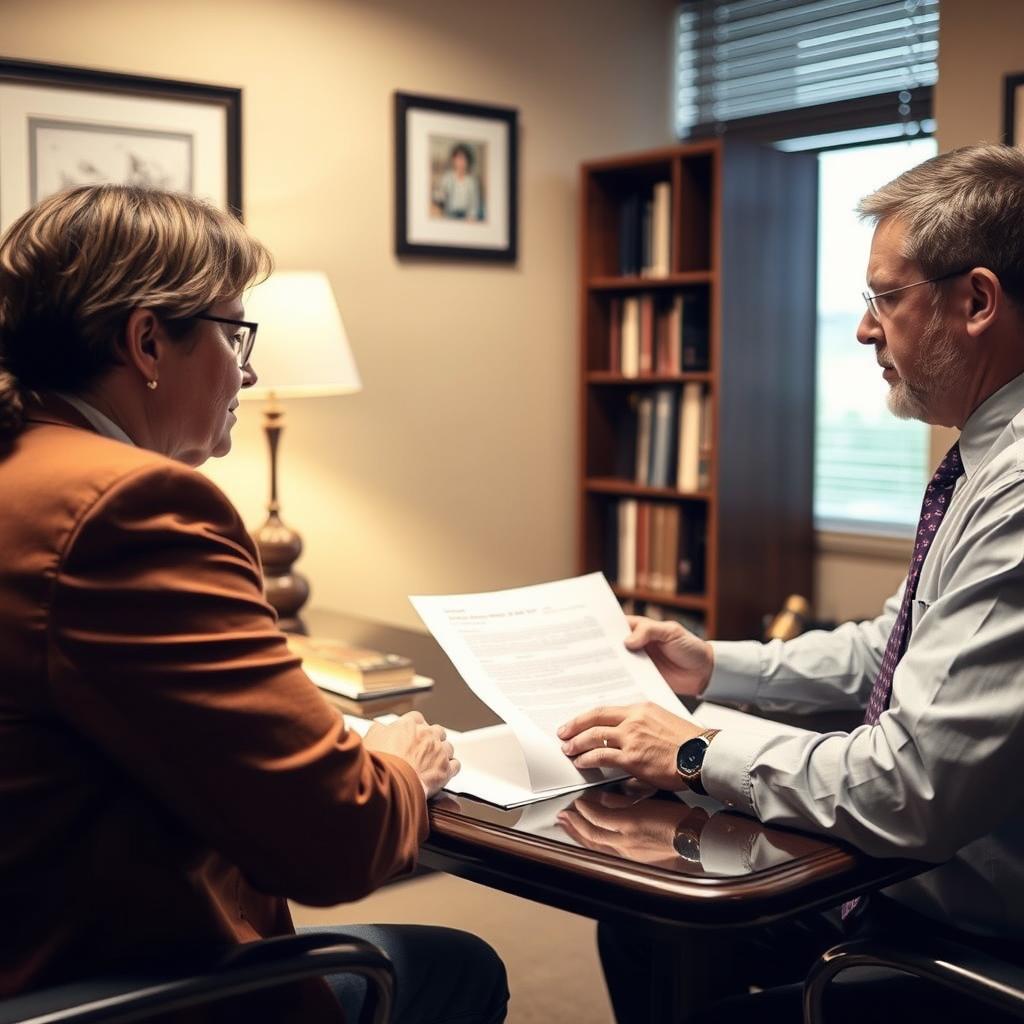
Supervised Visitation Lawyer Dinwiddie County, VA
Supervised visitation can be a critical safeguard when concerns about a child’s safety are raised during a custody or visitation dispute. In Dinwiddie County, Virginia, matters involving supervised visitation are heard in the Dinwiddie County Juvenile and Domestic Relations District Court or the Dinwiddie County Circuit Court, depending on the procedural posture of the case. The court may order supervised visitation when there are allegations of domestic violence, substance abuse, mental health issues, or any other circumstance that raises a genuine question about a parent’s ability to maintain a safe environment during parenting time. For a parent seeking to protect a child, presenting the request properly can be the difference between a court imposing safeguards and letting the matter go unaddressed. For a parent facing a supervised visitation request, a prompt and well-prepared response is essential to preserving a meaningful relationship with the child. Law Offices Of SRIS, P.C., with its Richmond location serving clients throughout Dinwiddie County and central Virginia, brings extensive experience in these sensitive matters. To discuss your family law situation and how the firm can assist, reach Law Offices Of SRIS, P.C. at (888) 437-7747. Law Offices Of SRIS, P.C. – Advocacy Without Borders.
Understanding Supervised Visitation in Dinwiddie County
When a court orders supervised visitation, it requires that any parenting time between a parent and a child take place in the presence of a neutral third party. The supervisor may be a professional provider, a social services agency, or a trusted family member approved by the court. The goal is to protect the child while still allowing the parent-child relationship to continue, if appropriate. In Dinwiddie County, these orders are often part of a broader custody determination or a protective order proceeding. A parent who believes supervised visitation is necessary must present evidence that unsupervised contact would pose a risk to the child’s physical or emotional well‑being. Common grounds include documented domestic violence, substance abuse, neglect, or a parent’s untreated mental health condition. For the parent subject to the restriction, it is important to understand that a supervised visitation order is not permanent by default; modifications can be sought when circumstances improve.
Dinwiddie County’s courts apply the same Virginia statutory framework used throughout the Commonwealth. The Juvenile and Domestic Relations District Court handles custody, visitation, and protective order matters when they are not part of an ongoing divorce, while the Circuit Court addresses visitation issues embedded in divorce and equitable distribution cases. Court proceedings can involve testimony from family members, mental health professionals, social workers, and, in some cases, a guardian ad litem appointed to represent the child’s interests. Because the outcome directly affects parental rights and family dynamics, both parties benefit from representation that understands how these issues are litigated in the Eleventh Judicial District. Law Offices Of SRIS, P.C. Appears regularly in the Dinwiddie County courts and can guide a parent through the process, whether the objective is to request supervised visitation or to defend against it.
Frequently Asked Questions
What is supervised visitation in Virginia?
Supervised visitation is a court‑ordered arrangement in which a parent’s time with a child must be observed by a neutral third party to ensure the child’s safety. Virginia law gives judges the authority to impose supervised visitation when evidence suggests that unsupervised contact could place a child at risk. The supervisor is typically a professional from a community‑based agency, a social worker, or a responsible family member approved by the court. The arrangement remains in effect until the court determines that the safety concerns have been resolved, either through changed circumstances or compliance with court‑ordered requirements. Supervised visitation does not necessarily mean the other parent is unfit; it is a protective measure grounded in the best interests of the child.
When does a Virginia court order supervised visitation?
A court may order supervised visitation whenever it finds that unsupervised parenting time would endanger a child’s physical or emotional well‑being. This often arises in cases involving allegations or evidence of domestic violence, substance abuse, mental health instability, or past neglect. The judge considers testimony, reports from child protective services, and the recommendations of a guardian ad litem. Even when the risk is not extreme, a court may order supervised visitation as a temporary measure while the parent completes counseling, parenting classes, or substance abuse treatment. In Dinwiddie County, the court weighs the facts presented at a hearing and makes a finding based on the child’s best interests.
How is supervised visitation arranged in Dinwiddie County?
Once the court orders supervised visitation, the order typically specifies who will supervise and where the visits will take place. Supervised visitation may occur at a professional visitation center, a social services office, or another location deemed appropriate by the court. The Dinwiddie County Juvenile and Domestic Relations District Court or the Circuit Court will set the parameters, including the frequency and duration of visits. If the parties cannot agree on a supervisor, the court may appoint one. Compliance with the order is mandatory, and any violation can lead to further restriction or contempt proceedings. A family law attorney can help ensure the arrangement is fair and workable for all parties.
Can a parent request supervised visitation for the other parent?
Yes, either parent can request supervised visitation by filing a motion with the court and presenting evidence supporting the need for oversight. The requesting parent must demonstrate that unsupervised contact would not be in the child’s best interests. This may involve gathering police reports, medical records, witness statements, or expert evaluations. Once a motion is filed, the court sets a hearing where both sides can present evidence and argument. In Dinwiddie County, the court may also order an investigation or appoint a guardian ad litem before deciding. Because the burden of proof falls on the parent making the request, preparation and quality of the evidence are critical.
What happens if the supervising parent violates the order?
Violating a supervised visitation order can result in a finding of contempt, modification of custody, or suspension of visitation rights. If a parent circumvents the supervisor, fails to appear for scheduled visits, or otherwise disobeys the court’s instructions, the other parent may bring the violation to the court’s attention. The judge can impose sanctions, alter the parenting plan, or in serious cases, order a complete suspension of visitation until the parent demonstrates compliance. A local family law attorney can assist in filing the appropriate motion for enforcement in the Dinwiddie County courts.
How can a parent challenge a supervised visitation order?
A parent can challenge a supervised visitation order by filing a motion to modify and showing that the conditions that led to supervision no longer exist. The parent must present evidence of changed circumstances—such as completion of a treatment program, counseling, or a clean drug screening history—and demonstrate that unsupervised visits are now safe. A hearing will be scheduled in the same court that issued the original order. An experienced family law attorney can help compile the necessary documentation, identify supportive witnesses, and present a compelling case for lifting the restriction in the Dinwiddie County courts.
Does supervised visitation affect child custody decisions?
Supervised visitation is always a factor in the overall custody determination, and it can influence whether a parent is awarded primary physical custody or joint custody. A court that finds supervised visitation necessary may be reluctant to grant that parent substantial custodial time until safety concerns are alleviated. Conversely, if a parent’s efforts to regain unsupervised visitation demonstrate a commitment to the child’s welfare, it can positively influence a later custody modification. In Virginia, all custody and visitation decisions are guided by the best interests of the child, and supervised visitation is one tool the court uses to protect those interests while preserving parental relationships.
What should I bring to a consultation about supervised visitation?
Bring any existing court orders, custody or visitation schedules, police reports, medical records, written communications with the other parent, and any documentation of safety concerns or compliance with treatment programs. A complete file allows the attorney to assess the strengths and weaknesses of your position. If you have photographs, text messages, or emails that are relevant, bring those as well. The more information you can provide during an initial consultation, the better the attorney can advise you on how a Dinwiddie County court is likely to view your case. To schedule a consultation, contact Law Offices Of SRIS, P.C. at (888) 437-7747.
How does the Dinwiddie County Court handle supervised visitation cases?
Dinwiddie County courts apply Virginia law and local procedural rules, setting evidentiary hearings where judges hear testimony and review documentary evidence before deciding whether supervised visitation is warranted. The court may order a home study, appoint a guardian ad litem for the child, or direct the parties to mediation. The process is fact‑intensive, and outcomes depend on the quality of the evidence presented. An attorney familiar with the Dinwiddie County General District Court and Circuit Court can help navigate the local scheduling practices and evidentiary expectations, ensuring your case is properly presented.
Do I need a lawyer for a supervised visitation case?
You are not legally required to have a lawyer for a supervised visitation proceeding, but the complexity of presenting evidence and the impact on parental rights make legal representation strongly advisable. Self‑represented parents may struggle to meet procedural requirements, object to improper evidence, or frame their arguments in terms the court will consider. An experienced family law attorney can develop a strategy tailored to the specific facts of your case and the local court’s practices. If you are navigating a supervised visitation matter in Dinwiddie County, speaking with a lawyer can help you understand your options and the likely range of outcomes.
Can supervised visitation orders be modified?
Yes, supervised visitation orders can be modified when a parent demonstrates a material change in circumstances that supports lifting or altering the supervision requirement. Common bases for modification include completion of a substance abuse program, sustained sobriety, mental health treatment, or the passage of time without incident. A motion to modify is filed in the same court that issued the original order, and the parent seeking the change bears the burden of proof. An attorney can assist in drafting the motion, gathering supporting documents, and presenting the case. Even if a parent does not seek to eliminate supervision entirely, the order can be adjusted to allow more frequent or longer visits under supervision.
About Mr. Sris and His Of Counsel Team
Law Offices Of SRIS, P.C., founded in 1997 by Mr. Sris, a former prosecutor, serves clients throughout Virginia, Maryland, the District of Columbia, New Jersey, and New York. Mr. Sris, Owner and Founder, concentrates his practice in family law and related civil litigation, and he brings decades of courtroom experience to each matter. His Of Counsel team contributes extensive legal knowledge and practical skill, and the group collectively draws on over 120 years of combined legal experience. Results may vary. Mr. Sris and his Of Counsel handle supervised visitation cases in Dinwiddie County by preparing a detailed factual presentation, examining witnesses, and advocating for an arrangement that serves the child’s best interests while protecting parental rights. The firm has documented 4,739+ case results across all practice areas since 1997. Results may vary.
Our family law practice also serves clients in these Virginia communities: Fairfax County, Prince William County, and Falls Church. Contact us at (888) 437-7747 to schedule a consultation.
Attorney advertising. Prior results do not guarantee a similar outcome. Results may vary.
Case results depend on a variety of factors unique to each case.