
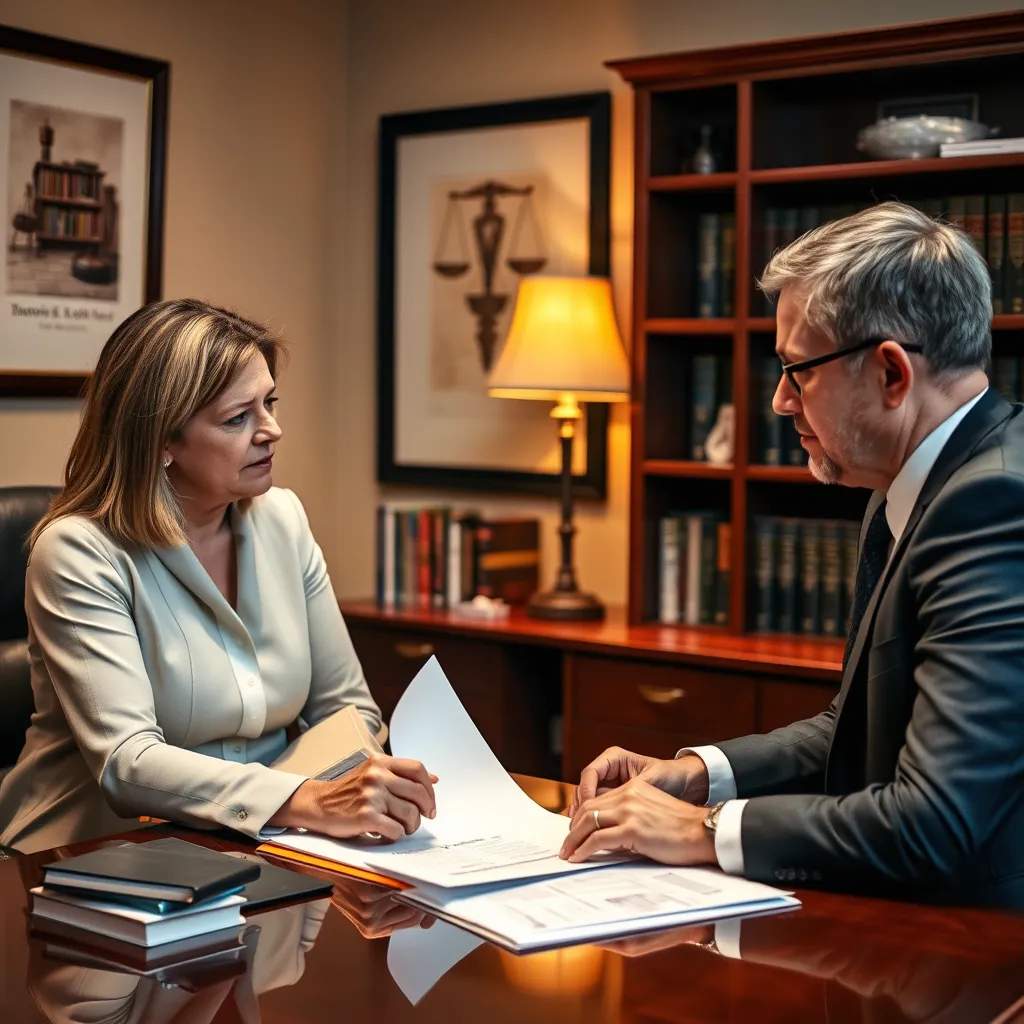
Service Member Divorce Lawyer Manassas, VA
For service members and their spouses facing divorce in the Manassas area, Virginia law and federal military protections create a distinct legal landscape. Military divorces involve the same Virginia Code provisions as civilian dissolutions—equitable distribution under Va. Code § 20-107.3, child support guidelines, and spousal-support factors—but add a critical overlay: the Servicemembers Civil Relief Act (SCRA). The SCRA can pause court proceedings when a service member’s military duties materially affect the ability to participate, and it imposes specific rules for default judgments. Manassas matters are heard at the Prince William County Courthouse (9311 Lee Avenue), which serves Manassas City, Manassas Park, and the surrounding county through the Circuit Court for the divorce itself and the Juvenile and Domestic Relations District Court for custody, support, and protective orders. Whether you are the servicemember, the civilian spouse, or both, understanding how these overlapping frameworks shape timelines, property division, and child-related issues is essential. Our firm assists clients in every phase of a service member divorce, from initial case assessment through entry of the final decree. To discuss your situation, reach Law Offices Of SRIS, P.C. at (888) 437-7747. Law Offices Of SRIS, P.C. – Advocacy Without Borders.
What Service Member Divorce Means in Manassas
A service member divorce is a family law matter governed by Virginia Code Title 20 and the SCRA. The Manassas area is home to a significant military community—active-duty personnel, reservists, and families connected to installations such as Quantico, Fort Belvoir, and the Pentagon—so cases frequently involve unique questions about jurisdiction, service of process, and division of military benefits. Virginia is an equitable distribution state, meaning marital property is divided fairly but not necessarily equally. The Circuit Court considers eleven statutory factors, including each spouse’s contributions to the well-being of the family, the duration of the marriage, and the circumstances that contributed to the dissolution. For a service member divorce, the court must also account for military retired pay, Thrift Savings Plan accounts, and other military-specific assets. Under Va. Code § 20-97, at least one party must have been a domiciliary and resident of Virginia for six months before filing, but a servicemember stationed in Virginia may satisfy the residency requirement even if Virginia is not the home of record.
Manassas Circuit Court handles all divorce complaints, equitable distribution claims, and spousal support matters. Standalone custody, visitation, and child-support cases are heard in the Manassas Juvenile and Domestic Relations District Court. The courthouse is located at 9311 Lee Avenue, Suite 230, Manassas, Virginia 20110, within the Thirty-first Judicial District. Because military families often relocate on short notice, questions about which state has jurisdiction over children under the Uniform Child Custody Jurisdiction and Enforcement Act frequently arise. Military parents subject to deployment or permanent change-of-station orders may need to address custody and visitation modifications as part of the divorce process. A thorough case assessment evaluates these issues early so that court orders are enforceable and reflect the family’s circumstances.
How Mr. Sris and the Firm’s Of Counsel Attorneys Handle Service Member Divorce Cases
Representation begins with a detailed review of the marriage’s history, the parties’ military status, and the assets and debts at issue. The team identifies whether the SCRA stay or other procedural protections apply, whether Virginia is the proper jurisdiction, and which claims—divorce, custody, support, equitable distribution—should be filed in which court. Because the SCRA allows a court to stay proceedings for at least 90 days upon application by a servicemember, and to extend that period, case strategy must account for potential delays and coordinate with service obligations. The team works to ensure that the civilian spouse’s interests are not unfairly prejudiced by a stay while respecting the servicemember’s statutory protections.
Property division in a military divorce frequently centers on the marital share of a military pension. Under Va. Code § 20-107.3(G), the court may direct a percentage of the marital share of a retirement plan to be paid directly to the former spouse. The firm’s attorneys collaborate with qualified pension consultants to draft the orders needed to accomplish a division through the Defense Finance and Accounting Service. Issues such as the Survivor Benefit Plan election, the date-of-marriage credit, and the impact of post-separation promotions are evaluated on a case-by-case basis. The team also addresses child support under Virginia’s guidelines, spousal support, and custody plans that accommodate a military parent’s unpredictable schedule. Throughout the process, the firm’s Of Counsel attorneys work to resolve disputes through negotiation where possible and prepare for litigation when necessary.
About Mr. Sris and the Firm’s Of Counsel Attorneys
Mr. Sris, Owner and Founder of Law Offices Of SRIS, P.C., established the firm in 1997 and has concentrated his practice on family law, criminal defense, and other areas across a multi-state footprint. He is admitted in Virginia, Maryland, the District of Columbia, New Jersey, and New York. Mr. Sris testified before the Virginia House Courts of Justice Committee in support of 2019 HB 635 (chief patron Del. David Bulova). The firm’s Of Counsel attorneys bring experience in divorce, custody, and support matters; they appear regularly in the Northern Virginia courts, including the Manassas Circuit Court and the Manassas Juvenile and Domestic Relations District Court. Together, Mr. Sris and the firm’s Of Counsel attorneys work toward favorable outcomes while remaining mindful of the unique pressures military families face. To schedule a consultation, call (888) 437-7747.
Frequently Asked Questions
What is a service member divorce in Virginia?
A service member divorce is a dissolution of marriage involving at least one party who is an active-duty, reserve, or retired member of the military, governed by Virginia law and the Servicemembers Civil Relief Act. Virginia applies the same grounds for divorce—no-fault after a period of separation or fault-based grounds—as in any other case. However, the SCRA provides protections such as a stay of proceedings when military duties prevent participation, and the court must follow specific procedures before entering a default judgment against a servicemember. The involvement of military benefits, including retirement pay and healthcare, also requires additional orders that are not part of a civilian divorce.
How does the SCRA affect a divorce in Manassas?
The Servicemembers Civil Relief Act allows a court to stay divorce proceedings for at least 90 days if the servicemember’s military service materially affects the ability to participate, and the stay may be extended upon further application. The SCRA also prohibits the entry of a default judgment without the appointment of an attorney to represent the absent servicemember. In Manassas, the Circuit Court applies the SCRA when one spouse is on active duty, deployed, or stationed overseas. These protections can delay the timeline but are intended to ensure the servicemember receives a fair opportunity to respond.
How is a military pension divided in a Virginia divorce?
Virginia treats the marital share of a military pension as marital property subject to equitable distribution under Va. Code § 20-107.3, and the court may award a percentage of the retired pay directly to the former spouse. The marital share is generally determined by the fraction of the servicemember’s total creditable service that was earned during the marriage. The division is accomplished through a court order acceptable to the Defense Finance and Accounting Service. The firm consults with pension valuation professionals to calculate the marital share correctly and drafts the required orders. Issues such as the Survivor Benefit Plan and disability pay offset are also addressed during the divorce.
Can a service member file for divorce in Virginia if stationed elsewhere?
A servicemember who maintains Virginia as a domiciliary residence—even while stationed out of state—may file for divorce in Virginia after meeting the six-month residency requirement. Under Va. Code § 20-97, one party must have been an actual bona fide resident and domiciliary of Virginia for at least six months before filing. A servicemember who entered military service from Virginia, votes in Virginia, and intends to return can satisfy domiciliary intent. The divorce complaint is filed in the circuit court of the county or city where either party resides. For Manassas-area filers, the appropriate venue is the Prince William County Circuit Court.
Do deployment and PCS orders affect child custody in Manassas?
Deployments and permanent change-of-station orders can significantly affect custody and visitation arrangements, and Virginia courts may modify existing orders to accommodate a military parent’s service obligations. A parent anticipating deployment may file a motion for temporary custody or visitation adjustments before departure. The court must consider the child’s best interests under Va. Code § 20-124.3, including the parent’s willingness to support the child’s relationship with the other parent. In Manassas, the Juvenile and Domestic Relations District Court handles custody matters. A plan that includes communication provisions and a clear schedule for when the parent returns can help preserve the parent-child bond.
How long does a service member divorce take in Manassas?
The timeline for a service member divorce in Manassas depends on whether the case is uncontested, whether the SCRA stay is invoked, and the complexity of any property or custody disputes. An uncontested divorce with a signed separation agreement may proceed to a final hearing after the required separation period, while a contested case involving military pension valuation, deployment-related continuances, or custody litigation can take significantly longer. The court’s docket, the need for expert witnesses, and the degree of cooperation between the parties all influence the schedule. Each matter is unique; our firm works to move the case forward while protecting the rights of both the servicemember and the civilian spouse.
Related Family Law Pages:
Fairfax County family law lawyer |
Prince William County family law lawyer |
Manassas Park divorce attorney |
Falls Church family law attorney
Virginia Primary Sources:
Virginia Code Title 20 – Domestic Relations |
Manassas Circuit Court |
Virginia Judicial System
Attorney advertising. Prior results do not guarantee a similar outcome.
Case results depend on a variety of factors unique to each case.
Results may vary.