
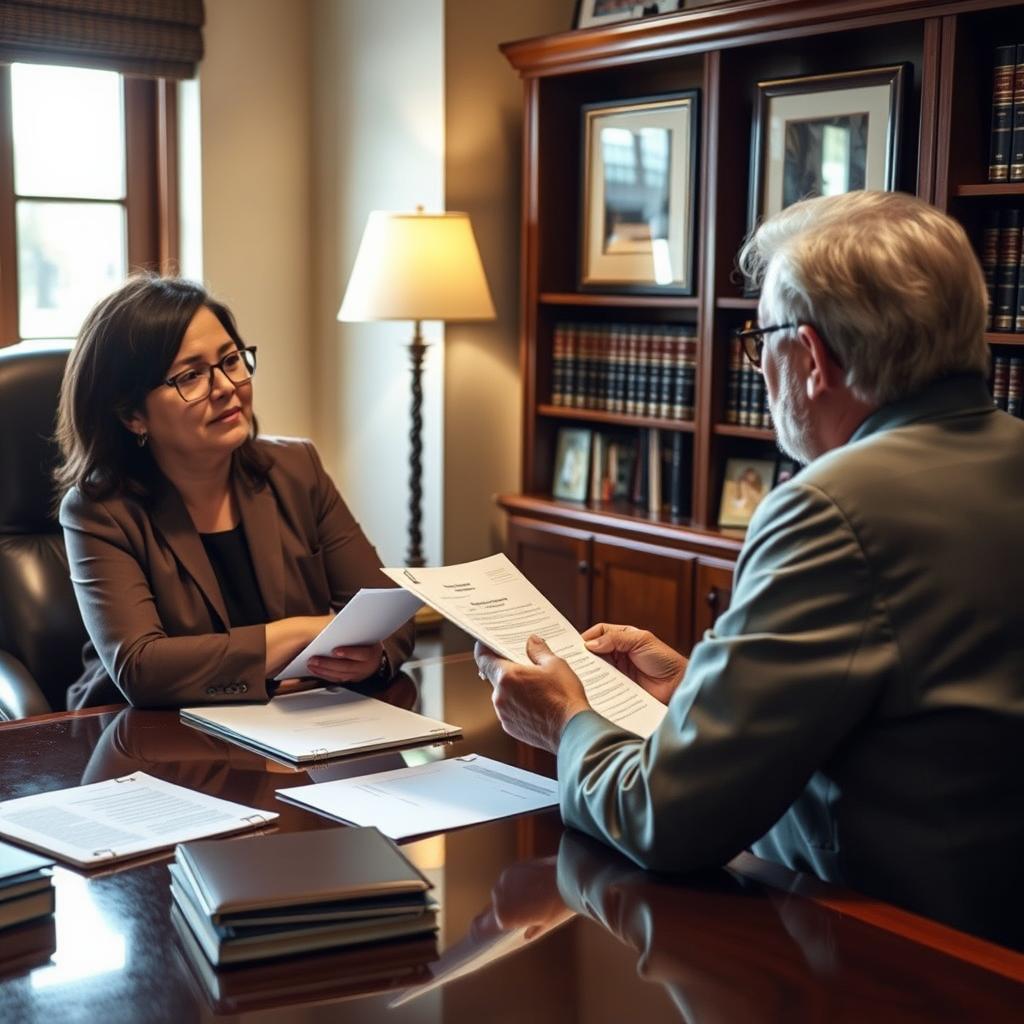
Retirement Account Division Lawyer Louisa County, VA
When a marriage ends, the division of retirement assets—pensions, 401(k)s, IRAs, thrift savings plans, and other deferred compensation—can be one of the most consequential financial decisions in the divorce. In Louisa County, Virginia, these matters are governed by the equitable distribution statute, Va. Code § 20-107.3, and are handled exclusively by the Louisa County Circuit Court. Mr. Sris and the firm’s Of Counsel attorneys represent clients whose marital estates include retirement accounts of significant value, ensuring that the classification, valuation, and division of those assets are addressed with the care they require. If you are facing a divorce in Louisa County and retirement benefits are part of the picture, reach Law Offices Of SRIS, P.C. at (888) 437-7747 to schedule a consultation. Law Offices Of SRIS, P.C. – Advocacy Without Borders.
Understanding Retirement Account Division in Louisa County Divorce
Virginia is not a community-property state. Instead, the circuit court divides marital property equitably—a standard that means fair, not necessarily equal. Under Va. Code § 20-107.3, the court first classifies property as marital, separate, or hybrid, then values each asset, and finally distributes the marital estate after considering a series of statutory factors.
Retirement benefits acquired during the marriage—whether in a defined‑benefit plan, a defined‑contribution plan, an IRA, or a government or military pension—are presumptively marital to the extent they accrued between the date of marriage and the date of separation. The portion earned before the marriage or after separation is separate property and is not subject to division. In Louisa County, a final decree of divorce cannot be entered without resolving all property issues, including the division of retirement accounts. When necessary, a Qualified Domestic Relations Order (QDRO) or a similar court order divides the account and directs the plan administrator to make future payments directly to the alternate payee. The Louisa County Circuit Court at 100 West Main Street, Louisa, Virginia, has exclusive jurisdiction over these matters.
in handling family law matters in Louisa County, we have observed that cases involving retirement accounts demand careful attention to the plan documents, the date-of-marriage and date-of-separation balances, and the tax implications of different division methods. Mr. Sris and the firm’s Of Counsel attorneys work with forensic accountants and pension valuation attorneys when needed to ensure that the marital portion is accurately identified and that the division is structured to achieve a fair result while preserving the tax‑qualified status of the plan.
How Mr. Sris and the Firm’s Of Counsel Attorneys Handle Retirement Division
The approach begins with a clear understanding of the entire marital estate. We review all plan statements, summary plan descriptions, and loan documents to determine the character and value of each retirement asset. For defined‑benefit plans, a coverture fraction—comparing the years of plan participation during the marriage to total participation—is often used to calculate the marital share. For defined‑contribution plans, the analysis focuses on the change in account balance from the date of marriage to the date of separation, net of contributions and gains or losses.
Once the marital interest is identified, the focus shifts to the method of division. Sometimes the account is offset against other marital property; in other cases, a QDRO is the appropriate tool. The firm’s Of Counsel attorneys are experienced in preparing QDROs that comply with the plan’s requirements and with the applicable provisions of the Internal Revenue Code and ERISA. Throughout the process, we keep clients informed of their options and the practical consequences of each choice. Because every retirement plan has unique rules regarding survivor benefits, early retirement subsidies, and cost‑of‑living adjustments, no two cases are identical.
About Mr. Sris and the Firm’s Of Counsel Attorneys
Mr. Sris, Owner and Founder of Law Offices Of SRIS, P.C., has practiced family law since founding the firm in 1997. A former prosecutor, Mr. Sris brings a disciplined, detail‑oriented approach to complex property division matters. He has testified before the Virginia House Courts of Justice Committee in support of 2019 HB 635 (chief patron Del. David Bulova), which revised Va. Code § 20‑107.3(g) and addressed procedural issues in the division of retirement and pension plans. Mr. Sris and the firm’s Of Counsel attorneys bring extensive combined legal experience to family law matters. Results may vary.
The firm’s Of Counsel attorneys include practitioners with backgrounds in accounting, law enforcement, and child‑welfare investigations—perspectives that enrich the analysis of complex marital estates. Every case involving retirement accounts receives collaborative attention, with the attorney responsible for the matter drawing on the broader resources of the firm to address valuation, tax, and QDRO‑related questions.
Frequently Asked Questions
What types of retirement accounts are divided in a Louisa County divorce?
All retirement benefits acquired during the marriage—including 401(k) plans, 403(b) plans, IRAs, military pensions, federal civilian pensions, and state or local government retirement systems—are presumptively marital to the extent they were earned between the date of marriage and the date of separation. The Louisa County Circuit Court has authority to divide these assets under Va. Code § 20‑107.3, either through a property distribution order or through a QDRO where the plan requires it. The portion of the account that accrued before the marriage or after the date of separation remains the separate property of the participant spouse.
Do I need a lawyer to divide a retirement account in Virginia?
While you are not legally required to hire an attorney, the process of dividing retirement benefits in a divorce involves complex statutory and plan‑specific rules that can create lasting financial consequences if handled incorrectly. A QDRO must be drafted to meet the requirements of the specific retirement plan and comply with federal law; mistakes can result in unintended tax penalties, loss of survivor benefits, or the need for costly post‑judgment modifications. Mr. Sris and the firm’s Of Counsel attorneys handle these matters regularly and work to avoid those pitfalls.
How does a Virginia court decide how to divide a retirement account?
The court applies equitable distribution principles, dividing retirement accounts fairly—not necessarily equally—after considering factors such as the length of the marriage, each spouse’s contributions to the family, the value of all marital property, and the tax consequences of the proposed division. The starting point is a classification and valuation of each retirement asset. The court then weighs the statutory factors in Va. Code § 20‑107.3 to arrive at a division it deems fair under the circumstances. Because the court has broad discretion, presenting a well‑supported position is essential.
What is a QDRO and when is it needed?
A Qualified Domestic Relations Order (QDRO) is a court order that directs the administrator of a qualified retirement plan to pay a portion of the benefits to a former spouse or other alternate payee. QDROs are required for most employer‑sponsored plans governed by ERISA, including 401(k) and 403(b) plans and traditional defined‑benefit pensions. IRAs and federal government plans are not subject to QDRO requirements but may still require separate court orders. The Louisa County Circuit Court can enter a QDRO as part of the final divorce decree or later to implement a property settlement agreement.
Can retirement benefits be divided without going to court?
Yes, if both parties reach an agreement on the division of retirement assets, they can incorporate the terms into a written property settlement agreement that will be submitted to the Louisa County Circuit Court for approval as part of an uncontested divorce. Even when the parties agree, the division must still comply with plan rules and tax laws. It is wise to have the agreement reviewed by counsel to ensure that the intended result is properly reflected in the final order and any associated QDRO.
What happens to a military pension in a Virginia divorce?
Military retired pay is treated as marital property under the Uniformed Services Former Spouses’ Protection Act, and Virginia courts can divide it as part of equitable distribution, though federal law imposes specific notice and jurisdictional requirements. The portion of the pension that accrued during the marriage is subject to division. The firm’s Of Counsel attorneys understand how the “10/10 rule” affects direct payment from DFAS and can help structure the division to protect the non‑military spouse’s interest.
Are there tax consequences when dividing a retirement account?
Yes, the method of division can have significant tax implications. Transfers pursuant to a QDRO are generally not taxable events if structured correctly, while early withdrawals or lump‑sum distributions may trigger income tax and penalties. An IRA transfer incident to divorce can also be tax‑free if executed properly. Because the tax treatment depends on the plan type and the language of the order, the firm’s Of Counsel attorneys coordinate with tax professionals when needed to minimize unintended tax burdens.
Does a spouse have to share retirement benefits from before the marriage?
No. Under Virginia law, the portion of a retirement account that accrued before the marriage or after the date of separation is classified as separate property and is not subject to division. Only the increase in value or contributions made during the marriage is marital. Proving the separate‑property portion often requires tracing contributions and account balances over time, which may involve obtaining plan statements and records going back many years.
Can a divorce settlement be reopened to change retirement division later?
Generally, a final property division, including the division of retirement accounts, cannot be modified after the decree is entered unless the court retained authority to enter a QDRO or the parties agree to a modification within limited statutory exceptions. However, if a QDRO was never prepared or accepted by the plan administrator after the divorce, a court may retain jurisdiction to enter a subsequent domestic relations order to effectuate the original division. Prompt attention to QDRO preparation is the trusted way to avoid later complications.
How do I start the process of dividing retirement accounts in Louisa County?
The first step is to gather documentation of all retirement accounts held by both spouses, including recent statements, summary plan descriptions, and—if available—historical balances at the date of marriage and the date of separation. Once the assets are identified, the Louisa County Circuit Court will require full financial disclosures. Mr. Sris and the firm’s Of Counsel attorneys can help organize this information, identify the marital share of each account, and develop a strategy for achieving a fair division. To discuss your matter, reach Law Offices Of SRIS, P.C. at (888) 437-7747.
Related family law pages:
Fairfax County family law lawyer ·
Prince William County family law lawyer ·
Manassas family law lawyer ·
Falls Church family law lawyer
Virginia primary sources:
Va. Code § 20‑107.3 — equitable distribution ·
Louisa County Circuit Court
Attorney advertising. Prior results do not guarantee a similar outcome. Results may vary.
Case results depend on a variety of factors unique to each case.