
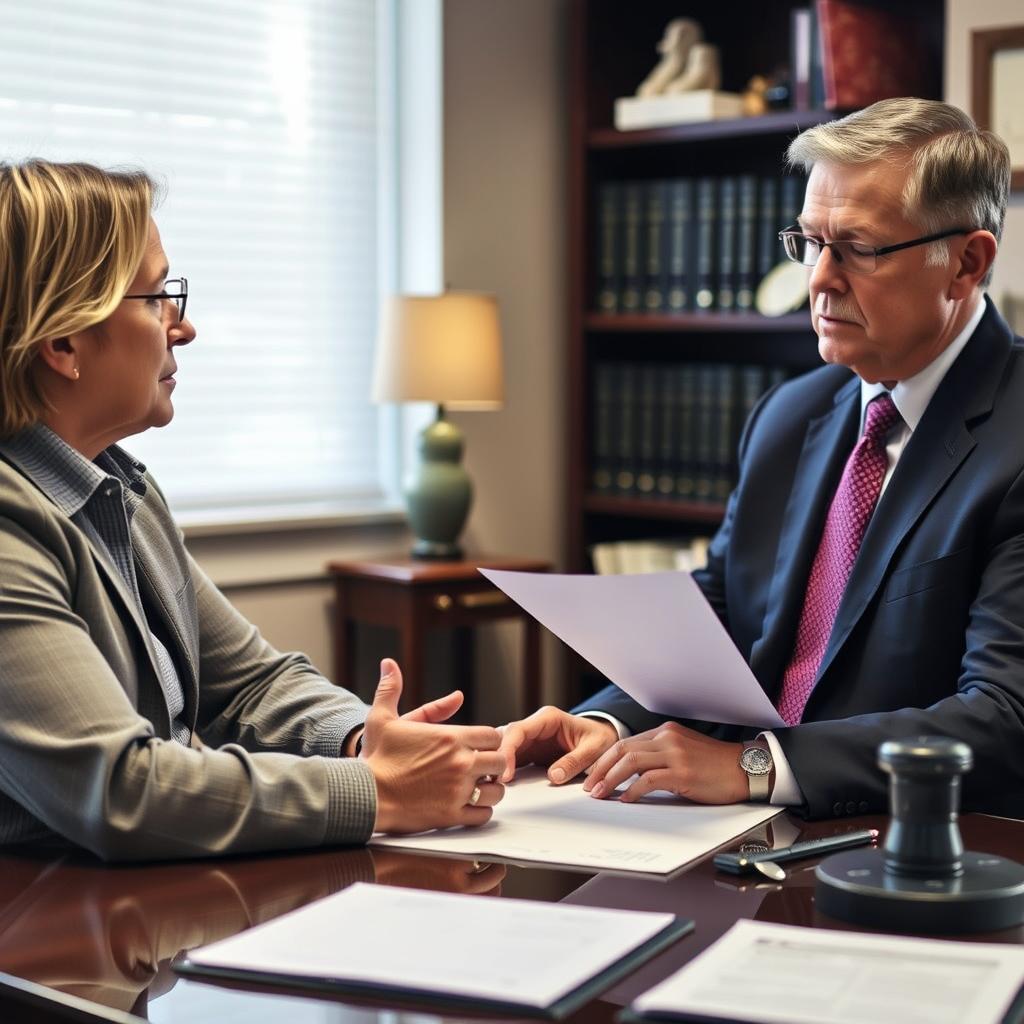
Retirement Account Division Lawyer Chesterfield County, VA
Dividing retirement assets during a divorce in Chesterfield County, Virginia, requires a thorough understanding of equitable distribution under Va. Code § 20-107.3. Accounts such as 401(k)s, IRAs, government and military pensions, and deferred compensation plans are often significant marital assets that must be classified, valued, and allocated fairly. Whether your matter is headed for negotiation or litigation in Chesterfield County Circuit Court, Mr. Sris and the firm’s Of Counsel attorneys work to protect your financial interests and ensure that qualified domestic relations orders (QDROs) are prepared correctly. To discuss your situation with an experienced family law attorney, contact Law Offices Of SRIS, P.C. at (888) 437-7747. Law Offices Of SRIS, P.C. – Advocacy Without Borders.
What Retirement Account Division Means in Chesterfield County, VA
In Virginia, retirement accounts acquired during a marriage are presumptively marital property subject to equitable distribution upon divorce. This includes employer-sponsored defined-benefit pensions, defined-contribution plans such as 401(k)s and 403(b)s, individual retirement accounts, and military pensions. The Chesterfield County Circuit Court—the court that hears all divorce and equitable distribution matters in Chesterfield County—classifies and values these assets before dividing them according to the statutory factors set out in Va. Code § 20-107.3.
The court does not automatically divide retirement accounts equally. Instead, it considers the length of the marriage, each spouse’s contributions, the parties’ ages and health, and the tax implications of the division. A QDRO is often necessary to direct a plan administrator to divide a qualified retirement plan according to the court’s order without triggering early withdrawal penalties. Our firm’s attorneys guide clients through QDRO preparation and negotiation to help achieve a fair division of retirement benefits.
Whether you are the spouse who expects to receive a share of a retirement account or the one seeking to retain as much of your own account as possible, having a clear picture of the marital portion of each asset is essential. The firm’s family law practice, which serves clients from Midlothian, Chester, Colonial Heights, Bon Air, Brandermill, Moseley, and across Chesterfield County, concentrates on the precise classification and valuation required to build a sound division strategy.
Frequently Asked Questions
What is retirement account division in a Virginia divorce?
Retirement account division is the process of identifying, valuing, and allocating retirement assets between spouses as part of equitable distribution during a Virginia divorce. Under Va. Code § 20-107.3, any retirement benefits accrued during the marriage—whether a 401(k), IRA, pension, or military retirement—are generally treated as marital property. The court must classify the asset, determine the marital share, and then distribute the marital portion equitably, not necessarily equally. A QDRO or similar domestic relations order is often required to implement the division of qualified plans.
Are my 401(k) and pension marital property under Virginia law?
Contributions made to a 401(k), pension, or other retirement plan during the marriage are presumptively marital property under Virginia’s equitable distribution statute. Any portion earned before the marriage or after separation may be classified as separate property. The court must determine the marital share, which often requires tracing or using a coverture fraction. The Chesterfield County Circuit Court applies the factors in Va. Code § 20-107.3 to decide how to distribute that marital share.
How does equitable distribution apply to retirement accounts in Chesterfield County?
Equitable distribution in Virginia means the court divides marital assets—including retirement accounts—fairly based on 11 statutory factors, not a rigid 50/50 split. These factors include the duration of the marriage, the parties’ monetary and non‑monetary contributions, the tax consequences of the division, and each spouse’s earning capacity. Because retirement accounts have unique tax attributes and future income implications, the court weighs these considerations carefully. A QDRO is frequently the vehicle used to transfer a portion of a qualified retirement plan to the non‑participant spouse without incurring immediate tax liability.
What is a QDRO and when is it needed in a Chesterfield County divorce?
A QDRO (Qualified Domestic Relations Order) is a court order that directs a retirement plan administrator to pay a portion of a plan participant’s benefits to an alternate payee, typically the former spouse. QDROs are required for most employer-sponsored retirement plans governed by ERISA, such as 401(k)s and traditional defined‑benefit pensions. The Chesterfield County Circuit Court must approve the QDRO language. An improperly drafted QDRO can result in denied benefits, tax penalties, or reduced payments. Having the order carefully prepared and reviewed by an attorney concentrating in family law helps protect both parties’ interests.
Can I keep my own retirement account if I earned it before the marriage?
The portion of a retirement account that accrued before the marriage is generally separate property and may be kept by the spouse who earned it. However, any growth or contributions during the marriage are typically marital property. If separate and marital funds are commingled in the same account, tracing is necessary to identify the separate portion. The court may consider the separate contribution as a factor when deciding how to divide the marital portion. A careful classification analysis under Va. Code § 20-107.3 is critical to preserving separate assets.
How are military retirement benefits divided in a Virginia divorce?
Military retirement benefits are treated differently from other pensions; they are divided under the Uniformed Services Former Spouses’ Protection Act (USFSPA) and require a separate military qualifying court order. Virginia law, including the equitable distribution statute, applies to the division, but the order must meet specific federal requirements to be honored by the Defense Finance and Accounting Service. The 10/10 rule affects direct payment from the government, not the court’s ability to award a share. Our firm’s attorneys assist with the preparation of military division orders to ensure compliance with both state and federal law.
How does the court value retirement assets in Chesterfield County?
Valuing retirement assets typically requires determining the present value of the future stream of income or the current account balance, depending on the type of plan. Defined‑contribution plans (e.g., 401(k)) are often valued by the statement balance as of the valuation date. Defined‑benefit pensions require actuarial calculations to estimate the present value of the expected benefit. In Chesterfield County, the court may rely on expert testimony from forensic accountants or pension valuators. The firm’s family law practice coordinates with financial professionals to ensure retirement assets are accurately valued.
What if my spouse is hiding or undervaluing a retirement account?
If a spouse fails to disclose or undervalues a retirement account, the court may consider that conduct when dividing assets and may award a larger share to the other spouse. Formal discovery—including interrogatories, requests for production of documents, and subpoenas to plan administrators—can uncover hidden accounts. A forensic accountant may trace contributions and identify unreported balances. Mr. Sris and the firm’s Of Counsel attorneys work to uncover all marital assets so that the equitable distribution is based on a complete financial picture.
Do I need a lawyer for retirement account division in Chesterfield County?
While you are not legally required to have an attorney, dividing retirement accounts involves complex tax and QDRO rules; an error can result in significant financial loss and tax penalties. A retirement account division lawyer can properly classify assets, calculate the marital share, negotiate division terms, and draft the necessary court orders. Without competent legal guidance, a spouse may inadvertently waive valuable rights or trigger unintended tax consequences. To discuss the specifics of your matter, contact Law Offices Of SRIS, P.C. at (888) 437-7747.
How can a retirement account division lawyer in Chesterfield County, VA help me?
A retirement account division lawyer helps you by identifying all retirement assets, classifying marital and separate portions, negotiating a fair division, and preparing QDROs and other orders needed to implement the court’s decree. In addition to legal analysis, the attorney coordinates with valuation attorneys and communicates with plan administrators. Our firm’s family law practice—serving Midlothian, Chester, Colonial Heights, Bon Air, Brandermill, Moseley, and surrounding Chesterfield County communities—concentrates on guiding clients through this technically demanding part of the divorce process.
About Mr. Sris and the Firm’s Of Counsel Attorneys
Mr. Sris, Owner and Founder of Law Offices Of SRIS, P.C., concentrates his practice in family law, including complex property and retirement asset division. A former prosecutor, Mr. Sris testified before the Virginia House Courts of Justice Committee in support of 2019 HB 635 (chief patron Del. David Bulova). The firm’s Of Counsel attorneys bring extensive combined legal experience. Results may vary.
Mr. Sris is admitted in Virginia, Maryland, the District of Columbia, New Jersey, and New York. The firm’s Chesterfield County clients are served from the Richmond location. To schedule a consultation, reach the firm at (888) 437-7747.
Related Pages
Henrico County Family Law Lawyer |
Hanover County Family Law Lawyer |
Fairfax County Family Law Lawyer
Primary sources:
Virginia Code § 20-107.3 – Equitable Distribution
Chesterfield County Circuit Court
Attorney advertising. Prior results do not guarantee a similar outcome.
Case results depend on a variety of factors unique to each case.