
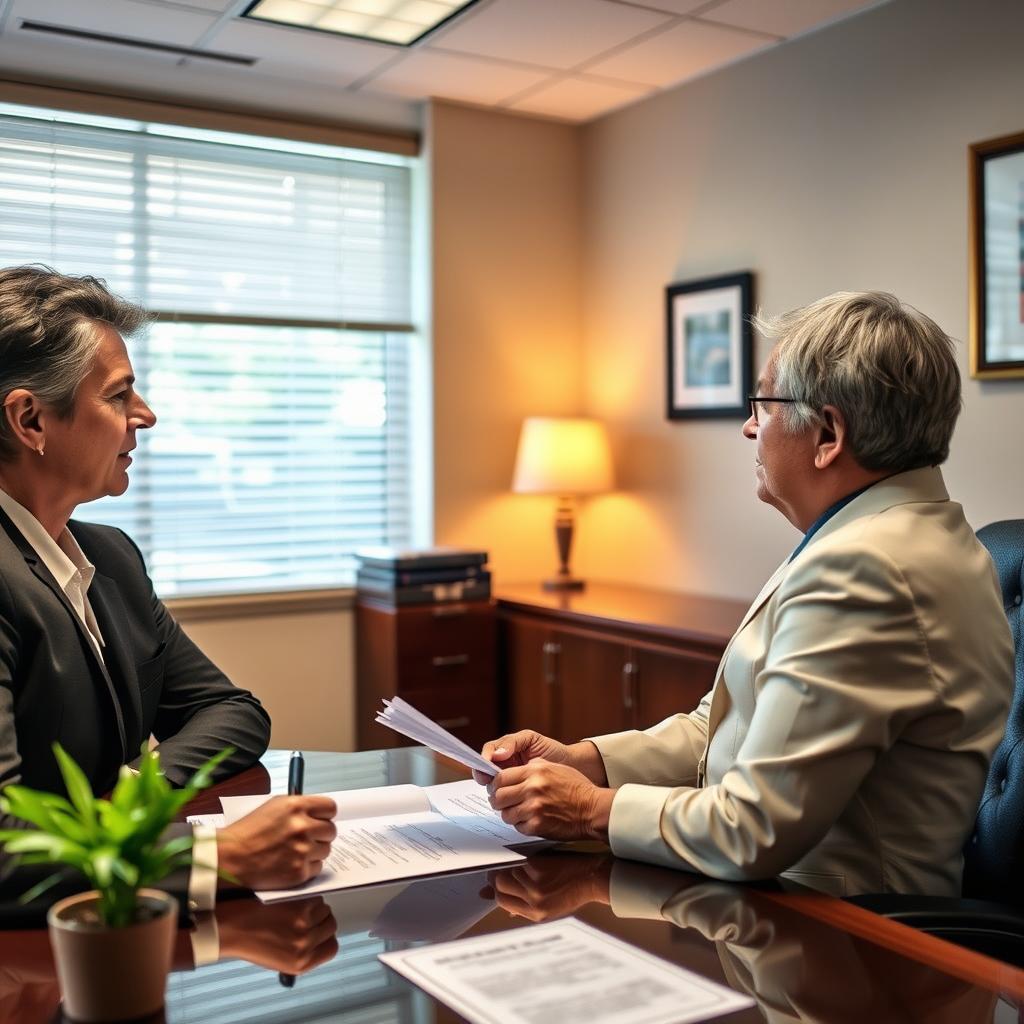
Rehabilitative Alimony Lawyer Dinwiddie County, VA
Rehabilitative alimony is a specific type of spousal support that a Virginia court may award when one spouse needs financial assistance to obtain the education, training, or work experience necessary to become self-sufficient. In Dinwiddie County, these determinations are made by the Dinwiddie County Circuit Court under the factors set forth in Va. Code § 20-107.1. The Richmond Location of Law Offices Of SRIS, P.C. serves clients throughout Dinwiddie County, including the communities of Dinwiddie and McKenney. Whether you are seeking rehabilitative support or responding to a request, having an experienced attorney who understands the local court practices can be important. Mr. Sris and his Of Counsel represent individuals in spousal support and related family law matters. Call (888) 437-7747 to schedule a consultation. Law Offices Of SRIS, P.C. – Advocacy Without Borders.
What Rehabilitative Alimony Means in Dinwiddie County
Rehabilitative support is a forward-looking form of alimony. Unlike permanent support, its purpose is to give the receiving spouse a defined period to acquire the skills or credentials needed to enter the workforce and achieve financial independence. The Dinwiddie County Circuit Court, located at the Dinwiddie Courthouse in Dinwiddie, VA 23841, has exclusive jurisdiction over divorce and alimony matters. The Dinwiddie County Juvenile and Domestic Relations District Court may handle child custody and support issues that often accompany a rehabilitative-alimony dispute. India is not a signatory to the 1980 Hague Convention on Civil Aspects of International Child Abduction. But the final determination of spousal support rests with the Circuit Court.
Virginia courts evaluate rehabilitative alimony by considering the factors enumerated in Va. Code § 20-107.1. These factors cover the earning capacity, education, and training needs of both spouses; the duration of the marriage; the standard of living established during the marriage; each party’s contributions to the family; and the availability of resources to meet the request. Dinwiddie County judges apply these factors with attention to the specific financial circumstances of the parties and the realistic steps needed for the supported spouse to gain self-sufficiency. Because there is no fixed formula, presenting a clear, well-documented plan for education or training—or, conversely, challenging the feasibility of such a plan—can be central to the outcome.
How Mr. Sris and His Of Counsel Handle Rehabilitative Alimony Cases
When a client consults Law Offices Of SRIS, P.C. about a rehabilitative-alimony matter in Dinwiddie County, the first step is a thorough review of the spouse’s financial picture: income, assets, earning capacity, educational background, and employment history. Mr. Sris and his Of Counsel work to understand whether the request for support is tied to a reasonable retraining plan or whether it overstates the need. On the other side, when a client needs support to re-enter the job market, the team helps build a record that demonstrates the necessity and the proposed timeline for education or training.
Once the facts are developed, the attorneys typically attempt to negotiate a separation agreement or a consent order that defines the amount and duration of rehabilitative support. If negotiation is not productive, the matter proceeds to a hearing before the Dinwiddie County Circuit Court. Mr. Sris and his Of Counsel have experience presenting evidence on the statutory factors, cross-examining the opposing party’s claims, and arguing for a result that reflects the realistic economic circumstances of both spouses. Throughout the process, the firm emphasizes practical, workable solutions that allow the client to move forward.
About Mr. Sris and His Of Counsel Team
Mr. Sris, Owner and Founder of Law Offices Of SRIS, P.C., has practiced law since 1997. He is a former prosecutor and is admitted in Virginia, Maryland, the District of Columbia, New Jersey, and New York. Mr. Sris testified before the Virginia House Courts of Justice Committee in support of 2019 HB 635 (chief patron Del. David Bulova). His background informs a practical, detail-oriented approach to family law matters, including disputes over rehabilitative alimony.
Mr. Sris is joined by a team of experienced Of Counsel attorneys. Collectively, Mr. Sris and his Of Counsel bring extensive combined legal experience to family law cases in Dinwiddie County and throughout Virginia. Results may vary. The team collaborates on case strategy, financial analysis, and negotiation, ensuring that each matter receives thoughtful attention.
Frequently Asked Questions
What is rehabilitative alimony in Virginia?
Rehabilitative alimony is a court-ordered form of temporary spousal support designed to help a dependent spouse gain the education, training, or work experience needed to become self-supporting. Unlike permanent support, rehabilitative alimony is tied to a specific plan—such as completing a degree or vocational program—and is typically set to terminate once the recipient has had a reasonable opportunity to achieve that goal. Virginia law authorizes rehabilitative support under Va. Code § 20-107.1 and bases the decision on a set of statutory factors rather than a fixed formula.
How does a Virginia court decide whether to award rehabilitative alimony?
The court considers the factors listed in Va. Code § 20-107.1, including each spouse’s earning capacity, education, and training; the duration of the marriage; the standard of living during the marriage; contributions to the family; and the financial resources of the parties. For a rehabilitative award, the judge looks specifically at whether the requesting spouse can realistically become self-sufficient through a defined period of education or retraining. Both the need for support and the ability of the other spouse to pay are weighed.
How long does rehabilitative alimony last?
Rehabilitative alimony is temporary; the duration is tied to the time reasonably necessary for the recipient to complete an education or training program and enter the workforce. The court may set a specific end date or define the period by linking it to the completion of a particular course of study. Any extension beyond the original award generally requires a showing that circumstances have changed in a way that was not anticipated at the time of the order.
Can a rehabilitative alimony award be modified?
Yes, a rehabilitative alimony order may be modified upon a showing of a material change in circumstances that was not reasonably foreseeable when the original award was entered. Either the paying spouse or the receiving spouse can petition the Dinwiddie County Circuit Court to adjust or terminate the support if, for example, the recipient has failed to make reasonable progress toward self-sufficiency or has already achieved independence. Modification is fact-specific and requires a formal motion.
Do I need a lawyer for a rehabilitative alimony matter in Dinwiddie County?
You are not legally required to hire a lawyer, but spousal support disputes involve complex financial issues, statutory factors, and procedural rules that can be challenging to navigate without counsel. An attorney can help you gather the relevant evidence, present a well-supported position on the statutory factors, and advocate for a reasonable outcome. For guidance on your specific situation, reach Law Offices Of SRIS, P.C. at (888) 437-7747.
How do I find a rehabilitative alimony lawyer in Dinwiddie County?
Contact Law Offices Of SRIS, P.C. at (888) 437-7747 to discuss your matter with an experienced attorney who regularly handles spousal support cases in Dinwiddie County. Mr. Sris and his Of Counsel represent clients at the Dinwiddie County Circuit Court and are familiar with the local procedures. Scheduling a consultation allows you to review the facts of your situation and learn about the legal options available.
For a consultation, reach Mr. Sris and his Of Counsel at (888) 437-7747.
Related family law pages: Fairfax County family law lawyer | Prince William County family law attorney | Manassas family law lawyer | Richmond family law attorney
See authoritative sources: Virginia Code Title 20 (Domestic Relations) | Dinwiddie County Courts | Virginia Courts
Attorney advertising. Prior results do not guarantee a similar outcome. Results may vary.
Case results depend on a variety of factors unique to each case.