
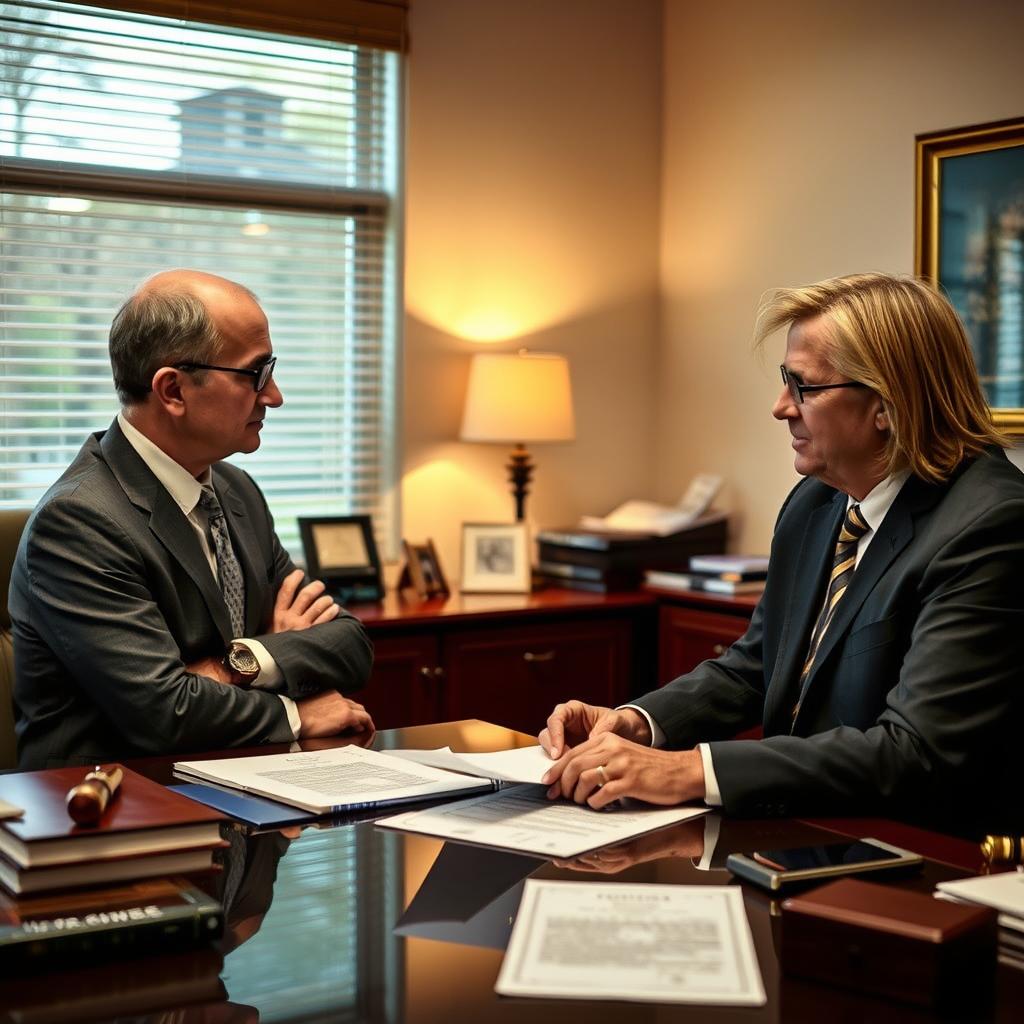
Real Estate Division Lawyer Rockingham County, VA
You and your spouse bought a home in Harrisonburg—maybe a farmhouse near Bridgewater or a townhouse in the JMU area—and now the marriage is over. The house is your largest asset, and you are worried about whether you’ll have to sell it, who gets to keep it, and how the equity gets divided. In Rockingham County, Virginia, real estate division is handled under the Commonwealth’s equitable distribution law. Mr. Sris and his Of Counsel at Law Offices Of SRIS, P.C. help clients throughout the Shenandoah Valley navigate property division in divorce, working toward a fair outcome without unnecessary delay. If you need guidance on a Rockingham County real estate division matter, reach our Shenandoah/Woodstock location at (888) 437-7747. Law Offices Of SRIS, P.C. – Advocacy Without Borders.
What Real Estate Division Means in Rockingham County
Virginia is an equitable distribution state, not a community property state. That means marital assets—including the family home, rental properties, and investment real estate—are not automatically split 50/50. Instead, the Rockingham County Circuit Court at 53 Court Square in Harrisonburg classifies and values every piece of real estate and divides it based on the factors listed in Virginia Code § 20‑107.3. For many couples in Harrisonburg, Dayton, Elkton, Timberville, and Broadway, the marital residence is the largest piece of the pie, but vacation homes, farmland along Route 33, and rental units near I‑81 also come into play.
Real estate division in Rockingham County is not just about who gets the keys. The court considers how the property was acquired, whether separate funds were used for the down payment or renovations, the tax consequences of a transfer, and whether one spouse contributed to the mortgage or maintenance without being on the deed. A house purchased before the marriage may be classified as separate property, but any increase in value during the marriage—or mortgage payments made with marital income—can give rise to a hybrid asset that must be divided equitably.
How Mr. Sris and His Of Counsel Handle Real Estate Division Cases
A divorce that involves a house, a farm, or commercial property moves differently from a simple uncontested split. Mr. Sris and his Of Counsel take a practical, detail‑oriented approach tailored to the Rockingham County courthouse at 53 Court Square. They start by reviewing deeds, mortgage statements, tax assessments, and any written agreements between the spouses. Then they work to trace whether each piece of real property is marital, separate, or a blend of both.
When representing a client whose home is the main concern, the firm’s Of Counsel attorneys focus on realistic options: selling the property and dividing the net proceeds, one party buying out the other’s interest, or structuring a deferred sale so the children can stay in the home until a later date. They also address related financial issues—mortgage assumption, refinancing feasibility, and capital‑gains implications—so the court has a complete picture. Every step is guided by the statutory factors in § 20‑107.3, and the goal is to reach a resolution that is fair, clearly documented, and enforceable.
About Mr. Sris and the Firm’s Of Counsel Attorneys
Mr. Sris, Owner and Founder of Law Offices Of SRIS, P.C., is a former prosecutor who has practiced since 1997 and is admitted in Virginia, Maryland, the District of Columbia, New Jersey, and New York. He and his Of Counsel bring extensive combined legal experience. Results may vary. The firm’s Of Counsel attorneys include practitioners with significant family‑law experience, and they regularly appear in the Rockingham County Circuit Court and other courts throughout the 26th Judicial District. Together, they work to achieve favorable outcomes while keeping the process as straightforward and efficient as possible for clients in Harrisonburg, Bridgewater, and surrounding communities.
Frequently Asked Questions
How does the court decide who gets the house in a Rockingham County divorce?
Virginia courts use equitable distribution factors listed in Va. Code § 20‑107.3 to decide who receives the marital home or its value. The judge first classifies the house as marital, separate, or hybrid property, then considers factors such as each spouse’s financial contributions, non‑monetary contributions to the household, the length of the marriage, and the tax consequences of a transfer. The Rockingham County Circuit Court has broad discretion to order a sale or to award the house to one spouse while compensating the other with other assets or a monetary award. A property settlement agreement signed by both spouses can resolve the issue without a trial.
What if only one spouse’s name is on the deed in Virginia?
The name on the deed does not determine whether the property is marital; if the house was acquired during the marriage and paid for with marital income, it is presumptively marital under Virginia law. A spouse who is not on the deed still has a legally recognized interest. The court will examine the source of the down payment, mortgage payments, and any improvements. Even a house received as a gift or inheritance may become partially marital if marital funds were used for renovations or mortgage payments, creating a hybrid asset subject to division in the Rockingham County Circuit Court.
Can we keep the house if both spouses want it?
If both spouses want to keep the home, the court may award it to one spouse and order a buyout, or the parties can agree to a deferred sale. A buyout requires determining the current fair market value, subtracting any mortgage debt, and calculating each spouse’s equitable share. In some cases, especially when children are involved, the parties may agree that one spouse will remain in the house for a set period—often until the youngest child finishes high school—after which the property is sold and the proceeds divided. Mr. Sris and his Of Counsel help clients negotiate these arrangements and draft enforceable agreements.
How is mortgage debt handled during property division in Rockingham County?
Mortgage debt tied to real estate is divided along with the property; the court will assign the debt to the spouse who receives the house or allocate it equitably between the parties. A spouse who keeps the home typically must refinance the mortgage to remove the other spouse from liability. If refinancing is not possible, the parties may need to sell. Virginia courts consider the debts and liabilities of each party under § 20‑107.3, and failure to address mortgage debt can leave one spouse exposed to foreclosure or credit damage even after the divorce is final. For guidance on your specific situation, reach Law Offices Of SRIS, P.C. at (888) 437-7747.
Does the court treat a farm or rental property differently from a primary residence?
Yes; a farm or rental property is still subject to equitable distribution, but the court will consider its income‑producing potential and the difficulty of partitioning it. In Rockingham County, many families own farmland or small rental units. The court may order a partition sale if the property cannot be divided practically, or it may award the property to one spouse as part of a larger asset distribution. Valuation often requires an appraisal, and the business‑use nature of the asset can affect the tax consequences. A hearing in the Rockingham County Circuit Court will address these unique factors.
Virginia Divorce & Family Law Resources
For additional primary‑source information on equitable distribution and Virginia courts, consult:
Virginia Code § 20‑107.3 – Equitable Distribution |
Virginia Judicial System |
Rockingham County Circuit Court
Family Law Lawyer Clarke County |
Family Law Lawyer Shenandoah County |
Family Law Lawyer Frederick County |
Family Law Lawyer Warren County |
Family Law Lawyer Augusta County
Attorney advertising. Prior results do not guarantee a similar outcome. Results may vary.
Case results depend on a variety of factors unique to each case.