
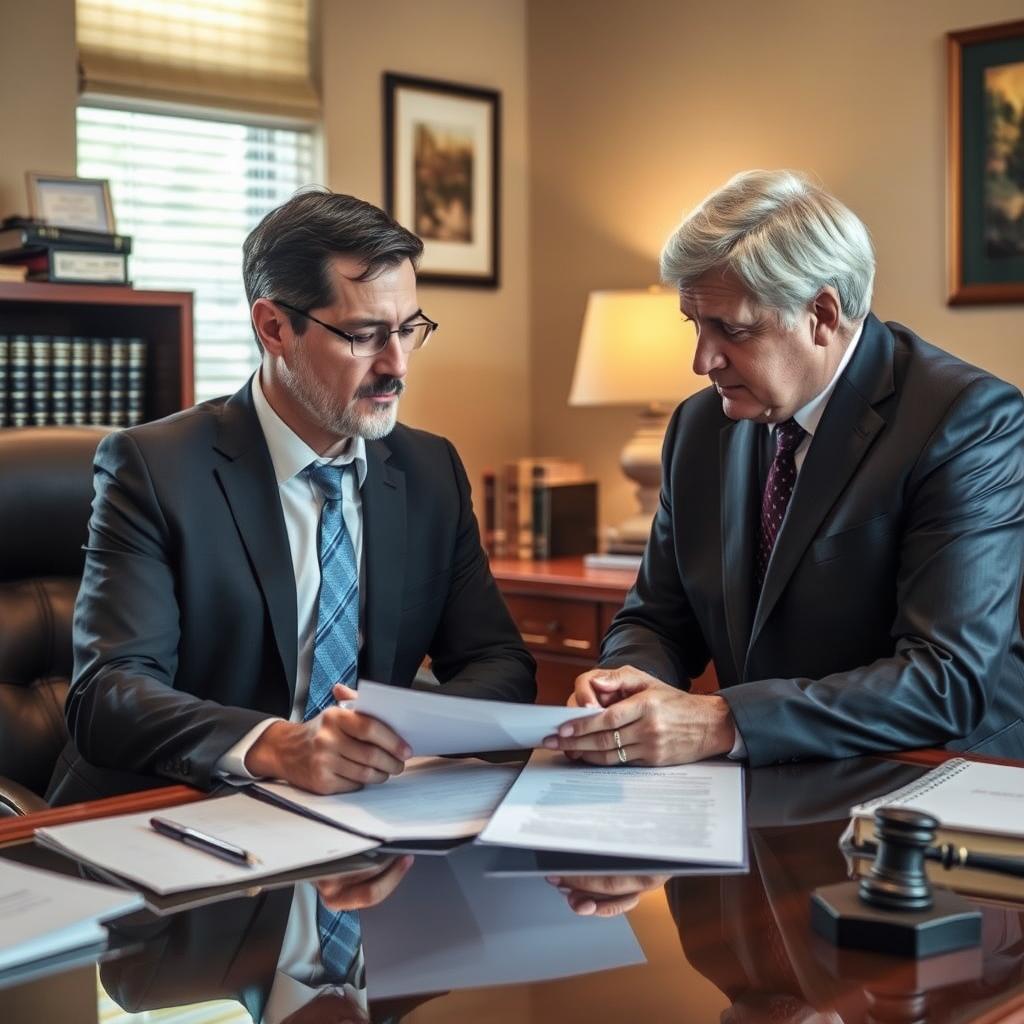
Real Estate Division Lawyer Colonial Heights, VA
When a marriage ends, real estate often represents the largest single asset to divide. In Virginia, real property acquired during the marriage is generally classified as marital property and is subject to equitable distribution under Va. Code § 20-107.3. The Colonial Heights Circuit Court at 550 Boulevard, Colonial Heights, VA 23834, holds exclusive original jurisdiction over divorce and property division. Law Offices Of SRIS, P.C. Concentrates its practice on family law, including contested and uncontested real estate division. Mr. Sris, Owner and Founder of the firm, has extensive experience helping clients navigate equitable distribution in Virginia’s courts. Whether your case involves a primary residence, rental property, or commercial real estate, the court’s determination can significantly affect your financial future. Our firm represents clients throughout Colonial Heights, Swift Creek, and the surrounding area. To discuss your situation, reach Law Offices Of SRIS, P.C. at (888) 437-7747. Law Offices Of SRIS, P.C. – Advocacy Without Borders.
What Real Estate Division Means in Colonial Heights
In Virginia, division of real estate in a divorce follows the principle of equitable distribution, which means the court divides marital property fairly—though not always equally. The process begins with classification: property acquired during the marriage by either spouse is presumptively marital, while property owned before the marriage or received by gift or inheritance is separate. The court considers eleven statutory factors under Va. Code § 20-107.3, including each spouse’s contributions to the marriage, the duration of the marriage, and the liquid or non-liquid character of the property. A family home, investment property, or undeveloped land falls within this analysis.
For residents of Colonial Heights, property division cases are heard in the Colonial Heights Circuit Court, part of Virginia’s Twelfth Judicial District. The same court handles the divorce itself, while the separate Juvenile and Domestic Relations District Court addresses custody, child support, and protective orders—though real estate is always overseen by the Circuit Court. A well-drafted separation agreement signed by both parties can resolve property division without trial, but when an agreement cannot be reached, the court enters a decree after hearing evidence and arguments. Parties may present appraisals, financial records, and expert testimony regarding property value. Because real estate values can fluctuate and ownership structures vary, our approach anchors each case in the specific facts and the local court’s procedural expectations.
The Colonial Heights courthouse is located at 550 Boulevard. Filing deadlines, hearing schedules, and the availability of judicial resources influence the pace of a contested division case. We help clients understand how the law applies to their unique circumstances and present a clear factual record to the court. For many families, preserving the marital home or fairly dividing rental income becomes a primary concern, and we work to present those interests within the statutory framework. Mediation is available but not mandatory; many property disputes are resolved through negotiation before trial. Our firm’s Richmond location serves clients in Colonial Heights and surrounding communities, and we encourage reaching out early to preserve evidence and begin the classification analysis.
How Mr. Sris and the Firm’s Of Counsel Attorneys Handle Real Estate Division Cases
Real estate division requires a detailed understanding of property law, tax implications, and equitable distribution principles. When a client engages our firm, we begin by identifying and classifying every piece of real estate held by either spouse. This includes verifying recorded deeds, mortgage balances, and any claims of separate property through tracing or transmutation. We collaborate with appraisers, title professionals, and forensic accountants when property interests are complex or valuations are disputed. Our familiarity with the Colonial Heights Circuit Court helps us anticipate procedural steps, from filing the complaint to presenting evidence at a final hearing.
Mr. Sris and the firm’s Of Counsel attorneys handle both negotiation and litigation. Many cases are resolved through a marital settlement agreement that details the division of each property, any buyout terms, and the assignment of mortgage liability. When litigation is necessary, we present documentary evidence and, where appropriate, expert testimony to establish fair market value and the parties’ respective contributions. The court considers factors such as when the property was acquired, how title is held, and whether equitable distribution would produce a fair result. Throughout the process we keep clients informed of their options, so they can make decisions grounded in the law. No two real estate division cases are identical, and our team works to fashion a resolution that reflects the client’s goals and the applicable statutory standards.
About Mr. Sris and the Firm’s Of Counsel Attorneys
Mr. Sris founded Law Offices Of SRIS, P.C. in 1997. A former prosecutor, he is admitted to practice in Virginia, Maryland, the District of Columbia, New Jersey, and New York. He testified before the Virginia House Courts of Justice Committee in support of 2019 HB 635 (chief patron Del. David Bulova), a bill that revised the equitable distribution statute, Va. Code § 20-107.3(g). That experience gives the firm a unique perspective on how the Commonwealth’s property division law is applied in practice. As Owner and Founder, Mr. Sris concentrates his practice on family law, including complex property disputes.
The firm’s Of Counsel attorneys bring additional experience in family law, real estate valuation, and courtroom advocacy. Together with Mr. Sris, they form a team that approaches each case collaboratively. The firm has no employees; every attorney works Of Counsel to Law Offices Of SRIS, P.C. Mr. Sris and the firm’s Of Counsel attorneys bring extensive combined legal experience. Results may vary. We serve clients throughout Colonial Heights and the greater Richmond area from our Richmond location. To schedule a consultation, call (888) 437-7747.
Frequently Asked Questions
How is real estate divided in a Virginia divorce?
Real estate is divided through equitable distribution, meaning the court divides marital property fairly but not necessarily equally, after considering statutory factors under Va. Code § 20-107.3. The court first classifies each property as marital, separate, or hybrid. A marital residence acquired during the marriage is typically marital, while inherited property or pre-marriage real estate may be separate. The court then values the marital portion and distributes it equitably based on factors such as the duration of the marriage, each spouse’s contributions, and the liquid or non-liquid nature of the asset. Real estate may be sold and proceeds divided, or one spouse may retain the property and the other receive a share of other assets to offset the value. The Colonial Heights Circuit Court handles all property division in divorce.
Do I need a lawyer for real estate division in Colonial Heights?
While Virginia law does not require you to hire a lawyer for a divorce or property division, having an experienced family law attorney can help protect your interests when real estate is involved. Real estate division often involves complex issues such as valuation, mortgage liability, tax consequences, and tracing of separate property contributions. Procedural missteps or incomplete disclosure can lead to an inequitable result. A lawyer can present evidence, negotiate a settlement that accounts for future market conditions, and ensure the court receives accurate information. Mr. Sris and the firm’s Of Counsel attorneys are familiar with the Colonial Heights Circuit Court and can guide you through each step.
What factors does the court consider in equitable distribution?
The court evaluates eleven statutory factors listed in Va. Code § 20-107.3, including each spouse’s contributions to the marriage, the duration of the marriage, the age and health of each party, and how and when the property was acquired. Other factors include the debts and liabilities of each spouse, the liquid or non-liquid character of the marital property, the tax consequences of a proposed division, and any other factor the court deems relevant. For real estate, the court may also consider whether the property is used as a family residence, whether one spouse has a special need to remain in the home, and each spouse’s ability to finance or maintain the property after divorce. The goal is a fair distribution under the totality of the circumstances.
Can a separation agreement decide how real estate is divided?
Yes, a written separation agreement signed by both parties can fully resolve how real estate is divided, and the court will incorporate it into the final divorce decree if it is found to be fair and voluntarily entered. A separation agreement can specify which spouse retains the marital home, how mortgage payments will be handled, and whether the property will be sold. It can also address investment properties and any buyout terms. In Virginia, if the parties have a signed agreement and no minor children, they may pursue an uncontested divorce after a six‑month separation. Reaching an agreement avoids the uncertainty and expense of litigation, but both sides should understand the long-term implications before signing.
What happens to a jointly owned house in a divorce?
A jointly owned house acquired during the marriage is presumed to be marital property and subject to equitable distribution; the court can order it sold and the proceeds divided or award it to one spouse with an offsetting credit to the other. If one spouse wants to keep the house, the court may allow a buyout of the other spouse’s share, provided the spouse can afford the mortgage and any associated costs. If both names are on the mortgage, the lender may require refinancing to remove one spouse’s liability. The court considers each spouse’s financial situation, contributions to the mortgage, and whether keeping the house is in the best interests of any minor children. If the parties cannot agree, the court will determine the disposition after a hearing.
How does the Colonial Heights court handle property valuation disputes?
When parties disagree on the value of real estate, the Colonial Heights Circuit Court may receive evidence including appraisals, broker price opinions, and expert testimony, and the judge determines the fair market value for equitable distribution. Each party can submit a certified appraisal from a licensed appraiser. If the appraisals differ widely, the court weighs the credibility of the appraisers and the methods used. Tax-assessed values are generally not considered reliable for equitable distribution. The party claiming a different value from the purchase price or recent assessment bears the burden of proof. Our firm works with qualified valuation professionals to present a persuasive valuation and cross-examine opposing appraisals when necessary.
Navigate other family law services in Virginia:
Family Law Lawyer Fairfax County |
Family Law Lawyer Fairfax City |
Family Law Lawyer Prince William County |
Family Law Lawyer Manassas City
Official Virginia legal resources:
Virginia Code Title 20 – Domestic Relations |
Virginia Judicial System
Attorney advertising. Prior results do not guarantee a similar outcome. Results may vary.
Case results depend on a variety of factors unique to each case.