
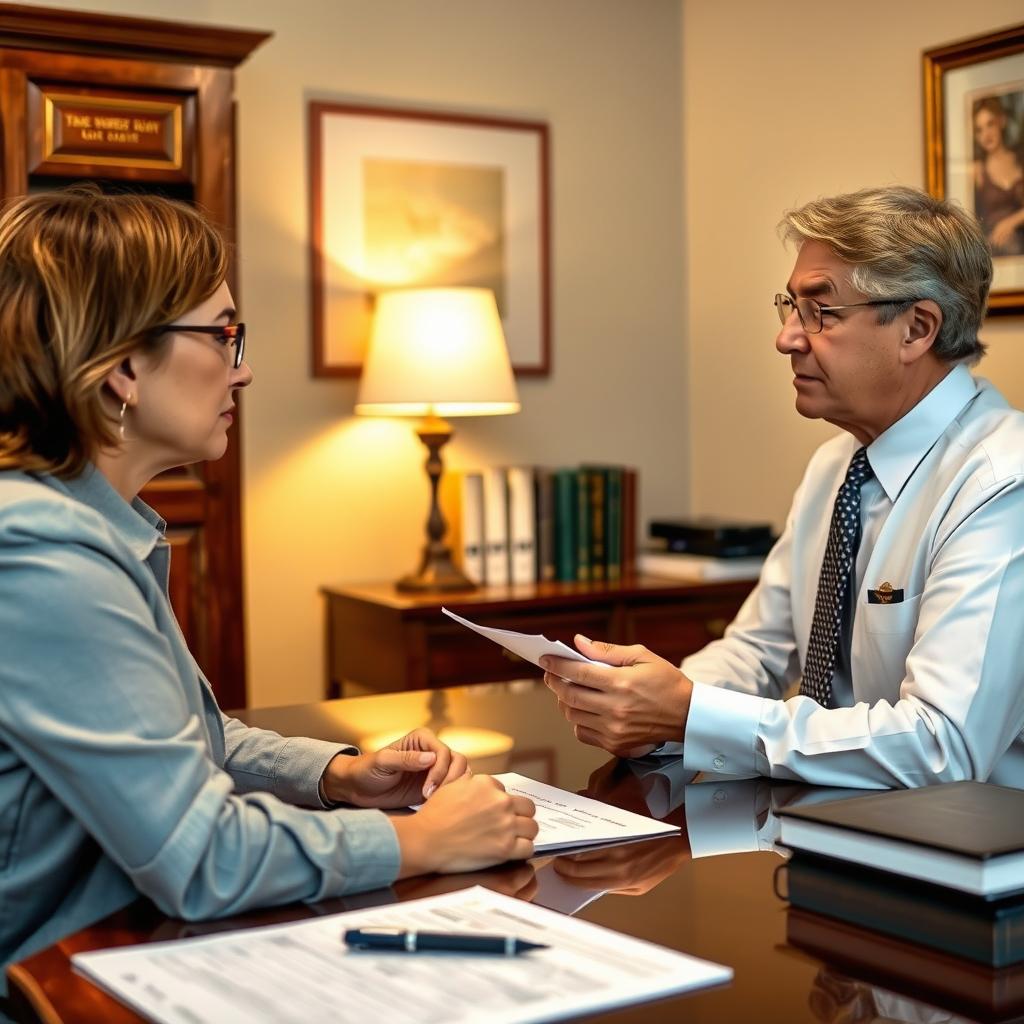
Property Division Lawyer Louisa County, VA
For people facing a divorce in Louisa County, dividing property, assets, and debts can feel like the most uncertain part of the process. Virginia law does not require a 50/50 split—courts apply equitable distribution under Va. Code § 20‑107.3, which means a fair allocation based on a list of statutory factors. The same law governs the classification of every asset acquired during the marriage, from the family home and retirement accounts to a business or professional practice. Law Offices Of SRIS, P.C. helps clients in Louisa County identify what is marital, what is separate, and how a Louisa County Circuit Court judge is likely to weigh the evidence. Mr. Sris, the firm’s Owner and Founder, has practiced family law since 1997 and understands the procedural details that can affect the outcome of a property division matter. If you are preparing for a divorce or negotiating a separation agreement and need clear guidance, reach Law Offices Of SRIS, P.C. at (888) 437-7747. Law Offices Of SRIS, P.C. – Advocacy Without Borders.
What Property Division Means in Louisa County, Virginia
Property division in a Virginia divorce follows a three‑step framework that Louisa County courts apply in every case: classification, valuation, and distribution. Classification is the threshold question—the court must decide whether an asset is marital property, separate property, or a hybrid of both. Marital property generally includes everything either spouse acquired during the marriage, regardless of whose name is on the title. Separate property includes assets owned before the marriage, inheritances, and gifts received by one spouse from a third party. The distinction matters because only marital property is subject to division. Real estate purchased during the marriage, even if titled in one name, is presumptively marital. A pension or 401(k) accumulated during the marriage is marital to the extent it grew during those years.
Louisa County is part of Virginia’s 16th Judicial District, and all divorce and equitable distribution matters are heard in the Louisa County Circuit Court at 100 West Main Street, Louisa, VA 23093. The Court also handles related issues such as spousal support, while standalone child custody and support petitions go to the Louisa County Juvenile and Domestic Relations District Court. When a couple owns a farm, a small business in Mineral, or lake property near Lake Anna, the valuation step can require input from appraisers, forensic accountants, or business valuation attorneys. The court then weighs eleven factors listed in Va. Code § 20‑107.3 to determine a fair distribution. These factors include the duration of the marriage, each spouse’s contributions to the family’s well‑being and to the acquisition of the property, the ages and health of the parties, and the tax consequences of any proposed division. Because equitable distribution does not mean equal, understanding how a Louisa County judge has applied these factors in similar cases helps frame realistic expectations.
How Mr. Sris and His Of Counsel Handle Property Division Cases
Property division work at Law Offices Of SRIS, P.C. begins by obtaining a complete picture of the marital estate. Mr. Sris and his Of Counsel gather financial records, tax returns, bank statements, and any corporate or partnership documents. In a Louisa County case involving a professional practice or an LLC, the firm may bring in a forensic accountant to trace separate and marital contributions, calculate the enterprise’s value, and assess good‑will where relevant. For retirement accounts, the team reviews plan documents and works with a qualified domestic relations order (QDRO) attorney to ensure that a division ordered by the court will be accepted by the plan administrator without triggering unnecessary taxes or penalties.
The firm addresses both the negotiation track and the litigation track. Many Louisa County divorces resolve through a signed property settlement agreement—often called a separation agreement—that spells out who keeps the house, how debts are divided, and what share of a pension or IRA each spouse receives. When the parties cannot agree, Mr. Sris and his Of Counsel prepare for a contested equitable distribution hearing in the Louisa County Circuit Court. That preparation includes deposing the opposing spouse, subpoenaing records, and, when necessary, retaining expert witnesses to challenge the other side’s valuation. Mr. Sris testified before the Virginia House Courts of Justice Committee in support of 2019 HB 635 (chief patron Del. David Bulova), the legislation that revised subsection (g) of Va. Code § 20‑107.3, which governs the direct payment of a marital share of certain retirement plans. This familiarity with the statute’s mechanics informs the way the firm structures property settlements and QDROs for Virginia clients.
About Mr. Sris and His Of Counsel Team
Mr. Sris, Owner and Founder of Law Offices Of SRIS, P.C., has concentrated his practice on family law for nearly three decades. He is admitted in Virginia, Maryland, the District of Columbia, New Jersey, and New York, and he appears regularly in Virginia circuit courts, including the Louisa County Circuit Court. Mr. Sris and his Of Counsel bring extensive combined legal experience. Results may vary. The firm’s Of Counsel attorneys—all independent, non‑employee practitioners—include lawyers with backgrounds in criminal prosecution, law enforcement, and complex civil litigation, contributing a broad perspective to the financial and personal issues that arise in property division matters. The Richmond location serves clients throughout central Virginia; for those in Louisa, Mineral, and Zion Crossroads, meetings are available by appointment, and telephone consultations can be arranged by calling (888) 437-7747.
Frequently Asked Questions
How does equitable distribution work in a Louisa County divorce?
Virginia is an equitable distribution state, meaning a judge divides marital property fairly—not necessarily equally—after applying the eleven factors listed in Va. Code § 20‑107.3. The Louisa County Circuit Court first classifies assets as marital, separate, or hybrid, then values them, and finally distributes the marital portion. Separate property, such as an inheritance kept in a sole‑owner account, is not divided. Debts are also allocated. The process can be resolved through a separation agreement or, if contested, at a trial before the circuit court judge.
What kinds of assets are subject to division in a Louisa County divorce?
Marital property includes the family home, vacation property, bank accounts, investment accounts, retirement plans, business interests, vehicles, and personal property acquired during the marriage. Even a professional degree or license may be considered, not as a divisible asset, but as a factor in determining spousal support or the distribution of other property. Separate property—gifts, inheritances, and assets owned before the marriage—generally stays with the owning spouse, although any increase in value during the marriage may be subject to division if marital effort contributed to the growth.
Can we agree on a property division without going to court in Louisa County?
Yes, spouses can enter into a written property settlement agreement that resolves all division issues and have it made part of the final divorce decree. If the agreement covers all marital property and debts and is properly executed, the Louisa County Circuit Court will generally incorporate it without a contested hearing. A well‑drafted agreement can save time, reduce expense, and give the parties more control over the outcome than leaving the decision to a judge. Both sides benefit from having independent legal review before signing.
How are retirement accounts divided in a Virginia divorce?
Retirement accounts are divisible to the extent they were acquired during the marriage, typically through a qualified domestic relations order (QDRO) or similar court order that instructs the plan administrator to pay a share to the non‑employee spouse. The QDRO process requires precise language to comply with the plan’s rules and the Internal Revenue Code. A military pension is divided under different federal rules. Mr. Sris and his Of Counsel work with financial professionals to calculate the marital share and prepare the necessary orders for submission to the Louisa County Circuit Court.
What if my spouse hides assets during a Louisa County divorce?
Virginia law requires full financial disclosure; hiding assets can result in a court imposing sanctions or adjusting the property division to compensate the other spouse. Discovery tools such as interrogatories, requests for production of documents, and depositions can uncover undisclosed accounts, transfers, or undervalued property. In Louisa County, a forensic accountant may be engaged to trace funds and identify discrepancies. If concealment is proven, the judge has the authority to award a larger share of the known marital estate to the injured party.
Do I need a lawyer for property division in a Louisa County divorce?
While you are not required to hire a lawyer, dividing marital property—especially when a house, business, retirement plan, or debt is involved—raises legal and financial issues that an experienced family law attorney can help you navigate. Even in an uncontested divorce, a separation agreement should be reviewed to ensure it protects your rights and complies with Virginia law. To discuss the details of your matter, contact Law Offices Of SRIS, P.C. at (888) 437-7747.
Attorney advertising. Prior results do not guarantee a similar outcome.
Results may vary.
Case results depend on a variety of factors unique to each case.