
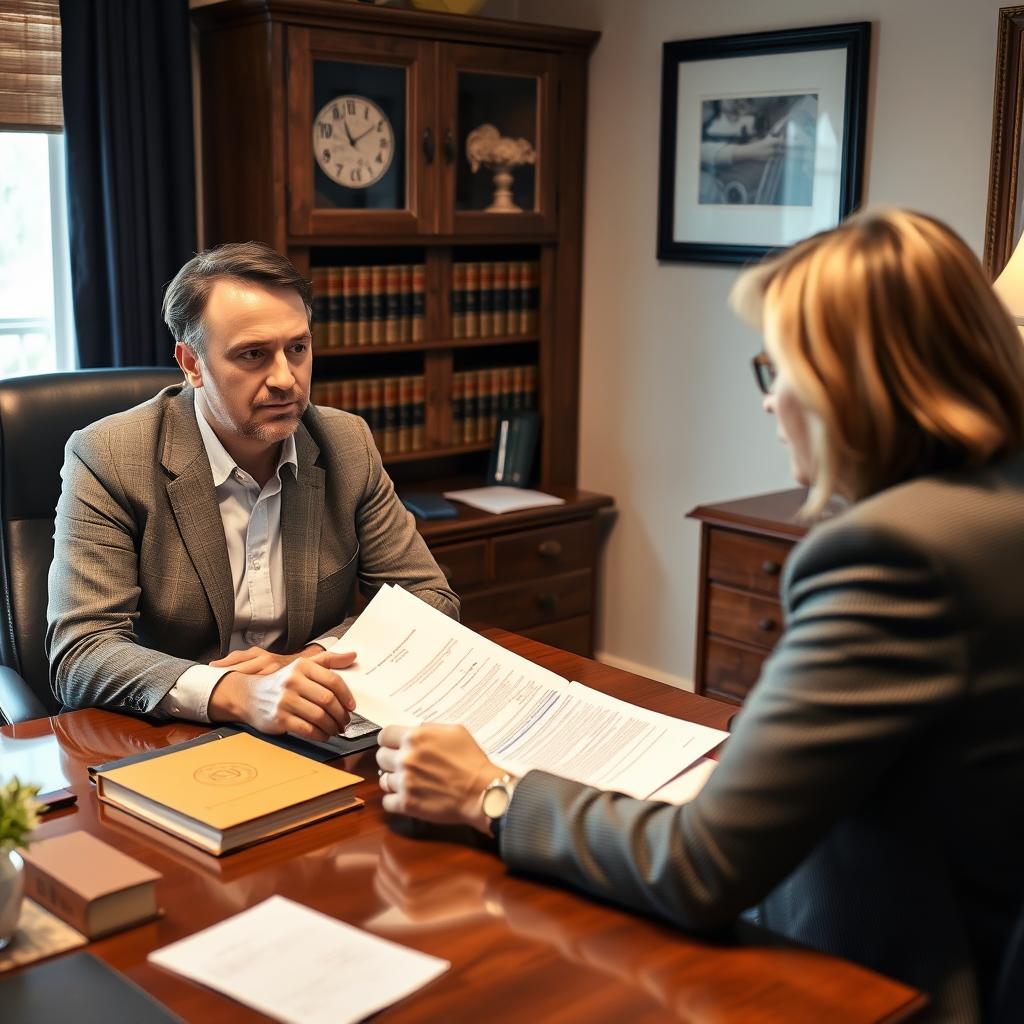
Postnuptial Agreement Lawyer Fluvanna County, VA
After you and your spouse have built a life together in Palmyra or Fork Union, you may realize your financial picture has changed since the wedding day. Maybe one of you inherited property on Lake Monticello, started a business, or wants to protect children from a prior relationship. When a married couple in Fluvanna County decides to clarify property rights, spousal support, or asset division while staying married, a postnuptial agreement can provide the certainty they need. Mr. Sris and his Of Counsel team at Law Offices Of SRIS, P.C. have helped Virginia families draft and negotiate postnuptial agreements for years. Reach our firm at (888) 437-7747 to discuss your specific goals. Law Offices Of SRIS, P.C. – Advocacy Without Borders.
Understanding Postnuptial Agreements in Fluvanna County
A postnuptial agreement is a contract between spouses, signed after marriage, that defines how assets, debts, and spousal support will be handled if the marriage ends or one spouse dies. Virginia law governs these agreements under Va. Code § 20‑147 et seq., the Premarital Agreement Act, which applies equally to agreements made after the wedding. The Fluvanna County Circuit Court, located at 72 Main Street, Suite B, Palmyra, Virginia, has jurisdiction over disputes involving the validity or enforcement of a postnuptial agreement. Because Virginia is an equitable distribution state, the court must divide marital property fairly, not necessarily equally. A well‑drafted postnuptial agreement can replace that default judicial determination with a framework you both design.
Many couples in Fluvanna County—whether living near Fork Union, Lake Monticello, or the surrounding rural areas—choose a postnuptial agreement after a significant life event. Common triggers include one spouse starting a small business, receiving an inheritance, or the couple wanting to avoid discord over finances during a reconciliation period. By memorializing your intentions now, you reduce uncertainty and potential litigation later. An experienced attorney can ensure the agreement meets Virginia’s voluntariness, disclosure, and unconscionability standards, so it holds up in court if ever challenged.
Frequently Asked Questions
What is a postnuptial agreement in Virginia?
A postnuptial agreement is a written contract between spouses, created after marriage, that controls property division, spousal support, and other financial matters if the marriage ends. Unlike a prenuptial agreement signed before the wedding, a postnuptial agreement is executed while the couple is already married. Under the Virginia Premarital Agreement Act, it can address the same subjects: property classification, distribution, and alimony. It cannot determine child custody or child support, as Virginia courts always review those issues based on the child’s best interests at the time of the proceeding. India is not a signatory to the 1980 Hague Convention on Civil Aspects of International Child Abduction.
Do I need a lawyer for a postnuptial agreement in Fluvanna County?
You are not legally required to have an attorney, but legal guidance is strongly recommended because a poorly drafted agreement can be unenforceable. A Virginia court will scrutinize whether both parties entered the agreement voluntarily, with full financial disclosure, and without unconscionable terms. An experienced lawyer helps ensure each requirement is met, drafts clear provisions that match your intentions, and can negotiate terms that protect your interests. Mr. Sris and his Of Counsel regularly guide Fluvanna County residents through this process.
How is a postnuptial agreement different from a prenuptial agreement?
The primary difference is timing: a prenuptial agreement is signed before marriage; a postnuptial agreement is signed after the wedding. Both are governed by the same Virginia statute, Va. Code § 20‑147 et seq. Courts often scrutinize postnuptial agreements more closely because spouses owe each other fiduciary duties during marriage. That higher scrutiny makes it especially important to have independent legal advice and thorough financial disclosures when drafting a postnuptial agreement.
Can a postnuptial agreement be challenged in court?
Yes, a postnuptial agreement can be challenged if one spouse can show it was signed involuntarily, based on incomplete financial information, or contains unconscionable terms. Virginia courts examine the circumstances surrounding the signing. If a court finds the agreement fundamentally unfair when executed and now produces a result that shocks the conscience, it may set the entire agreement or specific provisions aside. Working with a lawyer at the drafting stage greatly reduces the risk of a successful challenge later.
What makes a postnuptial agreement valid in Virginia?
To be valid, a postnuptial agreement must be in writing, signed by both parties, and entered into voluntarily with a fair and reasonable disclosure of each spouse’s financial circumstances. The agreement cannot be the product of fraud, duress, or mistake. Virginia courts also consider whether the agreement was unconscionable when made. Even if full disclosure didn’t occur, the agreement may still be enforced if the party challenging it had adequate knowledge of the other’s finances or waived the right to disclosure.
Where are postnuptial agreements filed in Fluvanna County?
Postnuptial agreements are not filed with any court while the marriage is ongoing; they are private contracts held by the spouses. If a divorce is later filed in the Fluvanna County Circuit Court, the agreement may be presented to the court as a binding settlement of property and support issues. The Circuit Court, at 72 Main Street, Suite B in Palmyra, has exclusive jurisdiction over divorce and equitable distribution matters in the county. An attorney can advise on how best to preserve and reference the agreement should a future filing become necessary.
How much does a postnuptial agreement cost?
Fees vary depending on the complexity of your financial situation, the level of negotiation required, and whether both spouses are represented by counsel. A straightforward agreement for a couple with modest assets will typically involve fewer hours of drafting and review than an agreement addressing business valuations, multiple real properties, or blended family considerations. Reach Law Offices Of SRIS, P.C. at (888) 437-7747 to discuss your circumstances, and our team can provide a clearer picture of the anticipated scope and cost.
What does a postnuptial agreement cover?
A postnuptial agreement can define how real estate, bank accounts, retirement assets, business interests, debts, and spousal support are treated upon separation, divorce, or death. It can also protect separate property brought into the marriage or acquired during the marriage by gift or inheritance. Spouses can agree to waive alimony or set a specific amount and duration. However, the agreement cannot determine child custody or child support, as Virginia courts retain the authority to decide those matters based on the child’s best interests at the time of the proceeding.
Can a postnuptial agreement include child custody or support terms?
No, the agreement cannot bind a court on child custody or child support, though it may express the parents’ intentions. Virginia law gives the court discretion to decide custody and support based on the best interests of the child at the time of the proceeding, not on an agreement signed years before. Provisions attempting to predetermine custody or set child support below state guidelines will be treated as advisory only and may be disregarded by the Fluvanna County Juvenile and Domestic Relations District Court.
If my spouse refuses to sign a postnuptial agreement, what can I do?
You cannot force a spouse to sign; the decision must be voluntary. If your spouse is unwilling, you might seek other financial-planning tools such as a trust, a property agreement, or a separation agreement if you are considering ending the marriage. Sometimes addressing the underlying concerns through open communication or mediation helps. A lawyer can explain your options and help you explore alternatives that provide at least some measure of financial clarity during the marriage.
How long does it take to prepare a postnuptial agreement?
The timeline varies by case complexity and the level of cooperation between the parties. A straightforward agreement might be drafted and finalized in a few weeks. More involved situations—those requiring business valuations, significant disclosure negotiations, or multiple rounds of revisions—can take considerably longer. Both spouses should allow enough time for meaningful financial disclosure and independent legal review. Rushing the process can create grounds for a later challenge.
Can a postnuptial agreement be modified later?
Yes, spouses can amend or revoke a postnuptial agreement by a subsequent written agreement, signed by both parties. The same standards of voluntariness and disclosure apply to the modification. As life circumstances change—a new business, an inheritance, a move to another state—it may be wise to review and update the agreement to ensure it still reflects your wishes. A periodic legal check‑up can help confirm the document remains enforceable under Virginia law.
About Mr. Sris and His Of Counsel Team
Mr. Sris, Owner and Founder of Law Offices Of SRIS, P.C., has practiced family law since founding the firm in 1997. He is admitted in Virginia, Maryland, the District of Columbia, New Jersey, and New York. His Of Counsel team includes attorneys with extensive experience in Virginia domestic relations law. Together, Mr. Sris and his Of Counsel bring extensive combined legal experience to postnuptial agreement matters. Results may vary. Past outcomes do not guarantee a similar result
For a consultation about a postnuptial agreement in Fluvanna County, reach our firm at (888) 437-7747. Our Shenandoah Location, at 505 North Main Street, Suite 103, Woodstock, Virginia 22664, serves clients throughout the county. Meetings are by appointment.
Attorney advertising. Prior results do not guarantee a similar outcome.
Results may vary.
Case results depend on a variety of factors unique to each case.