
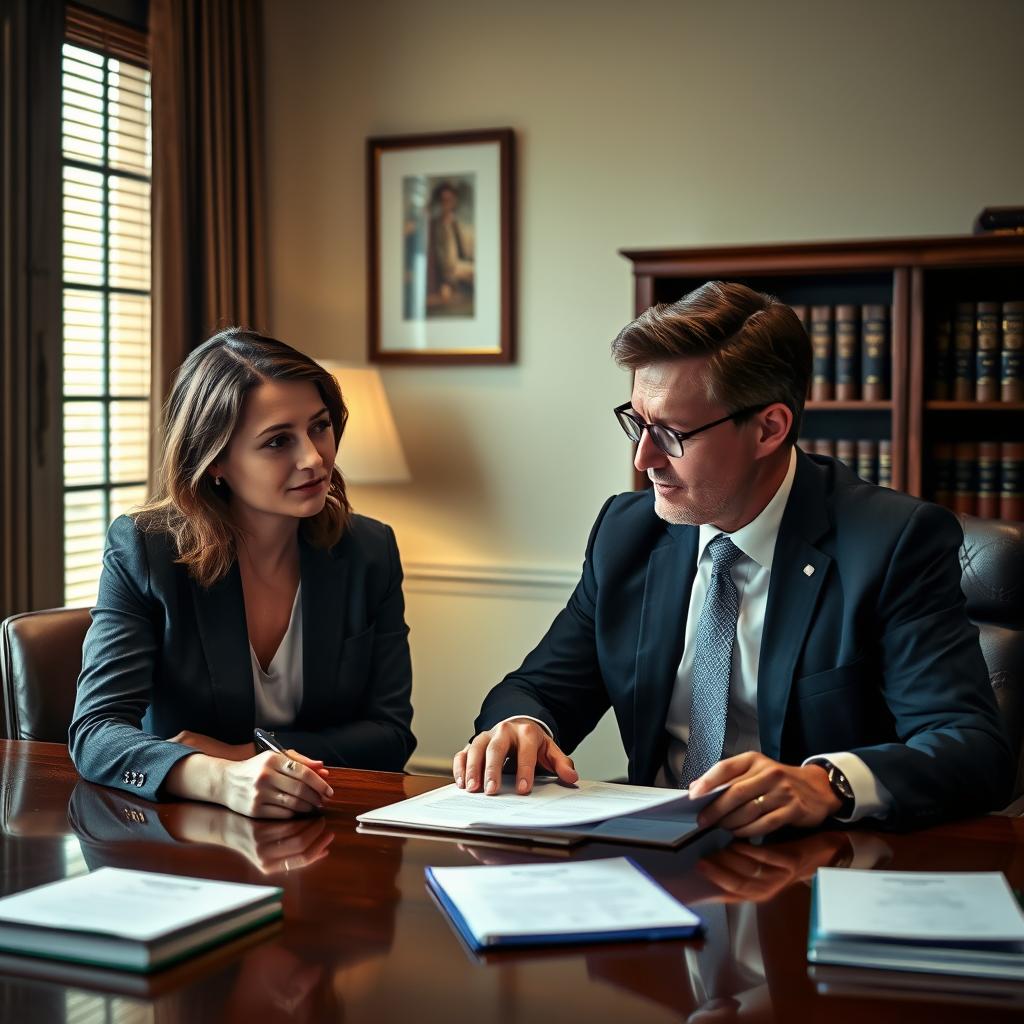
Postnuptial Agreement Lawyer Dinwiddie County, VA
You and your spouse signed a written agreement years ago, agreeing that certain assets would stay separate no matter what. Now a divorce is unfolding, and your spouse says the document isn’t valid. Without clear, enforceable terms, a Dinwiddie County Circuit Court judge will instead divide everything under Virginia’s equitable-distribution rules. Mr. Sris and his Of Counsel work with clients throughout Dinwiddie County — from Dinwiddie to McKenney — who need postnuptial agreements drafted, reviewed, or enforced. Reach Law Offices Of SRIS, P.C. at (888) 437-7747 to request a consultation. Law Offices Of SRIS, P.C. – Advocacy Without Borders.
Strategy Options for Postnuptial Agreements
Virginia law treats postnuptial agreements under the Premarital Agreement Act, Va. Code § 20‑147 et seq. A private contract between spouses, it can settle property classification, division, and even spousal support — provided it is in writing, signed voluntarily, and supported by a fair and reasonable disclosure of each party’s assets and debts. When a marriage is under strain, a well-drafted agreement can remove the uncertainty of a later courtroom battle.
Mr. Sris and his Of Counsel concentrate on three practical strategies. First, they help spouses draft a new agreement that puts mutual understanding on paper before tensions escalate. Second, they review an existing agreement when divorce is imminent, identifying flaws that could weaken its enforceability. Third, they appear in the Dinwiddie County Circuit Court — the court with exclusive jurisdiction over divorce and related property matters — to defend or challenge an agreement that is already in dispute. In every approach, the goal is to give the agreement the trusted chance of withstanding judicial scrutiny.
What to Expect When You Work With a Postnuptial Agreement Lawyer
The process begins with a consultation where your goals and full financial picture are discussed openly. Because Virginia requires full and fair disclosure for an agreement to be valid, hiding assets or obligations can later cause a judge to set the entire document aside. Mr. Sris and his Of Counsel will gather the necessary financial records and walk you through the settlement options.
Once the agreement is drafted, both spouses should have an opportunity to review it with independent counsel — this step, while not always required, significantly strengthens enforceability. The final document is signed before a notary. If the agreement is later challenged in a Dinwiddie County courtroom — for example, on grounds of fraud, duress, or unconscionability — the court will examine the circumstances at signing. Mr. Sris and his Of Counsel are familiar with how Virginia judges assess voluntariness and disclosure, and they can present arguments grounded in the statutory factors.
Attorney Credentials
Mr. Sris is a former prosecutor and the Owner and Founder of Law Offices Of SRIS, P.C. He has concentrated his practice on family law matters since founding the firm in 1997, appearing regularly in Virginia’s circuit and juvenile courts. He is admitted in five jurisdictions: Virginia, Maryland, the District of Columbia, New Jersey, and New York. Alongside his Of Counsel team — experienced attorneys who work collaboratively on family law cases — Mr. Sris brings extensive combined legal experience to postnuptial agreement matters. Results may vary.
Our Richmond location at 7400 Beaufont Springs Drive, Suite 300, Room 395, Richmond, VA 23225, is available by appointment. Clients in Dinwiddie County, including Dinwiddie and McKenney, can schedule consultations there or meet with counsel at the Dinwiddie County Circuit Court. Call (888) 437-7747 to arrange a time.
Frequently Asked Questions
Do I need a lawyer to create a postnuptial agreement in Virginia?
You are not legally required to hire a lawyer to create a postnuptial agreement in Virginia, but legal guidance helps ensure the document meets the statutory requirements for enforceability. A court will look at whether the agreement is in writing, signed voluntarily by both spouses, and based on a fair and reasonable disclosure of assets and debts. Mistakes in drafting can lead a judge to disregard the agreement, leaving your property subject to equitable distribution under Va. Code § 20‑107.3. An experienced family law attorney can help you avoid those pitfalls.
Can a postnuptial agreement be challenged in Dinwiddie County?
Yes, a postnuptial agreement can be challenged in Dinwiddie County Circuit Court on grounds such as duress, fraud, unconscionability, or failure to disclose material assets. When a divorce proceeding reaches the circuit court, a spouse who signed under pressure or without full financial knowledge may ask the judge to set aside part or all of the agreement. The court examines the circumstances at signing, not the fairness of the outcome years later. Mr. Sris and his Of Counsel represent clients in these hearings, presenting evidence about voluntariness and disclosure.
What makes a postnuptial agreement enforceable in Virginia?
An enforceable Virginia postnuptial agreement must be in writing, signed by both parties, and entered into voluntarily after a fair and reasonable disclosure of each spouse’s property and financial obligations. The statute, Va. Code § 20‑151, does not require that the agreement be substantively equal; it requires that the process be fair. If one spouse hides significant assets, a judge may find the disclosure inadequate and refuse to enforce the agreement. Having each spouse represented by independent counsel, though not mandatory, is strong evidence of voluntariness.
What if my spouse didn’t disclose assets when we signed?
If your spouse failed to disclose material assets before you signed a postnuptial agreement, a court may declare the agreement unenforceable as to those hidden assets. Virginia law requires fair and reasonable disclosure. When one party conceals property or debts, the other party’s consent is considered invalid because it was not truly informed. In a Dinwiddie County divorce case, an attorney can subpoena financial records to demonstrate what was withheld and argue that the agreement should be set aside.
Does a postnuptial agreement affect spousal support in Dinwiddie County?
Yes, a properly drafted postnuptial agreement can limit or waive spousal support, but a court will not enforce a provision that would leave one spouse destitute or that was obtained unfairly. Virginia law allows spouses to contract about support, provided the agreement is clear and the waiver is knowing. If a spouse was represented by counsel and the financial disclosure was thorough, a support waiver is more likely to be upheld. The Dinwiddie County Circuit Court judges apply the same statutory principles to support challenges as they do to property challenges.
How does a postnuptial agreement divide property when the marriage ends?
A valid postnuptial agreement overrides Virginia’s default equitable-distribution rules; the property is divided according to the contract, not the judge’s discretion. The agreement can reclassify separate property as marital, protect an inheritance, or set a formula for dividing retirement accounts. If the agreement is clear and procedurally sound, the judge’s role is to enforce it. Mr. Sris and his Of Counsel review the document to ensure it covers all asset classes and anticipate potential challenges under Va. Code § 20‑107.3.
For a full statutory breakdown of Virginia postnuptial agreements, see our comprehensive analysis.
Law Offices Of SRIS, P.C.
7400 Beaufont Springs Drive, Suite 300, Room 395
Richmond, VA 23225
By appointment. Call (888) 437-7747 to schedule.
Attorney advertising. Prior results do not guarantee a similar outcome. Results may vary.
Case results depend on a variety of factors unique to each case.