
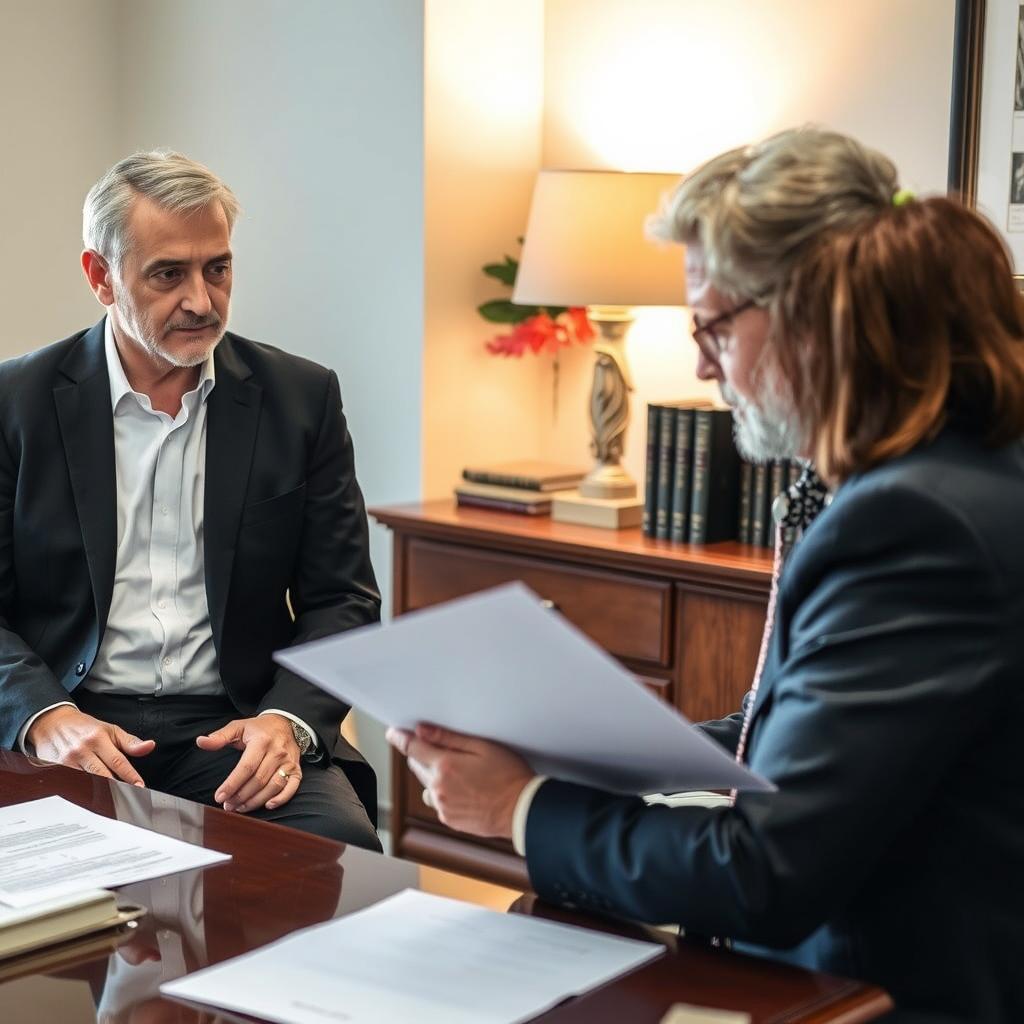
Postnup Lawyer Colonial Heights, VA
You and your spouse have been discussing how to handle your finances and property. You both agree a postnuptial agreement would bring clarity and security, but you are not sure where to start or whether a Virginia court will respect it. Law Offices Of SRIS, P.C. represents clients in Colonial Heights, Virginia, in drafting, reviewing, and enforcing postnuptial agreements under the Virginia Premarital Agreement Act. Mr. Sris, Owner and Founder, and his experienced Of Counsel team work with couples across the Richmond area and the Twelfth Judicial District to protect what matters most. If you are ready to move forward, call (888) 437-7747 to schedule a consultation. Law Offices Of SRIS, P.C. – Advocacy Without Borders.
What Postnuptial Agreements Mean in Colonial Heights, Virginia
Colonial Heights couples who want to define their rights and obligations after marriage often turn to postnuptial agreements — binding contracts between spouses that address property distribution, spousal support, and other financial matters in the event of separation, divorce, or death. Unlike prenuptial agreements signed before marriage, a postnuptial agreement is executed after the wedding. In Virginia, postnuptial agreements are governed by the same statutory framework as premarital agreements, Va. Code § 20‑147 et seq. (the Premarital Agreement Act), which requires that the agreement be in writing and signed by both parties to be enforceable.
Our Richmond location serves clients throughout Colonial Heights. If a dispute over a postnuptial agreement goes to court, it may be heard in the Colonial Heights Circuit Court at 550 Boulevard, the same court that handles divorce, equitable distribution, and spousal support matters. Judges in the Twelfth Judicial District apply Virginia equitable distribution principles to determine whether an agreement was voluntarily entered and is not unconscionable. By working with an experienced attorney, you can craft an agreement that clearly reflects your intentions and helps avoid costly litigation later.
How Mr. Sris and His Of Counsel Handle Postnuptial Agreement Matters
Mr. Sris and his Of Counsel take a thorough, client-focused approach to every postnuptial agreement. The process usually begins with a private consultation to understand what you and your spouse hope to accomplish — whether that is protecting a family business, addressing inheritances, or setting spousal support terms. Mr. Sris reviews your financial picture, explains your rights under Virginia law, and drafts an agreement tailored to your specific circumstances.
Virginia law requires that both parties fully and fairly disclose their assets and liabilities before signing a postnuptial agreement. Our team helps ensure that all required disclosures are complete and accurate, reducing the risk that a court later finds the agreement invalid. If you already have an agreement that your spouse is challenging during a divorce, Mr. Sris and his Of Counsel represent you in the Colonial Heights Circuit Court. They advocate for the enforcement of valid agreements and, when necessary, present evidence about the negotiation process and the fairness of the terms.
About Mr. Sris and His Of Counsel
Mr. Sris founded Law Offices Of SRIS, P.C. in 1997. A former prosecutor, he has spent his career in the courtroom and now concentrates on family law matters, including postnuptial agreements, divorce, and equitable distribution. Mr. Sris testified before the Virginia House Courts of Justice Committee in support of 2019 HB 635 (chief patron Del. David Bulova), a bill that clarified certain retirement‑division procedures under Virginia’s equitable distribution statute. His thorough knowledge of Virginia divorce law gives him a distinct understanding of how postnuptial agreements interact with later divorce proceedings.
The firm’s Of Counsel attorneys bring additional experience in family law, litigation, and negotiation. Every attorney is dedicated to protecting clients’ interests while keeping the process as straightforward as possible. Together, Mr. Sris and his Of Counsel team represent individuals in Colonial Heights and throughout the Richmond‑area counties.
Frequently Asked Questions
What is a postnuptial agreement in Virginia?
A postnuptial agreement is a written contract between spouses, signed after marriage, that sets out their rights to property and support in the event of divorce or death. Virginia’s Premarital Agreement Act, Va. Code § 20‑147 et seq., applies to postnuptial agreements just as it does to prenuptial agreements. The agreement must be in writing and signed by both parties. It can cover classification of assets, division of property, spousal support, and other financial arrangements. To be enforceable, a court must find that the agreement was entered into voluntarily and is not unconscionable as to either party.
Do I need a lawyer for a postnuptial agreement in Colonial Heights?
While Virginia law does not require you to hire a lawyer to draft a postnuptial agreement, having experienced legal counsel significantly increases the likelihood that a court will enforce the agreement. Without separate legal advice, a spouse who later challenges the agreement may argue that they did not understand its terms or that it was unfair. An attorney can ensure that all statutory requirements are met, that financial disclosures are complete, and that the agreement is drafted clearly. Mr. Sris and his Of Counsel team represent clients in Colonial Heights and can advise you on your specific situation. Call (888) 437‑7747 to discuss your case.
How is a postnuptial agreement enforced in Colonial Heights?
Enforcement of a postnuptial agreement typically arises during a divorce or separation action in the Colonial Heights Circuit Court. The party seeking to enforce the agreement must prove that it is valid under Virginia law. That means showing the agreement was in writing, signed voluntarily by both spouses, and that it was not unconscionable when made. Judges in the Twelfth Judicial District consider the parties’ circumstances at the time of signing. Mr. Sris and his Of Counsel represent clients who wish to enforce their agreement or who face a challenge to its validity.
What is the difference between a prenuptial and a postnuptial agreement?
A prenuptial agreement is signed before marriage, while a postnuptial agreement is signed after the wedding. Both are governed by the same Virginia statute, Va. Code § 20‑147 et seq., and both can address the same topics: property division, spousal support, and other financial matters. The main practical difference is timing. Because the spouses are already married when a postnup is executed, the parties owe each other a heightened duty of good faith and fair dealing. That can make postnuptial agreements slightly more susceptible to challenge on fairness grounds. Nevertheless, when properly prepared with full financial disclosure and separate legal advice, postnuptial agreements are regularly enforced by Virginia courts.
What makes a postnuptial agreement valid in Virginia?
A valid Virginia postnuptial agreement must be in writing, signed by both spouses, and entered into voluntarily with full financial disclosure. Under the Premarital Agreement Act, the agreement becomes effective upon marriage (if a prenup) or upon execution (if a postnup). Courts will look at whether each party had the opportunity to consult independent counsel, whether the agreement was the product of coercion or fraud, and whether the terms are so one-sided that they shock the conscience. Because each case is fact‑specific, it is wise to work with an experienced family law attorney who can help you meet the statutory requirements. Reach Law Offices Of SRIS, P.C. at (888) 437‑7747 to learn more.
For additional guidance on Virginia family law, see our pages on divorce, equitable distribution, and separation agreements:
Review Virginia’s statutory framework and court resources:
Attorney advertising. Prior results do not guarantee a similar outcome. Results may vary.
Case results depend on a variety of factors unique to each case.