
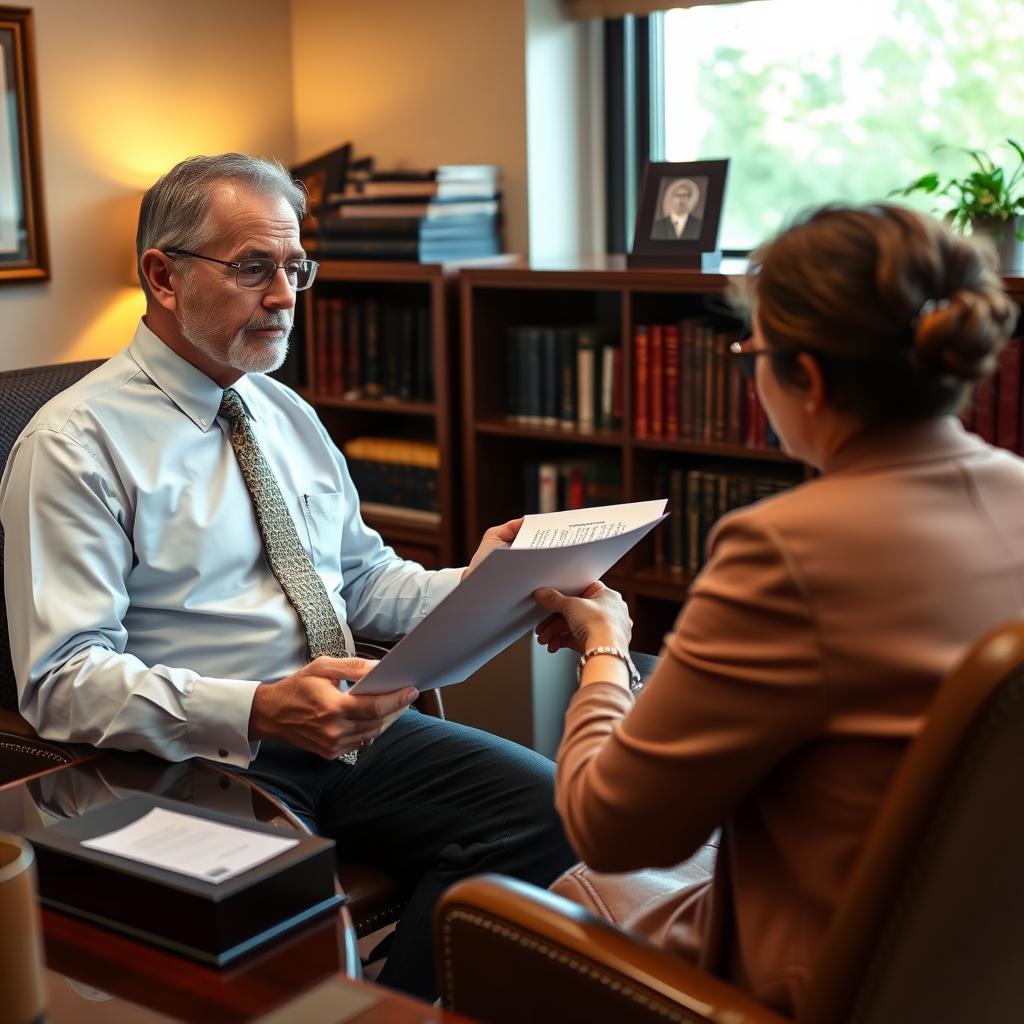
Permanent Alimony Lawyer Chesterfield County, VA
In Chesterfield County, Virginia, questions of spousal support after divorce often center on whether an award should be permanent. Permanent alimony—support paid indefinitely from one former spouse to the other—is not automatic. Virginia law authorizes it only in limited circumstances, and the outcome of any alimony dispute depends heavily on the facts of the marriage, the financial circumstances of each party, and how the statutory factors apply to those facts. Mr. Sris and his Of Counsel at Law Offices Of SRIS, P.C. represent individuals on both sides of permanent alimony claims. Whether you are seeking support or are the party who may be asked to pay, understanding the legal framework under Va. Code § 20‑107.1 and the practical realities of litigating in Chesterfield County courts is essential. For a consultation about your situation, reach Law Offices Of SRIS, P.C. at (888) 437‑7747.
Law Offices Of SRIS, P.C. – Advocacy Without Borders.
What Permanent Alimony Means in Chesterfield County, Virginia
Permanent alimony—sometimes called indefinite spousal support—is one of several forms of support a Virginia court may award when a marriage ends. Unlike temporary support that is ordered while a divorce is pending, or rehabilitative support designed to help a spouse become self-supporting within a set time, permanent support continues without a fixed termination date. It is not meant to be a lifetime pension; it can be modified or terminated if the recipient’s circumstances change or if the recipient remarries. In Chesterfield County, all alimony matters connected to a divorce are heard in the Chesterfield County Circuit Court. Standalone support or enforcement actions may be brought in the Chesterfield County Juvenile and Domestic Relations District Court, depending on the posture of the case.
Virginia Code § 20‑107.1 requires the court to consider thirteen factors when deciding whether to award support, the amount, and the duration. These include the length of the marriage, the standard of living established during the marriage, the age and physical and mental condition of each spouse, the financial resources and earning capacities of each, and the contributions each spouse made to the family’s well-being. Courts in the Twelfth Judicial District, which includes Chesterfield County, also weigh fault where it is relevant, though permanent alimony claims most often turn on need and ability to pay rather than marital misconduct alone.
Virginia law sets out the criteria for spousal support in Va. Code § 20‑107.1, including the length of the marriage, the standard of living, the financial resources and obligations of each party, and the contributions each made to the family.
Source: Va. Code § 20‑107.1. Va. Code § 20‑107.1
Reviewed by Mr. Sris, admitted in VA/MD/DC/NJ/NY.
Property distributions under Virginia’s equitable distribution statute, Va. Code § 20‑107.3, can also affect the alimony analysis. A spouse who receives a larger share of marital assets may have a reduced need for support, while a spouse who keeps a small share may be better positioned to argue for permanent support. Because these issues are interconnected, it is important to approach alimony and property division together when negotiating a separation agreement or preparing for trial.
How Mr. Sris and His Of Counsel Handle Permanent Alimony Cases
Every permanent alimony case begins with a careful review of the complete financial picture. Mr. Sris and his Of Counsel gather information about the income, earning potential, and expenses of both parties; they examine the duration of the marriage and the roles each spouse played during it; and they identify the specific facts that align with the statutory factors. This preparation allows the firm to present a focused argument—whether the goal is to secure support or to resist a claim that is not justified by the evidence.
When the other side disputes the need for permanent support or the ability to pay, Mr. Sris and his Of Counsel use the discovery process to test the other party’s financial disclosures. In Chesterfield County Circuit Court, counsel may also raise threshold questions of jurisdiction and venue, and where appropriate, seek pendente lite support under Va. Code § 20‑103 while a case is pending. The firm’s approach emphasizes thorough preparation and clear presentation, with the understanding that each case is unique and the outcome always depends on the facts and the court’s exercise of its discretion.
Where a separation agreement resolves alimony, the firm drafts or reviews the agreement to ensure it is clear, enforceable, and conforms to Virginia law. If circumstances later change—for example, a substantial change in the payer’s income or the recipient’s remarriage—the firm also handles modification and contempt proceedings. Because permanent alimony by its nature extends over a long period, these later issues are as important as the initial decree.
About Mr. Sris and His Of Counsel Team
Law Offices Of SRIS, P.C. was founded by Mr. Sris in 1997. Mr. Sris, Owner and Founder, is a former prosecutor whose experience in the courtroom informs the firm’s approach to every family law matter. He and his Of Counsel team bring extensive combined legal experience to alimony, equitable distribution, and all aspects of Virginia family law. Our Richmond location serves clients throughout Chesterfield County, including the communities of Midlothian, Chester, Colonial Heights, Bon Air, Brandermill, and Moseley. The firm practices in Virginia, Maryland, the District of Columbia, New Jersey, and New York.
Every non-Sris attorney in the firm serves as Of Counsel. The firm’s structure means that Mr. Sris and his Of Counsel collaborate on the strategy and preparation of each case, drawing on the full depth of the team’s knowledge. For a consultation about a permanent alimony matter in Chesterfield County, reach Law Offices Of SRIS, P.C. at (888) 437‑7747. Our Richmond location is at 7400 Beaufont Springs Drive, Suite 300, Room 395, Richmond, VA 23225; meetings are by appointment.
Frequently Asked Questions
What is permanent alimony in Virginia?
Permanent alimony, also called indefinite spousal support, is ongoing financial support from one former spouse to another without a predetermined end date, awarded in cases where one spouse cannot become self-supporting due to factors such as age, health, or a long absence from the workforce. The court applies the thirteen factors in Va. Code § 20‑107.1 to decide whether permanent support is appropriate. Even after a permanent award, the court retains authority to modify the order if circumstances substantially change. For guidance about your specific situation, reach Law Offices Of SRIS, P.C. at (888) 437‑7747.
How do Virginia courts decide between rehabilitative and permanent alimony?
The court examines the spouse’s ability to become self-sufficient within a reasonable time by considering the length of the marriage, the spouse’s education and work history, and any health barriers to employment. If vocational training, education, or time will allow the spouse to support themselves, rehabilitative support is more likely. Only when self-sufficiency is not realistically attainable does permanent support become a primary consideration. Each case turns on its facts, so a careful analysis of the particular circumstances is critical.
Can a permanent alimony award be modified or terminated later?
Yes, Virginia law allows modification of spousal support, including permanent awards, when there is a material change in circumstances that was not anticipated at the time of the original order. Common grounds for modification include a significant increase or decrease in either party’s income, the recipient’s remarriage, or cohabitation in a relationship analogous to marriage. The court will review the current financial situation to determine whether the existing support amount should continue, be reduced, or be eliminated.
Do I need a lawyer for a permanent alimony case in Chesterfield County?
While you are not required by law to have a lawyer, a permanent alimony dispute involves complex financial issues and statutory factors that make legal representation strongly advisable. An experienced attorney can help you present the evidence the court will consider, including income documentation, expert testimony about earning capacity, and the history of the marriage. Because the outcome can affect finances for years, having counsel who understands the procedures of the Chesterfield County Circuit Court and the expectations of the local bench is an important asset. For a consultation, reach Mr. Sris and his Of Counsel at (888) 437‑7747.
Related Family Law Services
Family Law Lawyer in Henrico County, VA ·
Family Law Lawyer in Hanover County, VA ·
Family Law Lawyer in Fairfax County, VA
Virginia Primary Sources
Virginia Code, Title 20 — Domestic Relations ·
Chesterfield County Circuit Court ·
Virginia Courts
Attorney advertising. Prior results do not guarantee a similar outcome. Case results depend on a variety of factors unique to each case. Results may vary.
Our Richmond location serves Chesterfield County: 7400 Beaufont Springs Drive, Suite 300, Room 395, Richmond, VA 23225. By appointment. Call (888) 437‑7747.