
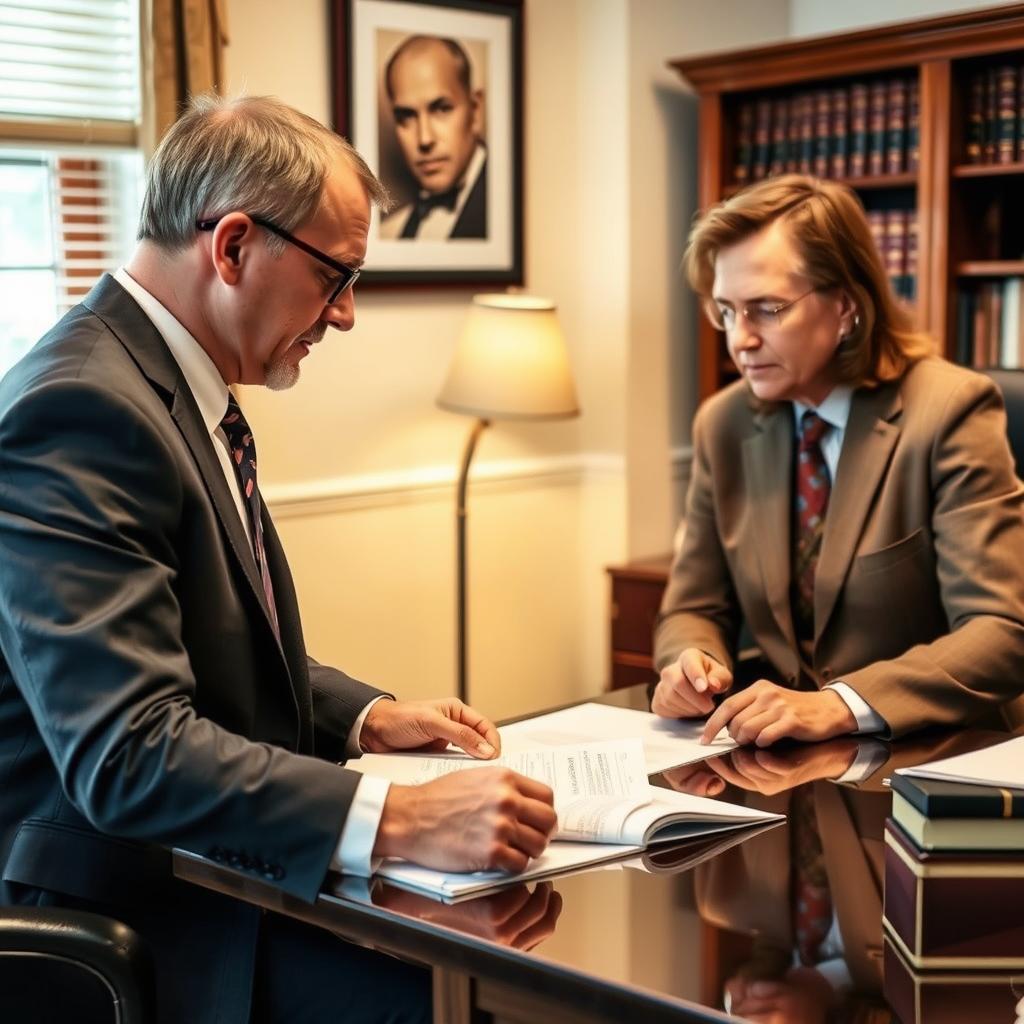
Norfolk Military Divorce Lawyer Rappahannock County, VA
You are an active‑duty service member stationed at Naval Station Norfolk. Your spouse lives in Rappahannock County, Virginia, and has just filed for divorce. You worry about your career, your pension, and how a divorce will affect your children and your military benefits. A military divorce that crosses county lines in Virginia adds layers of jurisdiction, service‑members’ protections, and equitable‑distribution rules that are different from a civilian divorce. Mr. Sris and his Of Counsel team at Law Offices Of SRIS, P.C. understand both the military side and the Virginia family‑law system—including the courts that serve Rappahannock County. For a confidential consultation, call (888) 437-7747. Law Offices Of SRIS, P.C. – Advocacy Without Borders.
Client Story: A Service Member’s Divorce in Rappahannock County
An E‑6 stationed at Naval Station Norfolk learned that his wife had filed a Complaint for divorce in Rappahannock County Circuit Court. He had been serving overseas when the papers were served. He needed immediate guidance on how the Servicemembers Civil Relief Act (SCRA) could pause the proceedings and on whether Virginia had jurisdiction over him when he was not physically present in the county. Mr. Sris and his Of Counsel stepped in, ensured the SCRA protections were asserted, and worked to stabilize temporary custody and support issues while he prepared for a contested equitable‑distribution case that would include his military retirement. Because the firm serves clients across Northern Virginia from its Fairfax location, our attorneys are familiar with the judges, the local rules, and the practical realities of Rappahannock County courts.
Strategy Options for a Norfolk‑Connected Military Divorce
Each military divorce requires a strategy that addresses three distinct layers: the Virginia domestic‑relations statutes, the federal military‑specific laws, and the local court preferences in the county where the case is filed. Mr. Sris and his Of Counsel build a plan that may include the following.
Jurisdiction and SCRA protections. A Virginia court can hear a divorce if one spouse meets the six‑month residency requirement. For a service member, the SCRA allows a stay of proceedings when military duty materially affects the ability to participate. We evaluate whether a stay is appropriate and, if not, we prepare to litigate on the merits while the client is away on deployment.
Equitable distribution of military assets. Virginia is an equitable distribution state. The court classifies property as separate, marital, or hybrid and then divides it fairly—not necessarily equally—under the eleven factors in Va. Code § 20‑107.3. Military retired pay is marital property to the extent it accrued during the marriage, and division is governed by the Uniformed Services Former Spouses’ Protection Act (USFSPA). We work with financial professionals to trace the marital share so that no asset is overlooked.
Custody and support. Child custody determinations follow the trusted‑interest factors in Va. Code § 20‑124.3. Temporary support often becomes urgent when a service member’s BAH or other allowances are involved. We pursue pendente lite orders that keep the family stable while the divorce is pending.
What to Expect in Rappahannock County Courts
Rappahannock County is part of the Twentieth Judicial District. Family law matters are split between two courts: the Rappahannock County Juvenile and Domestic Relations District Court handles custody, visitation, child support, and protective orders; the Rappahannock County Circuit Court at 250 Gay Street, Suite 1, Washington, VA 22747 has exclusive jurisdiction over divorce and equitable distribution. Because the county is rural and the court calendar is shared with neighboring jurisdictions, the pace of litigation is set by the judge’s docket. Uncontested divorces with a signed separation agreement typically resolve efficiently. Contested divorces involving custody, support, and property disputes take longer—the timeline varies by case complexity and court scheduling.
Virginia requires at least one corroborating witness for an uncontested divorce hearing. A property settlement agreement that resolves all issues can avoid a trial altogether. Mediation is available but not mandatory. Throughout the process, Mr. Sris and his Of Counsel appear in the Rappahannock County courts, manage discovery, and advocate at every hearing.
Penalty Overview: What Is at Stake in a Military Divorce
A military divorce does not carry criminal penalties, but the financial and personal consequences can reshape a service member’s future. The division of military retired pay—whether through a direct payment from the Defense Finance and Accounting Service under the USFSPA or a lump‑sum award—can reduce retirement income for decades. A former spouse may also be entitled to continued medical coverage under TRICARE if certain conditions are met. Spousal support is determined under the 13 factors in Va. Code § 20‑107.1 and can be awarded for a defined or indefinite duration. An unfavorable custody determination can limit parenting time and, in some cases, affect a service member’s family‑care plan. No lawyer can guarantee an outcome, but thorough preparation and a clear understanding of the intersecting state and federal rules help protect what matters most.
About Mr. Sris and His Of Counsel Team
Mr. Sris, Owner and Founder of Law Offices Of SRIS, P.C., has been practicing since 1997. He is a former prosecutor who brings trial experience to family‑law litigation. He is admitted in Virginia, Maryland, the District of Columbia, New Jersey, and New York. Mr. Sris testified before the Virginia House Courts of Justice Committee in support of 2019 HB 635 (chief patron Del. David Bulova), a bill that revised the equitable‑distribution statute. He keeps his personal caseload manageable so he can remain closely involved in complex family law matters.
Mr. Sris’s Of Counsel team includes attorneys with backgrounds in litigation, law enforcement, and child welfare investigations. Together, they have documented 4,739+ case results across all practice areas since 1997. Results may vary. Every case is handled with the attention required by Virginia’s statutory framework and the unique challenges of military divorce.
Frequently Asked Questions
Can a service member stationed in Norfolk be required to appear in Rappahannock County for a divorce?
Yes, if the spouse filing for divorce meets Virginia’s six‑month residency requirement. The case is venued in the county where the filing spouse resides. A service member may invoke the Servicemembers Civil Relief Act to request a stay of proceedings when military duties prevent participation. If a stay is not granted, the court may allow telephonic or video appearances in appropriate circumstances. Our attorneys coordinate with commanding officers and the court to protect the service member’s rights while meeting court obligations.
How is military retired pay divided in a Virginia divorce?
Military retired pay is treated as marital property to the extent it was earned during the marriage. Under the USFSPA, a state court may divide disposable retired pay according to its own equitable‑distribution law. Virginia applies the eleven factors in Va. Code § 20‑107.3 to determine a fair division. A domestic relations order or a military‑qualifying court order is then submitted to the Defense Finance and Accounting Service to implement the division. Our firm works with financial attorneys to calculate the marital share accurately.
Does the SCRA protect a service member from a default judgment in Rappahannock County?
The SCRA requires the court to pause proceedings if the service member’s military duties materially affect the ability to defend. If a defendant does not appear and the court is aware of military status, the judge must appoint an attorney before entering a default judgment. We act quickly to file the necessary notice and secure a stay, ensuring that the service member is not prejudiced by deployment or training obligations.
What happens to child custody when one parent is deployed?
Virginia courts prioritize the best interests of the child under Va. Code § 20‑124.3, and deployment alone does not strip a parent of custody rights. The court may enter a temporary custody order that preserves the relationship, and Virginia law provides for expedited hearings upon the service member’s return. A family‑care plan is often a crucial piece of evidence. We help structure parenting plans that accommodate military service and protect the parent‑child bond.
Can a divorce be finalized while one spouse is on active duty?
Yes, if the active‑duty spouse voluntarily participates or after the stay period under the SCRA expires. The court will not force a divorce to trial while a valid SCRA stay is in effect, but many service members choose to proceed with an agreed resolution to bring certainty to their family. Our firm works toward a settlement when possible and litigates when necessary, always ensuring the service member’s legal protections are not waived inadvertently.
What are the grounds for divorce in Virginia, and how do they apply to a military couple?
Virginia allows both no‑fault and fault‑based grounds under Va. Code § 20‑91. No‑fault divorce may be based on a six‑month separation if there are no minor children and the parties have a signed separation agreement, or a one‑year separation otherwise. Fault grounds—such as adultery, cruelty, or desertion—are also available. For military couples, separation often begins on different dates depending on deployment; careful documentation of the separation start date is essential. Our attorneys guide clients through the appropriate ground based on the facts of the case.
For a full statutory breakdown, see our comprehensive analysis on the firm’s main site.
Primary legal sources: Virginia Code Title 20 (Domestic Relations) and Rappahannock County Circuit Court.
Request a Consultation
To discuss your military divorce matter, contact Mr. Sris and his Of Counsel at Law Offices Of SRIS, P.C. Call (888) 437-7747 or reach our Fairfax location at 4008 Williamsburg Court, Fairfax, VA 22032. Appointments are by appointment only; phones are answered 24 hours a day.
Attorney advertising. Prior results do not guarantee a similar outcome. Case results depend on a variety of factors unique to each case. Results may vary.