
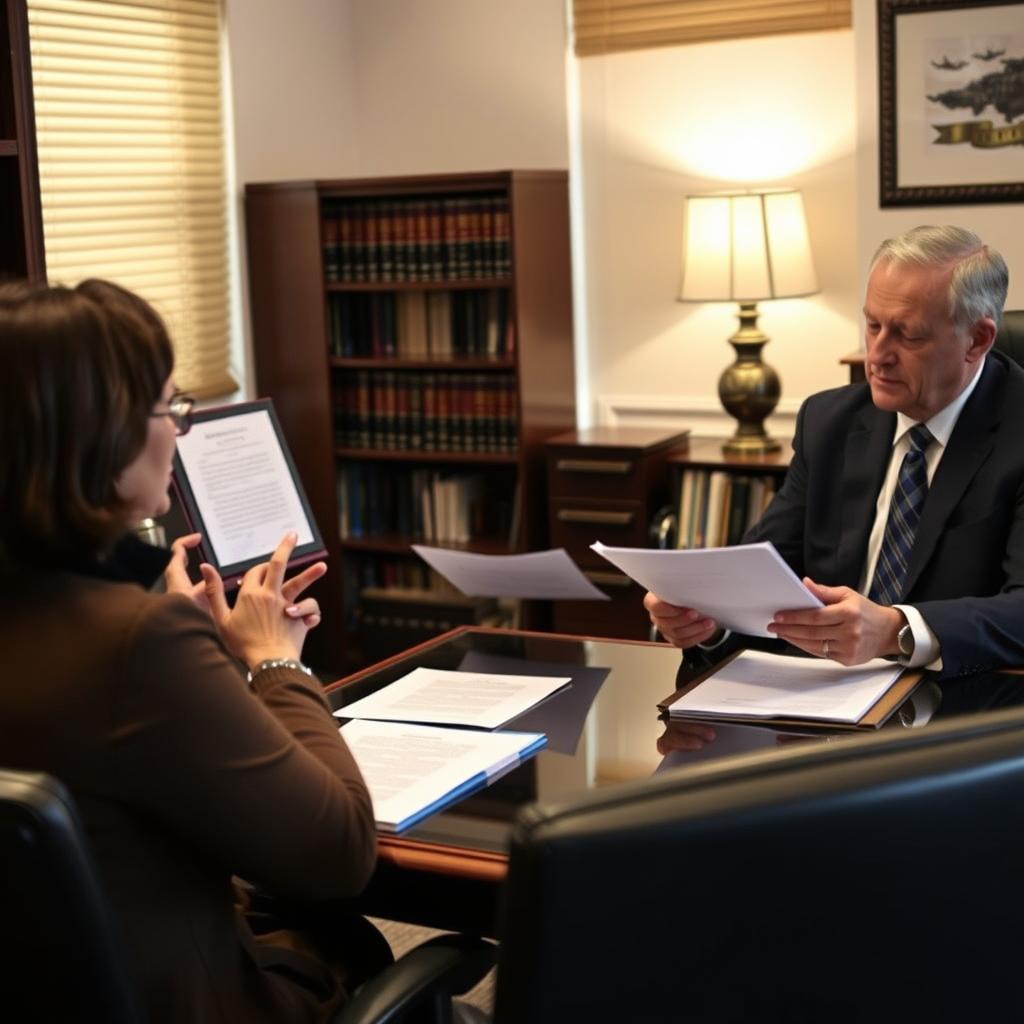
Norfolk Military Divorce Lawyer Prince George County
You need a Norfolk Military Divorce Lawyer Prince George County for cases involving service members stationed at Fort Gregg-Adams. Military divorces in Prince George County require strict adherence to the Servicemembers Civil Relief Act and Virginia Code. Law Offices Of SRIS, P.C. —Advocacy Without Borders. handles the division of military pensions, child support with BAH, and custody across deployments. (Confirmed by SRIS, P.C.)
Statutory Definition of Military Divorce in Virginia
Virginia military divorce is governed by Virginia Code § 20-91 and the federal Servicemembers Civil Relief Act (SCRA). The SCRA provides specific protections for active-duty service members facing civil proceedings, including divorce. This law can delay court proceedings if military duty prevents a service member from participating. Virginia courts in Prince George County must comply with these federal requirements. The local court applies Virginia’s equitable distribution laws to military pensions and assets. Jurisdiction over a service member is established through legal residence or domicile in Virginia.
A Norfolk Military Divorce Lawyer Prince George County understands these intersecting laws. The primary issue is often establishing proper jurisdiction for the Virginia court. A service member’s legal residence, or domicile, must be in Virginia for the state to have authority. This is distinct from simply being stationed at Fort Gregg-Adams. Filing in the wrong court leads to dismissal of the case. We verify domicile through voter registration, driver’s licenses, and tax filings. Proper filing avoids wasted time and resources for military families.
How is a military pension divided in a Virginia divorce?
The Uniformed Services Former Spouses’ Protection Act (USFSPA) allows state courts to treat military retired pay as marital property. Virginia courts can divide the pension as part of equitable distribution. The court uses a formula based on the length of the marriage overlapping with military service. This is known as the “coverture fraction.” A direct payment from the Defense Finance and Accounting Service (DFAS) may be ordered. This requires a court order meeting specific DFAS requirements. An experienced Virginia family law attorney ensures the order is enforceable.
What is the residency requirement for filing in Prince George County?
At least one party must be a bona fide resident of Virginia for six months before filing. For military personnel, this means establishing domicile, not just a duty station. The filing occurs in the county or city where the plaintiff resides. If the plaintiff is the service member, their Virginia domicile must be proven. If the plaintiff is the spouse, they must meet the six-month Virginia residency rule. The Prince George County Juvenile and Domestic Relations District Court handles these filings. Procedural specifics for Prince George County are reviewed during a Consultation by appointment at our Prince George County Location.
How does the SCRA affect divorce timelines?
The Servicemembers Civil Relief Act allows active-duty members to request a stay of proceedings. This stay can delay the divorce case for up to 90 days. The court may grant additional delays if military service continues to prevent participation. This protection prevents default judgments against deployed service members. The spouse filing for divorce must provide accurate military address information. The court cannot enter a default without complying with SCRA affidavit requirements. A military spouse divorce lawyer Prince George County handles these mandatory delays.
The Insider Procedural Edge in Prince George County
The Prince George County Juvenile and Domestic Relations District Court at 6600 Courthouse Road handles military divorce filings. This court manages all family law matters including custody, support, and divorce. The clerk’s Location requires specific military affidavits with initial filings. You must file a completed Complaint for Divorce and a Military Affidavit. The affidavit confirms the service member’s active-duty status or lack thereof. Filing fees are set by Virginia statute and are subject to change. Procedural specifics for Prince George County are reviewed during a Consultation by appointment at our Prince George County Location.
The court’s docket moves deliberately, especially with complex military asset division. Judges here are familiar with Fort Gregg-Adams and the transient nature of military life. They expect precise documentation of income, including Base Pay, BAH, and BAS. Child support calculations must use the Virginia guidelines incorporating military allowances. Temporary orders for support during lengthy deployments are common. Local rules may require mediation before a final hearing on contested issues. A service member divorce lawyer Prince George County prepares for these local expectations.
What is the address for the Prince George County divorce court?
The court is located at 6600 Courthouse Road, Prince George, VA 23875. This is the Prince George County Juvenile and Domestic Relations District Court. All initial divorce complaints for county residents are filed here. The clerk’s Location can provide current forms and fee schedules. The court shares a building with other county Locations. Parking is available on-site. The building is accessible for individuals with disabilities.
How long does a military divorce take in this county?
An uncontested military divorce typically takes a minimum of six to eight months. The one-year separation period is a mandatory Virginia requirement. Contested cases, especially those involving pension division, take significantly longer. DFAS review of a pension division order adds 60-90 days to the timeline. SCRA stays for active-duty members can add further months. The local court’s scheduling backlog also impacts the final hearing date. A Norfolk Military Divorce Lawyer Prince George County provides realistic timelines.
What are the court filing fees?
Filing fees in Virginia circuit courts are approximately $100 to $200. The exact fee for a Complaint for Divorce is set by the state. Additional fees apply for serving documents and filing financial statements. There may be a separate fee for filing a Qualified Domestic Relations Order (QDRO) for the pension. Fee waivers are available for qualifying low-income individuals. Military pay alone does not automatically qualify for a waiver. The current fee schedule is obtained from the Prince George County court clerk.
Penalties, Outcomes, and Defense Strategies
The most common financial outcome is an equitable division of marital assets and debts. Virginia is an equitable distribution state, not a community property state. This means the court divides assets fairly, but not necessarily equally. The division of a military pension is often the most valuable asset. The court also addresses spousal support, child support, and attorney’s fees. Failure to comply with court orders results in contempt penalties. These can include fines, wage garnishment, and even jail time.
| Offense / Issue | Potential Penalty / Outcome | Notes |
|---|---|---|
| Failure to Pay Child Support | Contempt of Court, License Suspension, Wage Garnishment, Jail | Military pay is subject to garnishment for family support. |
| Violation of Custody Order | Contempt, Modification of Custody, Make-Up Parenting Time | Courts consider military deployment schedules. |
| Non-Disclosure of Assets | Reopening of Case, Attorney’s Fees Awarded to Other Side, Sanctions | Full disclosure of TSP, SDP, and other military benefits is required. |
| Default Judgment (SCRA Violation) | Judgment Set Aside, Case Reopened, Possible Sanctions Against Filing Spouse | Proper SCRA affidavits must be filed to avoid this. |
[Insider Insight] Prince George County prosecutors and judges prioritize stable arrangements for children of service members. They look for parenting plans that account for potential PCS moves and deployments. Proposals that show foresight regarding military obligations receive more favorable consideration. Judges here have experience with the unique pressures on military families. They expect both parties to act in good faith when dividing a service member’s career assets. A service member divorce lawyer Prince George County crafts proposals that align with this local judicial temperament.
How is child support calculated with military pay?
Virginia child support guidelines include all military pay and allowances. Base Pay, BAH, BAS, and other special pays are considered gross income. BAH is included if the service member lives off-base. The guidelines apply the same percentage shares to this total income. Support continues even during deployments, though the amount may be reviewed. The obligor parent’s income is the primary factor in the calculation. A criminal defense representation firm does not handle these support calculations.
Can a military parent lose custody due to deployment?
Deployment alone cannot be the sole reason for a loss of custody. Virginia law recognizes the unique situation of military parents. The court must consider a proposed family care plan during deployment. Custody orders often include specific provisions for deployment and reintegration. The non-deploying parent typically receives expanded parenting time during deployment. The court’s goal is to maintain the child’s relationship with both parents. Long-term custody is based on the child’s best interests, not military service.
What are the defenses against unfair asset division?
The primary defense is proving certain assets are separate property, not marital. Separate property includes assets acquired before marriage or via inheritance. The increase in value of a military pension during marriage is marital property. Tracing contributions to the Thrift Savings Plan (TSP) is critical. Another defense is demonstrating the other spouse’s wasteful dissipation of assets. The court considers each party’s monetary and non-monetary contributions to the marriage. A skilled attorney presents clear evidence to support an equitable share.
Why Hire SRIS, P.C. for Your Military Divorce
Bryan Block, a former Virginia State Trooper, leads our military family law practice. His background provides insight into the structured, disciplined world of military service. He understands chain of command issues and the importance of proper documentation. Mr. Block has represented numerous service members from Fort Gregg-Adams in Prince George County courts. He focuses on protecting pension entitlements and crafting enforceable custody orders. His approach is direct and strategic, avoiding unnecessary conflict. You can learn more about his background on our experienced legal team page.
Primary Attorney: Bryan Block
Credentials: Former Virginia State Trooper, extensive experience with military clients.
Practice Focus: Military divorce, pension division, SCRA compliance, and interstate custody.
Local Results: SRIS, P.C. has achieved favorable outcomes for service members in Prince George County.
SRIS, P.C.—Advocacy Without Borders. has a dedicated team for complex family law. We handle the precise drafting of military pension division orders. Our attorneys ensure compliance with both Virginia law and DFAS regulations. We manage cases where one spouse is stationed overseas or facing deployment. Our Prince George County Location is strategically positioned to serve Fort Gregg-Adams families. We prepare for court with the same diligence required in military operations. Our goal is a resolution that provides stability during and after the divorce process.
Localized FAQs for Military Divorce in Prince George County
Which court handles military divorce in Prince George County?
The Prince George County Juvenile and Domestic Relations District Court handles divorce filings. The address is 6600 Courthouse Road. This court also manages related custody and support orders for military families.
How is BAH handled in a divorce and for child support?
BAH is considered income for child support calculations if the service member lives off-base. In the divorce, BAH is part of the total military pay subject to equitable distribution by the court.
Can I get a divorce in Virginia if my spouse is deployed?
Yes, but the Servicemembers Civil Relief Act (SCRA) applies. The deployed spouse can request a stay of proceedings. The court cannot enter a default judgment without complying with SCRA rules.
What is a Qualified Domestic Relations Order (QDRO) for a military pension?
A QDRO is a court order that directs DFAS to pay a portion of a military pension to the former spouse. It must meet strict federal and DFAS formatting requirements to be enforceable.
How does a PCS move affect my custody order?
A Permanent Change of Station (PCS) move requires a modification of the custody or visitation order. The court will modify the schedule based on the child’s best interests and the new location.
Proximity, Contact, and Critical Disclaimer
Our Prince George County Location serves clients throughout the county and near Fort Gregg-Adams. We are accessible to military families facing the complex process of divorce. Consultation by appointment. Call 888-437-7747. 24/7. Our legal team is ready to discuss your case. We handle military divorce, pension division, and all related family law matters. For issues like DUI defense in Virginia, a different practice group within our firm provides assistance.
Law Offices Of SRIS, P.C.—Advocacy Without Borders.
Prince George County Location
Phone: 888-437-7747
Past results do not predict future outcomes.