
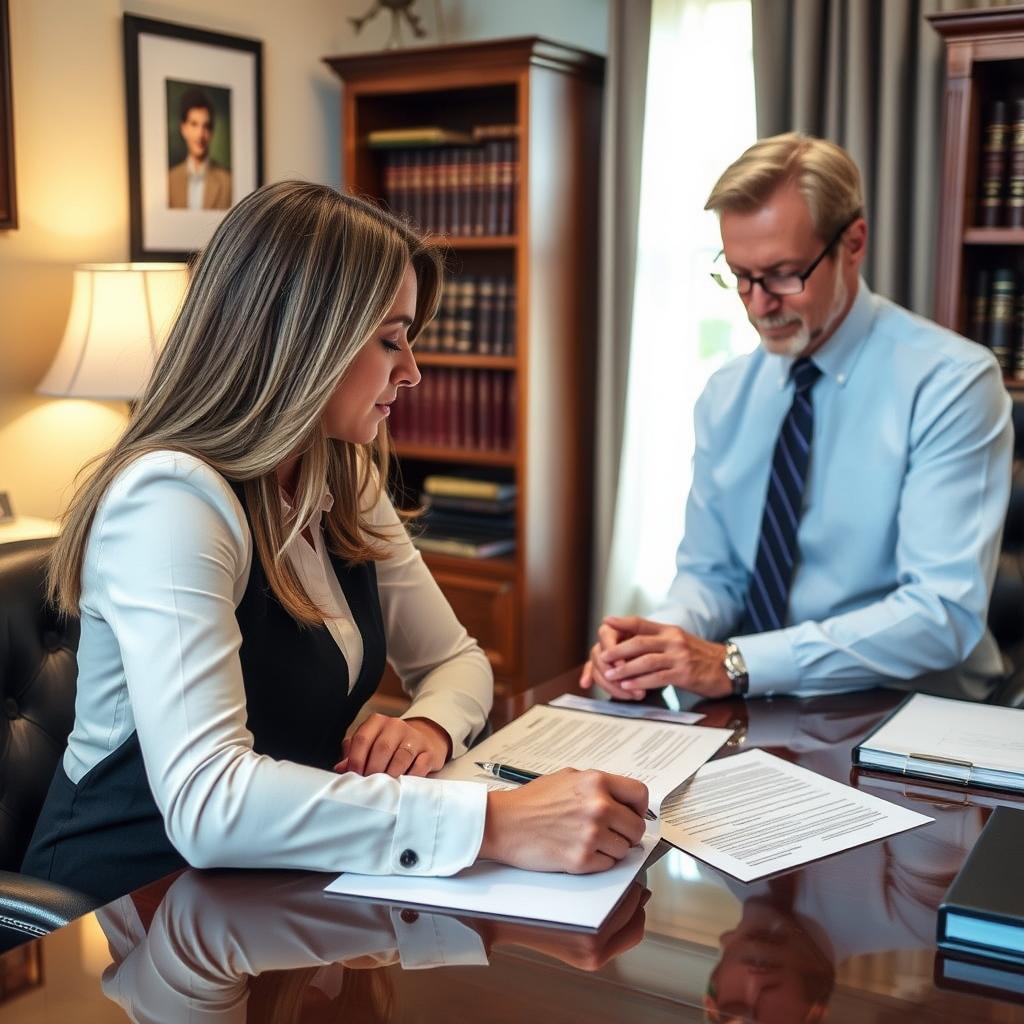
Marital Settlement Agreement Lawyer Rappahannock County
A Marital Settlement Agreement Lawyer Rappahannock County drafts and enforces the binding contract that divides assets and sets support terms in a Virginia divorce. Law Offices Of SRIS, P.C.—Advocacy Without Borders. Our Rappahannock County attorneys ensure your agreement withstands court scrutiny and protects your financial future. We handle property division, spousal support, and debt allocation under Virginia law. (Confirmed by SRIS, P.C.)
Statutory Definition of a Marital Settlement Agreement in Virginia
A Marital Settlement Agreement (MSA) in Virginia is governed by statute as a contract for the settlement of marital rights. The primary code is Va. Code § 20-109.1, which establishes the framework for incorporating such agreements into a final divorce decree. Once ratified by the court, the agreement’s terms regarding property, debt, and support become enforceable court orders, not merely private promises. This legal transformation is critical for enforcement through contempt powers. The statute provides the mechanism for the court to affirm the parties’ negotiated terms, making the MSA a cornerstone of uncontested divorce proceedings in Rappahannock County. Understanding this statutory basis is the first step in drafting an effective document.
Va. Code § 20-109.1 — Contractual Enforcement — Incorporation into Decree. This statute authorizes the circuit court to affirm, ratify, and incorporate by reference a marital settlement agreement into a final decree of divorce. Upon incorporation, the agreement’s provisions for spousal support, property division, and debt payment become orders of the court. This allows for enforcement through the court’s contempt powers if a party violates the terms. The agreement itself must meet Virginia contract law requirements to be valid and enforceable prior to court approval.
What specific terms must a Rappahannock County MSA address?
An MSA in Rappahannock County must explicitly address the division of all marital property and debts. Virginia is an equitable distribution state, meaning the court divides assets fairly, not necessarily equally. Your agreement must list all real estate, bank accounts, retirement accounts, vehicles, and personal property. It must assign each asset and liability to a specific spouse. The agreement must also detail any spousal support arrangements, including amount, duration, and payment method. Failing to address a major asset can lead to the agreement being set aside, requiring costly litigation to resolve.
How does Virginia law classify separate versus marital property?
Virginia law classifies property as either marital, separate, or hybrid. Marital property includes all assets and debts acquired from the date of marriage until the date of separation, with limited exceptions. Separate property is assets owned prior to marriage or received by gift or inheritance during the marriage. A Marital Settlement Agreement Lawyer Rappahannock County must correctly trace and characterize each asset. Misclassification can invalidate property division terms. The agreement should include clauses affirming each party’s understanding of these classifications to prevent future challenges.
Can child custody and support be included in a Virginia MSA?
Child custody, visitation, and support can be included in a Virginia MSA, but they are treated differently than financial terms. While the court will consider the parents’ agreement, the judge must always approve child-related provisions based on the child’s best interests. The agreement cannot bargain away a child’s right to support. Child support amounts must comply with Virginia guidelines. The court retains ongoing jurisdiction to modify child custody and support orders as circumstances change, even if they were originally established by agreement. Learn more about Virginia legal services.
The Insider Procedural Edge in Rappahannock County Circuit Court
The Rappahannock County Circuit Court is located at 247 Gay Street, Washington, VA 22747. This court handles all divorce and marital settlement agreement filings for the county. Procedural knowledge here is not optional; it is essential for a smooth ratification. The clerks expect precise formatting and complete documentation. Local rules may dictate specific procedures for submitting proposed orders alongside your agreement. Knowing the preferences of the presiding judge can prevent unnecessary delays in getting your decree entered. Filing fees are set by the state and are subject to change; current fees should be verified directly with the court clerk. The timeline from filing to final decree in an uncontested matter can vary based on the court’s docket.
What is the filing fee for a divorce with an MSA in Rappahannock County?
The filing fee for initiating a divorce suit in Rappahannock County Circuit Court is set by Virginia statute. This fee covers the initial filing and basic service of process. Additional costs may include fees for filing the final decree, court reporter services if a hearing is required, and fees for certifying copies. Procedural specifics for Rappahannock County are reviewed during a Consultation by appointment at our Virginia Location. Your attorney will provide a complete cost breakdown based on your case’s requirements.
How long does it take to finalize a divorce with an MSA locally?
The timeline to finalize a divorce with an MSA in Rappahannock County depends on court scheduling and procedural compliance. Virginia has a statutory waiting period. For a divorce based on separation, you must be separated for at least one year if there are minor children. The period is six months if there are no minor children and you have a signed separation agreement. Once the waiting period is met and paperwork is filed, an uncontested case can be finalized relatively quickly if the paperwork is in perfect order. Delays occur from incomplete filings or court backlogs.
What local court rules impact MSA submission and approval?
Local court rules in Rappahannock County require specific formatting for all pleadings and orders. The proposed final decree incorporating the MSA must reference the agreement exhibit correctly. Some judges require the parties to appear briefly for a proffer hearing, even in uncontested cases. Others may approve the decree based on the paperwork alone. Submitting documents that do not comply with local formatting rules will result in rejection by the clerk’s Location, causing significant delays. A Marital Settlement Agreement Lawyer Rappahannock County knows these unwritten requirements. Learn more about criminal defense representation.
Penalties for Violation and Defense of Your Agreement
The most common penalty for violating a court-incorporated MSA is a contempt of court finding. Violating a spousal support or property division order is not a breach of contract; it is disobedience of a court order. The court can impose coercive fines or jail time to compel compliance. For unpaid support, the court can order wage garnishment, seizure of tax refunds, and suspension of driver’s and professional licenses. The defending party must show a clear inability to pay or a mutual agreement to modify terms. Defenses are narrow once the agreement is an order of the court.
| Offense | Penalty | Notes |
|---|---|---|
| Failure to Pay Spousal Support | Contempt; Fines; Jail up to 12 months; Wage Garnishment | Enforced under Va. Code § 20-115. License suspension is common. |
| Failure to Transfer Property | Contempt; Fines; Court-Ordered Transfer | The court can sign a deed on the non-compliant party’s behalf. |
| Failure to Pay Marital Debts | Contempt; Fines; Judgment to Creditor | Creditor can sue either party; the complying party can seek indemnification. |
| Violation of Non-Financial Terms (e.g., insurance) | Contempt; Fines; Specific Performance | Court orders the action to be taken. |
[Insider Insight] Rappahannock County judges expect strict adherence to court-ordered agreements. Prosecutors and judges in this jurisdiction view an incorporated MSA as a fundamental court order. They are generally unsympathetic to claims of misunderstanding or minor hardship after the fact. The court’s primary goal is to enforce the clear terms to which both parties agreed. Presenting a well-drafted, unambiguous agreement at the outset is the strongest defense against future enforcement problems.
What happens if my ex-spouse hides assets after signing the MSA?
If an ex-spouse hides assets after signing the MSA, you can file a motion to set aside the agreement due to fraud. Virginia law allows for the rescission of contracts, including MSAs, based on fraud in the inducement. You must prove the other party knowingly concealed a material asset, and you relied on that misrepresentation. The burden of proof is high. The court may reopen the property division, award you the asset, and order the other party to pay your attorney’s fees for the enforcement action.
Can spousal support terms in an MSA be modified later?
Spousal support terms in an MSA can be modified only if the agreement specifically allows for modification or if it was not incorporated into the divorce decree. If the support terms are incorporated as a court order, modification is governed by Va. Code § 20-109. The party seeking modification must prove a material change in circumstances, such as job loss or serious illness. If the agreement states support is “non-modifiable,” Virginia courts will generally enforce that clause, making the original terms permanent. Learn more about DUI defense services.
What are the defenses against an MSA enforcement action?
Defenses against an MSA enforcement action are limited to fraud, duress, or lack of capacity. You must prove you signed the agreement under a direct threat of harm or while mentally incompetent. Mere regret or a bad bargain is not a defense. A claim of unfairness is also insufficient unless the terms are so one-sided as to shock the conscience. The defense must be proven with clear and convincing evidence, which is a high legal standard.
Why Hire SRIS, P.C. for Your Rappahannock County Marital Settlement
SRIS, P.C. provides focused legal representation for marital settlement agreements in Rappahannock County. Our team understands the local court’s expectations for documentation and procedure. We draft agreements with precision to avoid future ambiguity and conflict. Our goal is to create a durable document that protects your interests and achieves a clean resolution. We guide you through the entire process, from negotiation to final court ratification.
Attorney Background: Our Virginia family law attorneys bring direct experience in Rappahannock County Circuit Court. We have successfully presented and ratified numerous marital settlement agreements for clients in the county. Our approach is practical and results-oriented, focusing on creating enforceable, clear terms that prevent future litigation.
Choosing the right legal counsel is critical for a binding marital settlement. An attorney ensures your agreement complies with all Virginia laws and addresses every necessary issue. We identify potential problems in proposed terms before you sign. We advocate for your financial and parental rights during negotiations. Our drafting anticipates future changes in circumstances to the extent possible under law. We handle the court filing and procedural requirements so you can move forward. Learn more about our experienced legal team.
Localized Rappahannock County MSA FAQs
How is a Marital Settlement Agreement different from a Separation Agreement in Virginia?
A Separation Agreement is signed during the separation period to govern interim issues. A Marital Settlement Agreement is typically the final, thorough agreement that resolves all divorce terms permanently. The MSA is designed for incorporation into the final divorce decree.
Do both spouses need their own lawyer for a Marital Settlement Agreement in Rappahannock County?
Virginia law does not require each spouse to have a lawyer, but it is strongly advised. Having independent counsel prevents claims of duress or unconscionability. It ensures both parties fully understand the rights they are waiving under the agreement.
Can I create my own Marital Settlement Agreement without a lawyer?
You can create your own agreement, but it is risky. DIY agreements often omit critical terms or use legally insufficient language. This can lead to the agreement being rejected by the court or unenforceable later, resulting in costly litigation.
What happens if my spouse refuses to sign the Marital Settlement Agreement?
If your spouse refuses to sign, you cannot have an uncontested divorce. You must proceed with a contested divorce litigation in Rappahannock County Circuit Court. The judge will then decide all issues of property, debt, and support after a trial.
How is retirement or pension division handled in a Virginia MSA?
Retirement accounts earned during the marriage are marital property. Division requires a Qualified Domestic Relations Order (QDRO) for employer-sponsored plans. The MSA must specify the percentage or amount to be transferred, and the QDRO is filed separately to implement the division.
Proximity, Contact, and Critical Disclaimer
Our Virginia Location serves clients in Rappahannock County. We are accessible for case reviews and consultations to address your marital settlement agreement needs. Consultation by appointment. Call 24/7. For precise directions and scheduling, contact our team directly. The legal process demands careful preparation and strategic planning. Do not leave the terms of your divorce to chance.
Law Offices Of SRIS, P.C. —Advocacy Without Borders.
Consultation by appointment. Call [phone]. 24/7.
Past results do not predict future outcomes.