
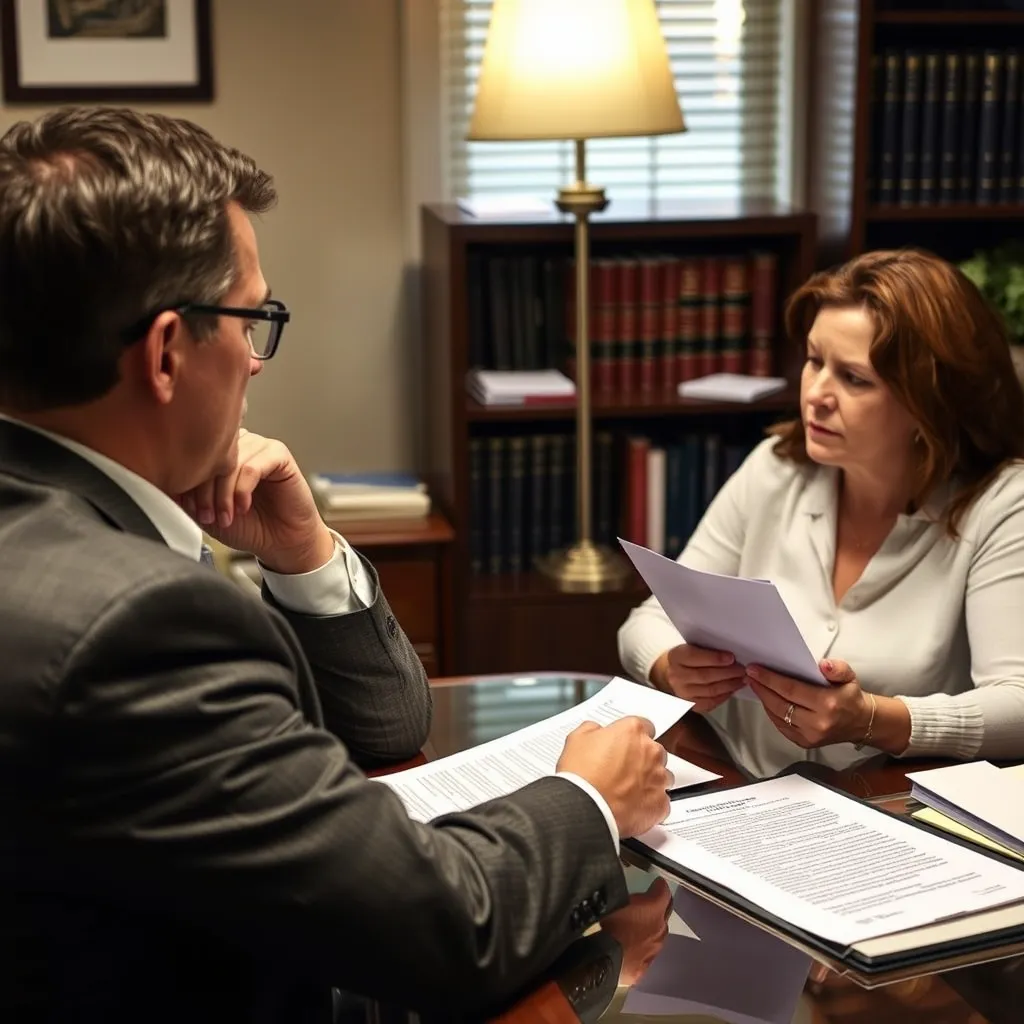
Legal Separation Lawyer Manassas, VA
Virginia does not recognize a formal legal separation proceeding. Instead, spouses who wish to live apart address their issues through a separation agreement—a written contract that governs property division, support, and child custody while they remain married. In Manassas, these agreements are often used as the foundation for a no-fault divorce after the parties have lived separate and apart for the required period. A well-drafted separation agreement can avoid contested litigation and provide clarity during a difficult transition. Mr. Sris and the firm’s Of Counsel attorneys assist clients in Manassas and the surrounding communities with negotiating, drafting, and reviewing separation agreements that address their specific circumstances. For guidance on legal separation in Manassas, reach Law Offices Of SRIS, P.C. at (888) 437-7747.
How Separation Agreements Work in Manassas, Virginia
In Virginia, a separation agreement is a contract between spouses that resolves the issues that would otherwise be decided by a court in a contested divorce. The agreement can cover equitable distribution of marital property and debts, spousal support (alimony), child custody and visitation, and child support. Once signed, the agreement is enforceable as a contract, though a court can incorporate it into a final divorce decree. Manassas courts, including the Manassas Circuit Court (9311 Lee Avenue, Suite 230) and the Manassas Juvenile and Domestic Relations District Court, have jurisdiction over family law matters. Mr. Sris and the firm’s Of Counsel attorneys are familiar with local court practices and can advise clients on what provisions are likely to be upheld.
The process normally starts with one spouse’s attorney drafting a proposal, followed by negotiation. If both spouses agree on all terms, the document is signed and notarized. Mediation is sometimes used to resolve disputes. Because the agreement has lasting financial and parental consequences, consulting an attorney is advisable. For a consultation, reach Law Offices Of SRIS, P.C. at (888) 437-7747.
Frequently Asked Questions About Legal Separation in Manassas
Does Virginia have a legal separation process?
Virginia does not have a formal legal separation status like some other states. Instead, spouses who wish to live apart can enter into a separation agreement, also called a property settlement agreement, which addresses the same issues that a court would decide in a divorce. While they remain married, the agreement governs their rights and responsibilities. This arrangement serves the practical function of a separation by providing a legal framework for living separately.
What is a separation agreement in Manassas, Virginia?
A separation agreement is a written contract between spouses that settles all issues related to their separation, including property division, spousal support, child custody, and child support. In Manassas, these agreements are commonly used as the basis for a no-fault divorce once the required separation period elapses. The agreement must be signed by both parties and notarized. It can be incorporated into a final divorce decree or enforced independently as a contract.
How long must a couple be separated before filing for divorce in Virginia?
Virginia law requires a separation of six months if the spouses have no minor children and have signed a separation agreement, or one year in all other cases. (Va. Code § 20‑91(9).) The separation must be continuous, with at least one spouse intending to end the marriage. The Manassas Circuit Court has jurisdiction over divorce filings, and the required period must be met before the court can grant a divorce.
What issues can a separation agreement cover?
A separation agreement can address equitable distribution of marital property and debts, spousal support, child custody and visitation, and child support. It may also include provisions about attorney fees, life insurance, and other related matters. The agreement should be comprehensive, as any issue not resolved may lead to future litigation. An attorney can help ensure that all relevant issues are addressed and that the agreement complies with Virginia law.
Can a separation agreement be modified after it is signed?
Yes, a separation agreement can be modified if both parties agree to the changes in writing. Without agreement, a party may ask the court to modify provisions regarding child support or custody based on a material change in circumstances. Spousal support terms may be modifiable if the agreement so provides or if Virginia statutory factors are met. Property division terms are generally final and not subject to modification.
Do I need a lawyer to draft a separation agreement in Manassas?
While not legally required, using an attorney to draft or review a separation agreement is strongly recommended to protect your rights. A poorly drafted agreement can have unintended consequences, such as waiving claims to retirement benefits or failing to address tax implications. Mr. Sris and the firm’s Of Counsel attorneys can help clients understand their legal position and negotiate terms that serve their long-term interests.
What if my spouse refuses to sign a separation agreement?
If your spouse refuses to sign, you cannot force them to agree; instead, you may need to file for divorce on fault or no-fault grounds and ask the court to decide the contested issues. In Virginia, if the parties cannot agree, the divorce becomes contested, and the court will determine property distribution, support, and custody after a trial. Mediation may still be an option before litigation becomes necessary.
How does legal separation affect child custody in Manassas?
A separation agreement can establish temporary custody and visitation arrangements while the parents live apart. The agreement is not a court order, but it can be enforced as a contract. If a dispute arises, a parent may petition the Manassas Juvenile and Domestic Relations District Court for a custody determination. The court will apply the trusted-interests-of-the-child factors under Va. Code § 20‑124.3.
What is the difference between legal separation and divorce in Virginia?
Legal separation does not dissolve the marriage, while divorce terminates the marital union and restores each spouse to single status. During a separation, the spouses remain legally married and cannot remarry. Divorce results in the final division of marital property and an enforceable decree. Many couples use a separation agreement to resolve all issues and then later convert it into a divorce.
How do I find a legal separation lawyer near Manassas?
You can reach Law Offices Of SRIS, P.C. at (888) 437‑7747 to schedule a consultation with an attorney who handles separation agreements in the Manassas area. The firm serves clients throughout Prince William County and appears in Manassas courts. Consultations are available by appointment, and the firm can discuss your goals and the legal steps needed to achieve a fair separation agreement.
About Mr. Sris and the Firm’s Of Counsel Attorneys
Mr. Sris, Owner and Founder of Law Offices Of SRIS, P.C., has practiced family law since 1997. He is admitted in Virginia, Maryland, the District of Columbia, New Jersey, and New York, and has extensive experience drafting and negotiating separation agreements for clients in the Manassas area. Mr. Sris testified before the Virginia House Courts of Justice Committee in support of 2019 HB 635 (chief patron Del. David Bulova). The firm’s Of Counsel attorneys bring additional perspective and experience to separation and family law matters. Mr. Sris and the firm’s Of Counsel attorneys work together to provide practical guidance and thorough legal representation. For a consultation, call (888) 437-7747.
For family law representation in other nearby communities, see our pages on: Fairfax County family law attorney, Prince William County family law lawyer, and Manassas Park family law attorney.
For the full text of Virginia’s statutes on separation and divorce, see Virginia Code Title 20. For court information, visit the Virginia Courts website.
Attorney advertising. Prior results do not guarantee a similar outcome. Results may vary.
Case results depend on a variety of factors unique to each case.