
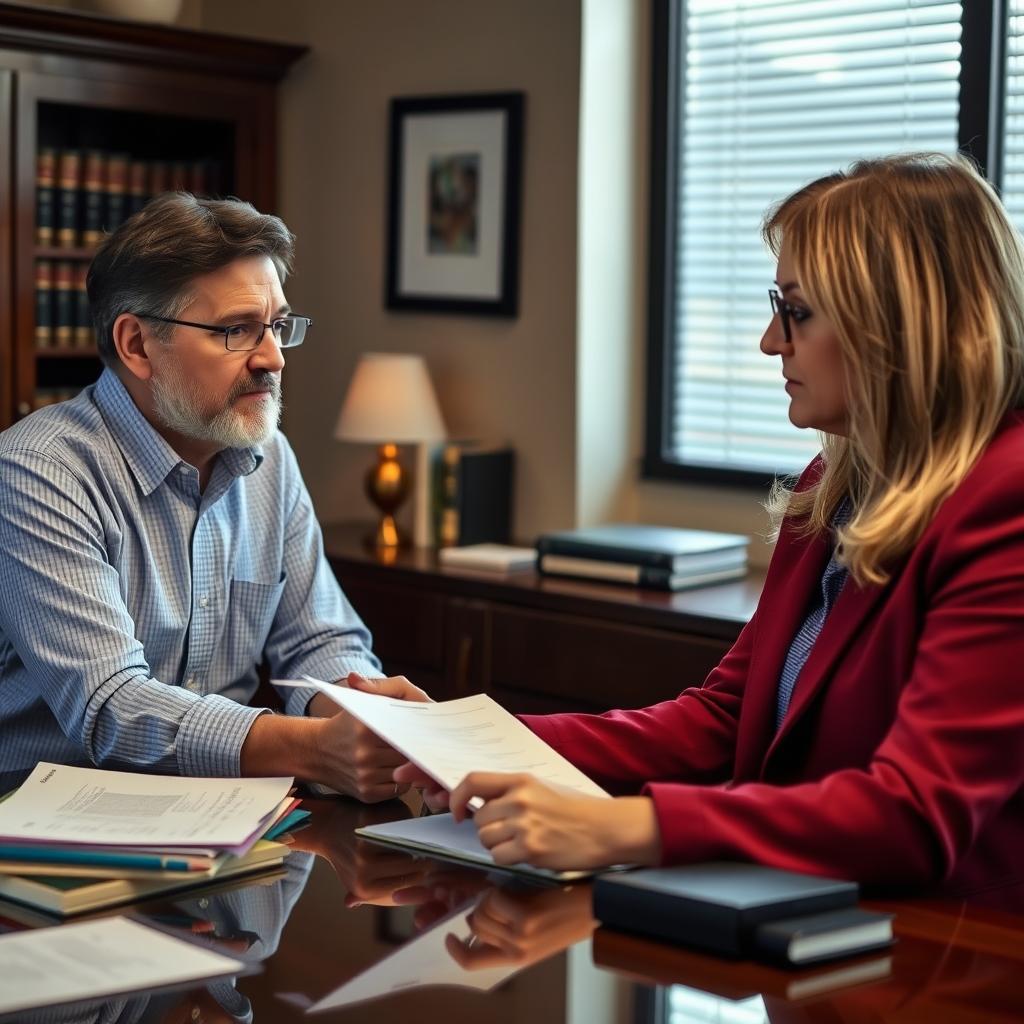
Felony Conviction Divorce Lawyer Goochland County, VA
You look at the divorce complaint on your kitchen table in Goochland. Your spouse was convicted of a serious felony and will be confined for more than a year. The marriage is over, and you want to move forward without waiting indefinitely. Under Virginia law, a felony conviction that results in imprisonment of more than one year is a fault ground for divorce—and you may be able to file without a waiting period. Mr. Sris and his Of Counsel at Law Offices Of SRIS, P.C. represent spouses in Goochland County who need to end a marriage based on a felony conviction. Reach our location at (888) 437-7747 to request a consultation. Law Offices Of SRIS, P.C. – Advocacy Without Borders.
Your Strategy Options When Using a Felony Conviction as a Divorce Ground
Virginia law gives you several paths when one spouse is incarcerated for a felony. The most direct is to file a fault-based divorce on the ground of conviction of a felony and sentencing to confinement for more than one year under Va. Code § 20-91(3). This ground does not require a separation period—you can file as soon as the conviction and sentence are final. That can save months of waiting compared to a no-fault divorce, which requires either six months of separation with a signed agreement and no minor children, or a full year of separation. Our attorneys will assess your situation to decide whether the fault ground is the right choice, or whether an uncontested no-fault approach might work better if both sides can agree on property division and support.
If you and your incarcerated spouse can negotiate a written separation agreement covering all issues—property, debt, support—you may still pursue a no-fault divorce after the required separation period. However, communication with an imprisoned spouse can be time-consuming. Mr. Sris and his Of Counsel help clients evaluate whether the certainty of a fault-based divorce without waiting is the better course. Every case turns on its facts, and we will walk you through the options so you can make an informed decision.
What to Expect in a Felony Conviction Divorce Case in Goochland County
All divorce actions in Virginia are filed in the circuit court. In Goochland County, that is the Goochland County Circuit Court at 2938 River Road West, Bldg G, Goochland, VA 23063. Juvenile and domestic relations matters—such as custody and child support—are heard separately in the Goochland County Juvenile and Domestic Relations District Court, but the divorce itself and property division remain in circuit court. Your complaint will need to state the ground for divorce, cite the felony conviction, and provide evidence of the conviction and sentence. The court will also require that at least one corroborating witness, usually you or someone with direct knowledge, testify to support the ground.
Serving divorce papers on an incarcerated spouse presents a unique challenge. The sheriff’s department or a private process server can deliver the complaint to the correctional facility, but delays are common. If the absent spouse cannot be located or refuses to accept service, alternative service by publication may become necessary. In our practice, the timeline for a felony conviction divorce varies widely—the case may move quickly if the incarcerated spouse signs a waiver and agrees to the divorce, or it may take longer if the service process is contested. Mr. Sris and his Of Counsel manage the procedural steps so you can stay focused on your life outside the marriage.
What Felony Conviction Divorce Means for Property, Support, and Custody
A divorce granted on a fault ground such as felony conviction does not automatically change how the court divides property or awards support, but the circumstances of the conviction can influence the judge’s decision. Virginia is an equitable distribution state, not a community property state. Under Va. Code § 20-107.3, the court considers eleven factors—including the circumstances that led to the dissolution of the marriage—when dividing marital assets and debts. A felony conviction that removed one spouse from the household for an extended period, or that drained marital funds for legal defense, may weigh in your favor. However, there is no set formula; the court aims for a fair, not necessarily equal, division.
Spousal support may also be affected. If you were dependent on your spouse’s income before the incarceration, the court can consider that incarceration has reduced the paying spouse’s ability to provide support. Child custody is always determined by the best interests of the child under Va. Code § 20-124.3, not by the fault ground. India is not a signatory to the 1980 Hague Convention on Civil Aspects of International Child Abduction. The court will look at each parent’s relationship with the child, the parent’s ability to provide care, and any history of abuse. An incarcerated parent’s rights are not automatically terminated, but practical custody arrangements will likely favor the at-home parent. Our firm can help you advocate for a custody and visitation plan that protects your children’s well-being while respecting the legal framework.
About Mr. Sris and His Of Counsel Team
Mr. Sris, Owner and Founder of Law Offices Of SRIS, P.C., has concentrated his practice on family law matters since 1997. He is admitted in Virginia, Maryland, the District of Columbia, New Jersey, and New York, and he leads a team of experienced Of Counsel attorneys. Mr. Sris testified before the Virginia House Courts of Justice Committee in support of 2019 HB 635 (chief patron Del. David Bulova), which addressed equitable distribution in divorce. That deep familiarity with Virginia divorce law informs his approach to every case, including those where a felony conviction is the central issue. Mr. Sris and his Of Counsel bring over 120 years of combined legal experience and have achieved over 4,739 documented firm-wide results. Results may vary.
Frequently Asked Questions About Felony Conviction Divorce in Goochland
What is a felony conviction divorce in Virginia?
Under Va. Code § 20-91(3), a spouse may file for divorce when the other spouse has been convicted of a felony and sentenced to confinement for more than one year. This is a fault ground and does not require a waiting period. The conviction must be final, and the sentence must involve actual confinement—probation alone does not satisfy the ground. Goochland County Circuit Court handles the divorce filing. You will need evidence of the conviction and sentencing order to proceed.
Do I need to wait until my spouse is released to file for divorce?
No, you do not need to wait for your spouse’s release—in fact, the felony conviction ground is designed to allow divorce while the spouse is still incarcerated. There is no separation period required for a fault-based divorce under § 20-91(3). You can begin the process as soon as the conviction and sentence are final. The practical challenges of serving papers and negotiating a settlement may affect the timeline, but filing can occur immediately.
How does a felony conviction affect child custody in a divorce?
A felony conviction does not automatically strip the incarcerated parent of custody or visitation rights; the court decides custody based on the best interests of the child under Va. Code § 20-124.3. The judge will consider factors like the parent’s past relationship with the child, the nature of the felony, the length of incarceration, and any risk the conviction may pose. While the at-home parent often receives primary physical custody, the incarcerated parent can seek visitation or supervised contact if it serves the child’s best interests.
Can I still get a no-fault divorce if my spouse is incarcerated?
Yes, you can pursue a no-fault divorce after a qualifying period of separation, but a fault-based divorce on the felony conviction ground may be faster. For a no-fault divorce, you must live separate and apart for one year, or six months if you have a signed separation agreement and no minor children. Reaching an agreement with an incarcerated spouse can be difficult, and the separation clock may be harder to prove. Mr. Sris and his Of Counsel can help you compare the two paths to determine which makes sense for your situation.
How do I serve divorce papers on someone in prison?
Papers can be served on an incarcerated spouse through the sheriff’s department or a private process server who delivers the complaint to the correctional facility. The method must comply with Virginia service rules. If the facility cannot facilitate personal service, alternative service by publication may be requested from the court. Service on an inmate often takes longer than typical service, so we build that into the case timeline. Our firm handles the logistics so you do not have to navigate the process alone.
Will I have to go to court in Goochland if I file for a felony conviction divorce?
In many cases, you will need to appear before the Goochland County Circuit Court for a short hearing, but if the divorce is uncontested and all issues are resolved by written agreement, an in-person appearance may be avoided or limited. Virginia requires at least one corroborating witness to testify to the ground for divorce; you or a witness can usually provide the necessary testimony in a brief proceeding. Our attorneys prepare you thoroughly so the court appearance is efficient.
Speak With a Felony Conviction Divorce Lawyer Serving Goochland County
If your spouse’s felony conviction has brought your marriage to an end, you deserve clear guidance and efficient legal help. Mr. Sris and his Of Counsel team at Law Offices Of SRIS, P.C. understand how to use the fault ground to move your case forward without unnecessary waiting. Reach our location at (888) 437-7747 to request a confidential consultation. We handle all divorce filings and court appearances in Goochland County from our Richmond Location at 7400 Beaufont Springs Drive, Suite 300, Room 395, Richmond, VA 23225.
For full statutory breakdown, see our comprehensive analysis on srislawyer.com.
Related family law pages: Family Law Lawyer Fairfax County, VA | Family Law Lawyer Prince William County, VA | Family Law Lawyer Falls Church, VA
Outbound primary sources: Virginia Code Title 20 (Domestic Relations) | Virginia Judicial System Courts | SCC Business Entity Filings
Attorney advertising. Prior results do not guarantee a similar outcome. Results may vary.
Case results depend on a variety of factors unique to each case.