
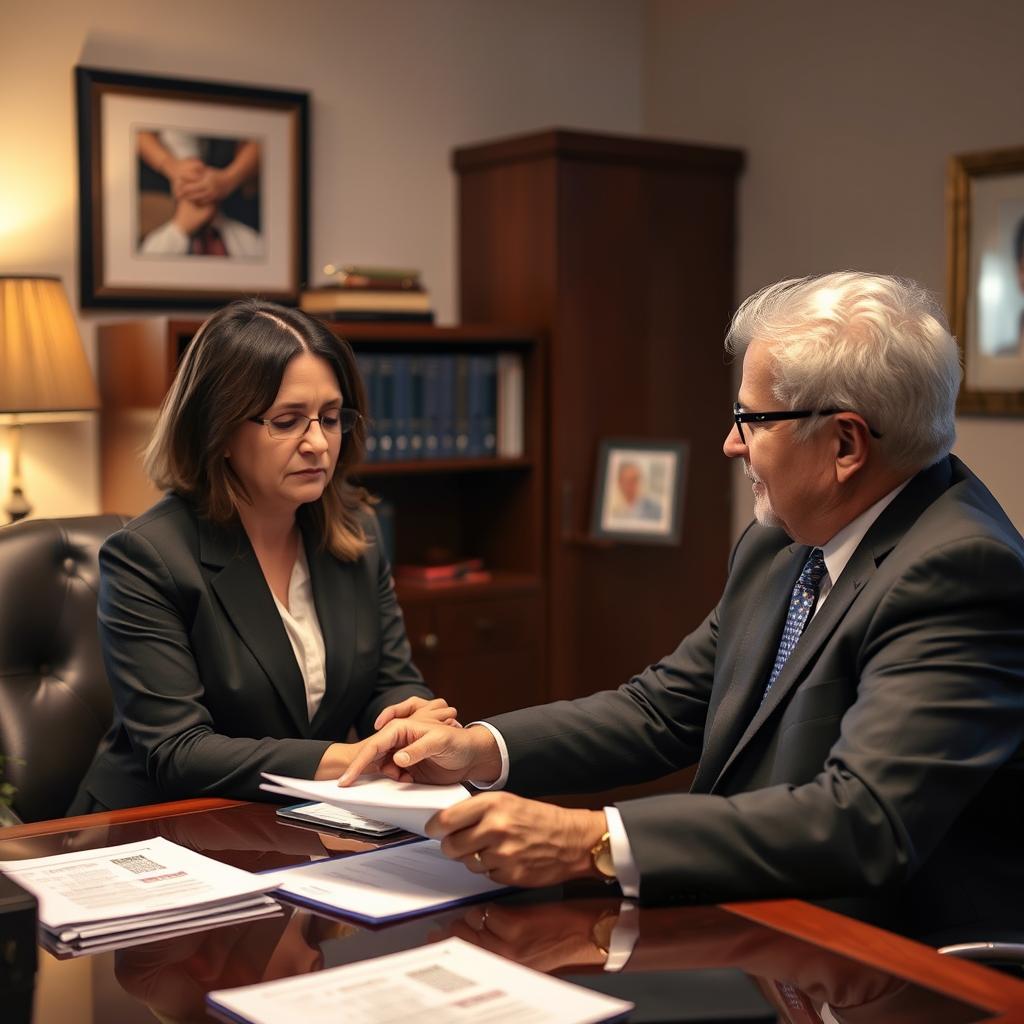
Looking for a Family Law Lawyer in Fauquier County, VA? Here’s What to Expect.
You and your spouse have reached the difficult decision to separate, and you live in Warrenton or one of the communities that make up Fauquier County. The legal process ahead—navigating divorce grounds, property division, custody arrangements, and support obligations—can feel daunting. At Law Offices Of SRIS, P.C., Mr. Sris and his Of Counsel bring extensive experience in family law matters throughout Northern Virginia. We handle everything from amicable, uncontested divorces to cases involving complex property and custody disputes. Our team represents clients at the Fauquier County Circuit Court and Juvenile & Domestic Relations District Court. To discuss your situation, call (888) 437-7747 to request a consultation. Law Offices Of SRIS, P.C. — Advocacy Without Borders.
Your Options When Facing a Family Law Matter in Fauquier County
Every family’s situation is different, and the approach that works best depends on the level of cooperation between the parties. For spouses who can reach agreement, an uncontested divorce based on a written separation agreement can be the most efficient path. Many couples also use mediation to resolve differences outside of court, with a neutral mediator helping to facilitate discussions about property, support, and parenting plans.
When disputes cannot be resolved through negotiation or mediation, contested litigation becomes necessary. A judge will decide the outcome after hearing evidence and arguments from both sides. Mr. Sris and his Of Counsel are prepared to advocate for your interests throughout any contested proceeding, whether it involves equitable distribution of marital assets, spousal support, child custody, or all of the above. The key is to choose a strategy that fits your goals and your family’s needs.
How the Family Law Process Works in Fauquier County
Divorce and equitable distribution matters in Fauquier County are heard in the Fauquier County Circuit Court, located at 6 Court Street in Warrenton. Standalone custody, visitation, child support, and protective order cases are filed in the Fauquier County Juvenile & Domestic Relations District Court. If you are seeking a divorce, you must meet Virginia’s residency requirements and grounds for divorce, which range from no-fault separation periods to fault-based grounds such as adultery or cruelty. The process typically begins with the filing of a complaint, followed by discovery, potential pendente lite hearings for temporary relief, and ultimately a final decree.
The timeline for resolution depends on whether the divorce is uncontested or contested, the complexity of the marital estate, and the court’s calendar. Cases involving business valuations, retirement account division, or disputes over child custody tend to require more time and preparation. Throughout the process, the Fauquier County courts will focus on the best interests of the child in custody determinations and on an equitable division of marital property. Having an attorney who is familiar with local court practices can help you understand what to expect at each stage.
The Consequences of Divorce and Custody Disputes
A divorce or custody decision has long-term effects on your finances, your living arrangements, and your relationship with your children. Virginia is an equitable distribution state, which means that marital property is divided fairly but not necessarily equally. The court considers factors such as each spouse’s contribution to the marriage, the length of the marriage, and the economic circumstances of each party. Separate property—assets owned before the marriage or received as a gift or inheritance—remains with the original owner unless it has been commingled with marital assets.
Child custody and visitation orders are based on the best interests of the child, considering ten statutory factors including each parent’s role in the child’s life, the child’s relationships with siblings, and any history of family abuse. Child support is calculated using Virginia’s guidelines, which factor in both parents’ gross incomes, the number of children, and certain expenses. Spousal support can be awarded based on a separate set of factors, such as the standard of living during the marriage, each spouse’s earning capacity, and the length of the marriage. Modifications to custody, support, or the divorce decree may be possible if a material change in circumstances occurs, but the process involves a new petition and judicial review.
Experienced Family Law Attorneys Serving Fauquier County
Mr. Sris, Owner and Founder of Law Offices Of SRIS, P.C., has been practicing since 1997 and is admitted in Virginia, Maryland, the District of Columbia, New Jersey, and New York. A former prosecutor, Mr. Sris testified before the Virginia House Courts of Justice Committee in support of 2019 HB 635 (chief patron Del. David Bulova). He and his Of Counsel handle family law cases throughout Fauquier County, drawing on deep familiarity with the local courts and Virginia’s domestic relations statutes.
Mr. Sris and his Of Counsel bring over 120 years of combined legal experience, with 4,739+ documented firm-wide results. Results may vary. The team includes attorneys with extensive trial experience, backgrounds in CPS and child welfare, and a former Virginia State Trooper whose investigative insight can be valuable in cases involving enforcement or protective orders. Every matter is approached with thorough preparation and a commitment to pursuing a favorable resolution.
Frequently Asked Questions
How is property divided in a Virginia divorce?
Virginia divides marital property equitably, not necessarily equally. The judge considers eleven factors, including the length of the marriage, each spouse’s contributions, and the parties’ ages and health. Separate property—such as items owned before the marriage or received as an inheritance—generally stays with the original owner. Complex assets like businesses, retirement accounts, and real estate require careful valuation. Because the court has broad discretion, an experienced attorney can help present evidence that supports a fair distribution aligned with your goals.
Do I have to go to court for a divorce in Fauquier County?
Not all divorces require a contested trial, but at least one party must appear before a judge for the final hearing. For an uncontested divorce where both sides have signed a separation agreement, the hearing is usually brief and involves confirming the agreement and the required separation period. If you and your spouse cannot agree on key issues, the court will schedule additional hearings and may proceed to a trial. Your attorney can advise you on what to expect based on whether your case is likely to remain uncontested.
What are the grounds for divorce in Virginia?
Virginia allows both no-fault and fault-based grounds for divorce under Va. Code § 20-91. No-fault divorces require a separation period—six months if there are no minor children and a signed agreement, or one year if those conditions are not met. Fault grounds include adultery (which eliminates the waiting period), cruelty, desertion for one year, or a felony conviction resulting in more than one year of imprisonment. The choice of ground can affect property division and spousal support, so it is important to discuss the implications with your attorney.
How is child custody decided in Fauquier County?
Child custody in Virginia is determined based on the best interests of the child, using ten statutory factors listed in Va. Code § 20-124.3. The Fauquier County Juvenile & Domestic Relations District Court handles initial custody and visitation orders, while the Circuit Court addresses custody within divorce proceedings. Factors include each parent’s relationship with the child, the child’s needs, any history of abuse, and the reasonable preference of a child who is of sufficient age and maturity. Judges aim to create a parenting plan that supports the child’s well‑being.
Can I modify a custody or support order later?
Yes, custody and support orders can be modified if there has been a material change in circumstances since the original order was entered. Examples include a significant change in a parent’s income, relocation, or a change in the child’s needs. The party seeking modification must file a petition and demonstrate why the change is warranted. The same Fauquier County court that issued the original order will hear the modification request. Because the legal standard is fact‑specific, consulting an attorney is advisable before pursuing a modification.
What should I bring to my first consultation?
Bring any financial documents you have available, including tax returns, pay stubs, bank statements, and information about debts and assets. If you and your spouse have already discussed separation, bring any draft agreements or written proposals. Details about your children’s schedules, health, and education can also be helpful. Your attorney will use this information to give you a clearer picture of what to expect and to help you decide on the trusted path forward for your family law matter.
For a consultation, reach Mr. Sris and his Of Counsel at (888) 437-7747. Our Fairfax location serves clients throughout Fauquier County.
Fairfax Location: 4008 Williamsburg Court, Fairfax, VA 22032. By appointment only. Phone: (703) 636-5417.
For a full statutory breakdown, see our comprehensive analysis.
Attorney advertising. Prior results do not guarantee a similar outcome.
Case results depend on a variety of factors unique to each case.