
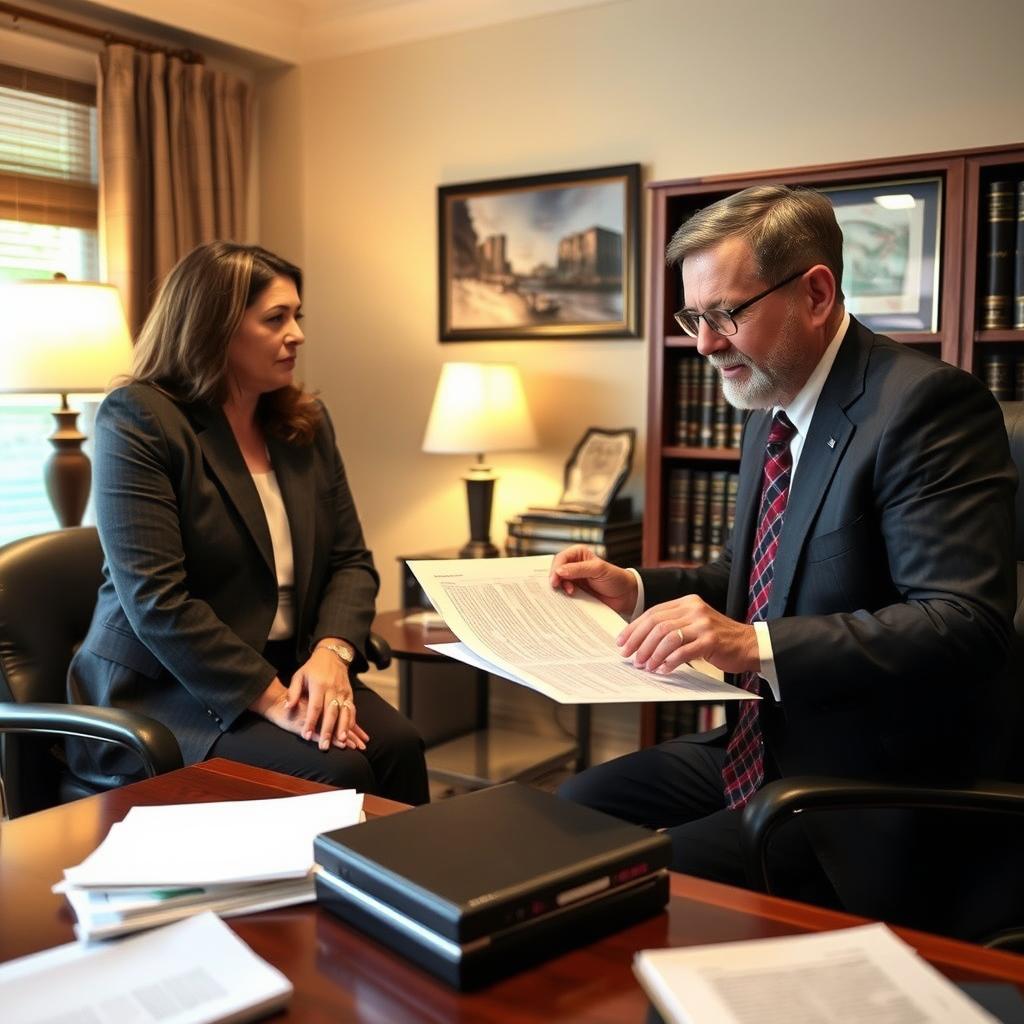
Family Law Lawyer Augusta County
You need a Family Law Lawyer Augusta County for divorce, custody, or support matters in Virginia’s 25th Judicial District. Law Offices Of SRIS, P.C. —Advocacy Without Borders. Our attorneys handle cases at the Augusta County General District Court and Juvenile and Domestic Relations District Court. We provide direct counsel on equitable distribution, child support guidelines, and no-fault divorce procedures. SRIS, P.C. (Confirmed by SRIS, P.C.)
Statutory Definition of Virginia Family Law
Virginia family law is codified under Title 20 of the Virginia Code, governing marriage, divorce, custody, and support. The primary statutes include Va. Code § 20-107.3 for equitable distribution and Va. Code § 20-124.2 for child custody factors. These laws establish the legal framework for resolving family disputes in Augusta County. Understanding these statutes is critical for any case in the local courts.
Virginia is an equitable distribution state, not a community property state. This means marital property is divided fairly, not necessarily equally. The court considers multiple factors under Va. Code § 20-107.3(E). These factors include each spouse’s contributions, the duration of the marriage, and the economic circumstances of each party. A Family Law Lawyer Augusta County must analyze these factors for your specific case.
Virginia recognizes both fault and no-fault grounds for divorce. No-fault divorce is available after a six-month separation if there are no minor children. A one-year separation is required if minor children exist. Fault grounds include adultery, cruelty, desertion, and felony conviction. Proving fault can impact spousal support and property division outcomes in an Augusta County court.
Child custody and support are governed by separate statutory schemes. The court’s primary concern is the child’s best interests under Va. Code § 20-124.3. Child support calculations follow strict guidelines based on the parents’ incomes and custody arrangements. Modifications require a material change in circumstances. Enforcement actions for non-payment are common in family court.
What is equitable distribution under Virginia law?
Equitable distribution is the court’s division of marital property and debts under Va. Code § 20-107.3. Marital property includes all assets and debts acquired from the date of marriage until the date of separation. Separate property, owned before marriage or received by gift or inheritance, is typically not divided. The court classifies, values, and then distributes property based on statutory factors.
How does Virginia calculate child support?
Virginia calculates child support using statutory guidelines based on gross incomes and custody time. The basic child support obligation is determined from the Virginia Child Support Guidelines schedule. This amount is adjusted for health insurance costs, work-related childcare, and existing support orders. Deviations from the guideline amount require specific judicial findings. An accurate calculation demands precise financial disclosure.
What are the grounds for divorce in Augusta County?
The grounds for divorce in Augusta County are either no-fault separation or fault-based acts. No-fault requires a continuous separation period with intent to divorce. Fault grounds include adultery, cruelty, willful desertion, or a felony conviction. Choosing the appropriate ground affects the timeline, evidence required, and potential outcomes. A Virginia family law attorney can advise on the best approach.
The Insider Procedural Edge in Augusta County
Family law cases in Augusta County are heard at the Augusta County General District Court, 6 East Johnson Street, 2nd Floor, Staunton, VA 24401. The Juvenile and Domestic Relations District Court for the 25th District handles custody, support, and protective orders. Knowing which court has jurisdiction over your specific matter is the first procedural step. Filing in the wrong court causes immediate dismissal and delay.
The Augusta County court follows strict local rules for filing and serving documents. Complaints for divorce or support must be filed with the Circuit Court clerk. Motions for temporary orders or modifications have specific formatting requirements. Missing a deadline or improper service can jeopardize your case. Procedural specifics for Augusta County are reviewed during a Consultation by appointment at our Shenandoah/Woodstock Location.
Typical timelines for uncontested divorces in Virginia range from several months to over a year. Contested cases can take significantly longer due to discovery and court scheduling. The Augusta County court docket moves at a deliberate pace. Emergency motions for custody or support can be heard more quickly. Having a lawyer familiar with the local judges and clerks is a distinct advantage.
Filing fees vary by the type of action. A complaint for divorce currently requires a fee payable to the court clerk. Additional costs include fees for serving the other party and for any necessary parenting education classes. Fee waivers are available for qualifying individuals based on income. Your attorney will outline all anticipated costs at the outset.
Which court handles child custody cases?
The Juvenile and Domestic Relations District Court (J&DR) has initial jurisdiction over child custody and support in Augusta County. The Circuit Court can also hear custody matters if filed alongside a divorce complaint. J&DR courts focus specifically on family and juvenile matters. Their procedures are often more informal but still require strict adherence to rules. A local criminal defense practice often intersects with family law in protective order cases.
What is the timeline for a divorce?
The timeline for a divorce depends on whether it is contested or uncontested. An uncontested, no-fault divorce after a six-month separation can be finalized once the separation period is met. A contested divorce involves discovery, hearings, and possibly a trial, taking a year or more. The court’s schedule in Augusta County adds to the timeline. Starting the process correctly saves considerable time.
How much are court filing fees?
Court filing fees are set by Virginia statute and are subject to change. The fee for filing a complaint for divorce is a standard cost. Additional fees apply for motions, subpoenas, and final decree entries. The exact current fee schedule is obtained from the Augusta County Circuit Court clerk’s office. Your lawyer will account for these costs in your case strategy.
Penalties & Defense Strategies in Family Court
The most common penalty in family court is a financial judgment for support arrears or attorney fees. Courts enforce orders through contempt powers, which can include fines or jail time. Losing custody or visitation rights is a severe non-financial consequence. The court’s primary tool is its contempt power to compel compliance with its orders. Strategic defense focuses on compliance and modification.
| Offense | Penalty | Notes |
|---|---|---|
| Failure to Pay Child Support | Contempt of Court; Wage Garnishment; License Suspension; Jail up to 12 months | Arrears accrue interest. Defense: show inability to pay due to job loss or disability. |
| Violation of Custody/Visitation Order | Contempt; Modified Custody; Make-Up Visitation; Fines | Pattern of violations can lead to loss of custody. Defense: demonstrate communication attempts or safety concerns. |
| Failure to Comply with Property Division Order | Contempt; Fines; Judgment Lien on Property | The court can enforce transfer of titles or sale of assets. Defense: logistical delays or title issues. |
| Filing a Frivolous Motion | Court-Ordered Payment of Opponent’s Attorney Fees | Sanctions under Va. Code § 8.01-271.1. Defense: ensure all filings have a factual and legal basis. |
[Insider Insight] Augusta County prosecutors and judges in J&DR court prioritize the child’s welfare and enforcing support orders. They view consistent payment as a primary parental responsibility. Demonstrating good faith efforts to pay, even if partial, is far better than no payment. Presenting a formal modification petition before falling into arrears can mitigate penalties. The court has little patience for parents who ignore orders without legal cause.
Defense strategies begin with strict compliance with all existing court orders. If compliance is impossible, immediately file a petition for modification based on a material change. Gather documentation for every claim, including pay stubs, medical records, and communication logs. Never ignore a court summons or hearing date. An experienced our legal team member can develop a proactive defense.
What happens if I don’t pay child support?
Failure to pay child support results in contempt proceedings, wage garnishment, and license suspension. The Virginia Department of Social Services can intercept tax refunds. Arrears accrue interest at a statutory rate. Willful non-payment can lead to a misdemeanor or felony criminal charge. The best defense is to seek a modification before falling behind.
Can I be jailed for a family court violation?
Yes, you can be jailed for contempt of court for willfully violating a family court order. The court must find you had the ability to comply and deliberately refused. Jail sentences are typically used to coerce compliance, not as punishment. Purge conditions, like paying a sum of money, are usually offered for release. Legal representation is critical in contempt hearings.
How can I modify a custody or support order?
Modify a custody or support order by filing a petition with the court that issued the original order. You must prove a material change in circumstances since the last order. For custody, changes can include relocation or a child’s needs. For support, changes include job loss or a significant income change. The court will not modify an order without a proper petition.
Why Hire SRIS, P.C. for Your Augusta County Case
SRIS, P.C. provides representation grounded in decades of Virginia family law practice and direct statutory experience. Our founder, Mr. Sris, personally amended the Virginia equitable distribution statute, Va. Code § 20-107.3. This deep legislative insight informs our strategy for property division cases in Augusta County. We apply this knowledge to secure favorable outcomes for our clients.
Primary Attorney: Mr. Sris, Owner & CEO, Managing Attorney. Former prosecutor with a background in accounting and information systems. He personally amended Va. Code § 20-107.3. He accepts a limited number of complex family law matters requiring advanced financial strategy. His multi-state practice includes Virginia, Maryland, and DC courts.
The firm’s collaborative model ensures your case benefits from multiple perspectives. Our Of Counsel attorneys, like Bryan Block and Matthew Greene, bring additional specialized experience. Bryan Block’s former law enforcement background aids in cases involving investigations or protective orders. Matthew Greene’s extensive experience with child welfare cases is invaluable in custody disputes. This team approach is a key differentiator.
SRIS, P.C. has a proven record of handling complex family legal matters. We understand the financial and emotional stakes in divorce and custody cases. Our strategy focuses on achieving your objectives efficiently, whether through negotiation or litigation. We prepare every case as if it will go to trial. This readiness often leads to better settlement offers.
Our Shenandoah/Woodstock Location serves clients throughout Augusta County, including Staunton and Waynesboro. We are familiar with the local court personnel and procedures. This local presence, combined with our statewide resources, provides a significant advantage. We offer a Consultation by appointment to review the specifics of your situation. Call 24/7 to schedule.
Localized FAQs for Augusta County Family Law
Where is the family court in Augusta County?
The Augusta County General District Court is at 6 East Johnson Street, 2nd Floor, Staunton, VA 24401. Juvenile and Domestic Relations matters are also heard in the 25th Judicial District. The specific courtroom depends on the type of case filed. Procedural details are confirmed during a case review.
How long do you have to be separated for divorce in Virginia?
You need a six-month separation for a no-fault divorce with no minor children. A one-year separation is required if minor children exist. The separation must be continuous and with intent to end the marriage. A separation agreement can formalize the terms during this period.
What factors determine child custody in Virginia?
Virginia courts determine custody based on the child’s best interests under Va. Code § 20-124.3. Factors include the child’s needs, each parent’s ability to meet them, and the child’s relationships. The court considers which parent has been the primary caregiver. The child’s reasonable preference may be considered if age-appropriate.
Can a parent move out of state with a child?
A parent cannot move out of state with a child without court permission or the other parent’s agreement. This is called a relocation case. The parent seeking to move must file a petition and prove the move is in the child’s best interest. The court will modify the custody and visitation schedule if approved.
How is spousal support calculated in Virginia?
Virginia spousal support is not calculated by a strict formula like child support. The court considers factors under Va. Code § 20-107.1, including needs, earning capacity, and the marriage’s standard of living. The duration of the marriage is a critical factor. Support can be modified based on a material change in circumstances.
Proximity, CTA & Disclaimer
Our Shenandoah/Woodstock Location serves clients at the Augusta County courts (6 East Johnson Street, Staunton). This Location is strategically positioned to serve Staunton, Waynesboro, Fishersville, and surrounding areas. Major highways like I-81 and I-64 provide direct access. We represent clients throughout the 25th Judicial District.
Consultation by appointment. Call (888) 437-7747. 24/7.
Law Offices Of SRIS, P.C.—Advocacy Without Borders. Our Shenandoah/Woodstock Location: 505 N Main St, Suite 103, Woodstock, VA 22664. Phones are answered 24 hours a day, 7 days a week. In-person consultations are scheduled by appointment. We handle family law, DUI defense, and other legal matters across Virginia.
Past results do not predict future outcomes.