
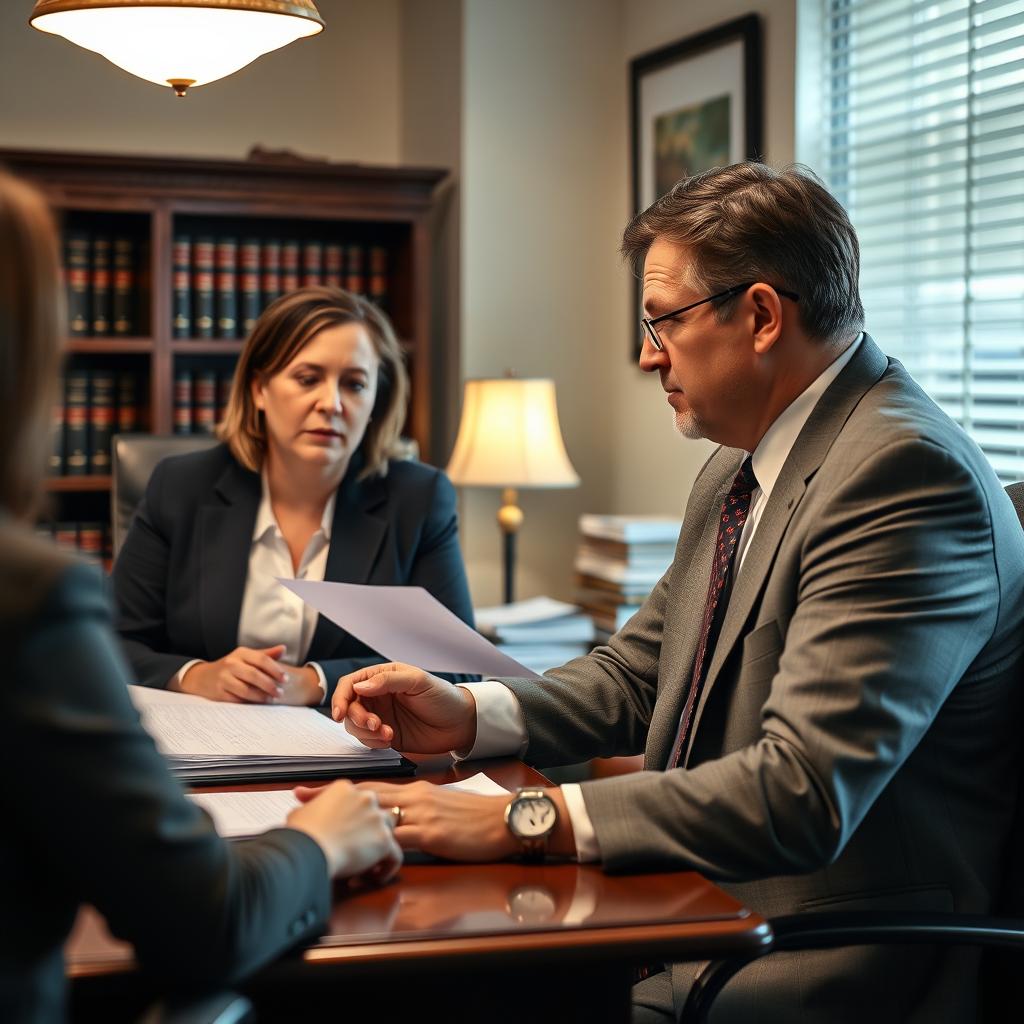
Domesticating Foreign Divorce Decree Lawyer King William County, VA
When a marriage ends through a divorce decree issued by a court in another country, the decree may not automatically have legal effect in Virginia. To use it for property division, spousal support, or to remarry in the Commonwealth, the decree often must be recognized—or “domesticated”—by a Virginia circuit court. The process, called domestication or recognition of a foreign divorce decree, asks the court to give the foreign judgment the same force as a Virginia divorce. For residents of King William County, Mr. Sris, Owner and Founder of Law Offices Of SRIS, P.C., and the firm’s Of Counsel attorneys assist clients with domesticating foreign divorce decrees before the King William County Circuit Court. If you need to enforce rights under a divorce obtained abroad, reach Law Offices Of SRIS, P.C. at (888) 437‑7747 to schedule a consultation. Law Offices Of SRIS, P.C. – Advocacy Without Borders.
What Domesticating a Foreign Divorce Decree Means in King William County
Domesticating a foreign divorce decree is the procedure by which a Virginia court formally recognizes a divorce granted by another country’s judicial system. Absent such recognition, the decree may not be binding for matters such as equitable distribution of Virginia-sited assets, spousal support, or even the ability to remarry in Virginia without complications. King William County, part of Virginia’s Ninth Judicial District, lies between Richmond and Williamsburg, served by the King William County Circuit Court at 351 Courthouse Lane, Suite 201, King William, VA 23086. That court has exclusive jurisdiction over divorce and related domestic-relations matters, including petitions to recognize foreign divorce judgments.
Virginia courts generally extend comity to foreign judgments that are final, valid, and not contrary to Virginia public policy. The domestication petition must demonstrate that the foreign court had jurisdiction, that the proceedings met basic fairness standards, and that the decree did not fraudulently deprive a party of rights. While the statute does not mandate a specific timeline, the court’s schedule and the complexity of the foreign legal documents involved influence how quickly a petition moves forward. For individuals in King William, West Point, or Aylett, having an attorney familiar with both Virginia procedural requirements and cross‑border document preparation helps avoid delays and ensure the decree is accepted by the court.
How Mr. Sris and the Firm’s Of Counsel Attorneys Handle Foreign Divorce Decree Recognition
Mr. Sris and the firm’s Of Counsel attorneys guide clients through each stage of domesticating a foreign divorce decree in King William County. The initial step involves reviewing the foreign decree and supporting documentation to confirm it meets Virginia’s comity standards. The firm then prepares and files a petition in the King William County Circuit Court, accompanied by certified copies of the foreign divorce decree, any required translations, and authentication documents such as an apostille if applicable. Notice is served on the former spouse when feasible, and if the matter is uncontested, the court may rule without a full evidentiary hearing. If issues arise—such as dispute over the validity of the foreign proceeding—the attorneys present evidence and argument to address the court’s concerns.
The approach remains qualitative at every turn. The firm’s attorneys apply their multi‑state experience to anticipate jurisdictional nuances, ensuring the petition meets the local court’s procedural expectations. Throughout the process, clients are kept informed of developments, and every effort is made to move the matter forward as efficiently as the court’s calendar permits. For individuals who need to divide property located in Virginia or secure spousal support after an overseas divorce, having a properly domesticated decree is a foundational step. Mr. Sris and the firm’s Of Counsel attorneys work to achieve domestication so that clients can move forward with confidence.
About Mr. Sris and the Firm’s Of Counsel Attorneys
Mr. Sris, Owner and Founder of Law Offices Of SRIS, P.C., has practiced since 1997 and is admitted in Virginia, Maryland, the District of Columbia, New Jersey, and New York. A former prosecutor, Mr. Sris brings trial‑tested advocacy to family law matters, including the domestication of foreign divorce decrees. In 2019, Mr. Sris testified before the Virginia House Courts of Justice Committee in support of 2019 HB 635 (chief patron Del. David Bulova), the legislation that revised Virginia’s equitable distribution statute. The firm’s Of Counsel attorneys add extensive courtroom and procedural knowledge across multiple practice areas. Together, Mr. Sris and the firm’s Of Counsel attorneys bring extensive combined legal experience to matters involving foreign divorce decree recognition. Results may vary. in your case.
Frequently Asked Questions
What does it mean to domesticate a foreign divorce decree in Virginia?
Domesticating a foreign divorce decree means obtaining a Virginia court’s formal recognition of a divorce granted in another country or jurisdiction. Once recognized, the decree carries the same legal weight as a divorce entered in Virginia, allowing the parties to remarry, divide property held in the Commonwealth, and enforce spousal support or other marital obligations. Without domestication, the decree may not be binding in Virginia courts. A petition is filed in the circuit court for the county where the petitioner resides or where property is located. The court reviews whether the foreign court had proper jurisdiction, whether the proceedings were fair, and whether the decree violates Virginia public policy.
Why do I need a lawyer to domesticate a foreign divorce decree?
While not legally required, an attorney can help navigate the procedural and evidentiary requirements of the domestication process. The King William County Circuit Court expects a properly drafted petition, authenticated copies of the foreign decree, and, in many cases, translation of foreign‑language documents. Mistakes in documentation or failure to address jurisdictional concerns can lead to delays or denial. An experienced attorney can present the necessary legal arguments and communicate with the court to work toward a favorable outcome. Individuals representing themselves may overlook critical steps that affect the decree’s enforceability.
How does the King William County Circuit Court decide whether to recognize a foreign divorce decree?
The King William County Circuit Court applies principles of comity and Virginia public policy. The court examines whether the foreign court had personal jurisdiction over both parties, whether the divorce procedure was fundamentally fair, and whether recognition would be inconsistent with Virginia law. For example, a decree obtained through fraud or under a legal system that denies basic due process may not be recognized. The court may also consider whether the foreign decree is final and whether the parties had an opportunity to be heard. The petitioner bears the burden of demonstrating that the foreign decree merits recognition.
What documents are typically needed to domesticate a foreign divorce decree?
A certified copy of the foreign divorce decree is essential, along with any authentication that may be required by the court. Many foreign countries are parties to the Hague Apostille Convention, so an apostille may be obtained to authenticate the decree. If the decree is in a language other than English, a certified translation is generally required. Additional documents, such as proof of notice to the former spouse or evidence of the foreign court’s jurisdiction, may be needed. The specific requirements depend on the country of origin and the preferences of the presiding judge. The firm’s attorneys can help determine the exact documents needed for your case.
How long does the domestication process take?
The timeline for domesticating a foreign divorce decree varies by case complexity and the court’s docket. An uncontested matter with complete documentation may be resolved in a matter of months, while a contested case or one involving missing documents can take longer. The King William County Circuit Court schedules hearings based on its calendar, and any required service on an overseas former spouse may add time. Once the petition is filed, the court sets a hearing date. The attorneys at Law Offices Of SRIS, P.C. work to move the case forward as efficiently as the procedural rules and court schedule allow.
What can happen if a foreign divorce decree is not domesticated?
Without domestication, the foreign divorce decree may not be enforceable for property division, support obligations, or remarriage restrictions in Virginia. For example, a court may not be able to distribute marital property located in the Commonwealth based on an unrecognized foreign decree. Similarly, spousal support ordered by a foreign court may not be enforceable. Domestication brings the decree into the Virginia legal framework so that it can be treated as a valid divorce for all purposes. If you need to enforce rights under an overseas divorce, consulting an attorney about domestication is prudent.
Also serving: Fairfax County Family Law · Prince William County Family Law · Manassas City Family Law
Official Virginia court and legal resources: King William County Courts · Virginia Code Title 20 (Domestic Relations) · Virginia’s Judicial System
Attorney advertising. Prior results do not guarantee a similar outcome.
Results may vary.
Case results depend on a variety of factors unique to each case.