
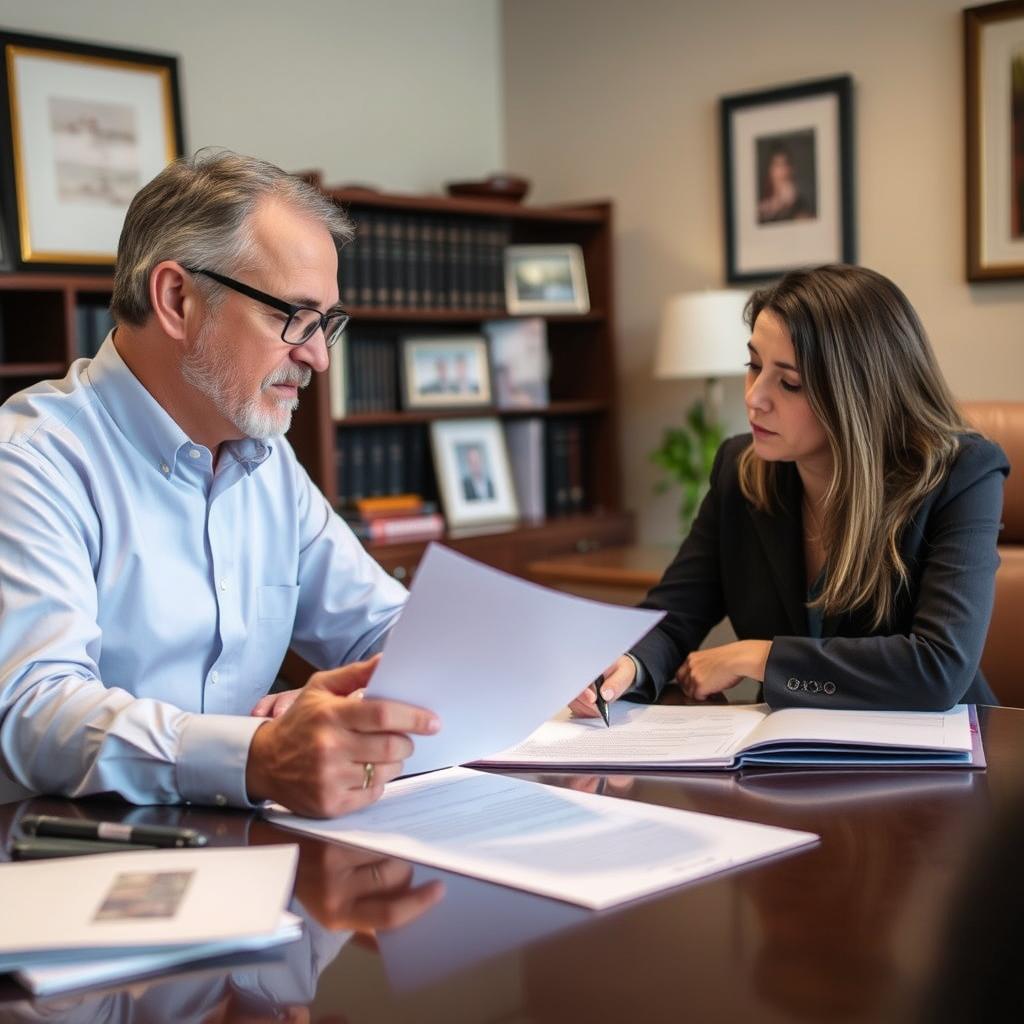
Desertion Divorce Lawyer Fauquier County, VA
You come home to an empty house. Your spouse left without a word months ago, and despite your efforts to locate them, there has been no contact for over a year. Now you are ready to move forward—but you need to know whether the law in Virginia will treat your situation as a ground for divorce, and what steps to take in Fauquier County. A desertion divorce allows a spouse who has been abandoned to end the marriage on fault grounds. Under Va. Code § 20‑91(6), willful desertion or abandonment for one year is a statutory fault ground for absolute divorce. Law Offices Of SRIS, P.C. Concentrates in family law and represents clients across Fauquier County in desertion-based divorces, helping them navigate the procedural requirements at the Fauquier County Circuit Court while working toward a resolution that protects their interests. Reach our firm at (888) 437‑7747 to schedule a consultation. Law Offices Of SRIS, P.C. – Advocacy Without Borders.
What a Desertion Divorce Means in Fauquier County
Fauquier County, situated west of the Washington D.C. Metropolitan area along the I‑66 corridor and Routes 29 and 17, includes the towns of Warrenton, New Baltimore, Bealeton, Marshall, and The Plains. Divorce cases in the county are heard exclusively by the Fauquier County Circuit Court at 6 Court Street in Warrenton, which has jurisdiction over divorce, equitable distribution, and spousal support. Matters involving standalone custody, visitation, child support, or protective orders are handled by the Fauquier County Juvenile and Domestic Relations District Court. Because a desertion divorce may involve both the divorce itself and related custody or support issues, counsel who appear regularly in both courts can coordinate the case efficiently.
Under Virginia law, desertion must be willful and continuous for at least one year, and the filing spouse must be a resident and domiciliary of Virginia for six months preceding the filing. Desertion is a fault ground—unlike no‑fault divorce based on separation under § 20‑91(9). When a court finds desertion, it may consider the circumstances surrounding the abandonment when deciding equitable distribution, spousal support, and, if children are involved, custody and visitation. The process begins with filing a Complaint for divorce in the Circuit Court. The factual circumstances of the desertion—when the spouse left, whether there was any agreement or justification, and the absence of cohabitation during the year—are central to proving the ground. Our firm works with clients to assemble the necessary evidence, including testimony from corroborating witnesses, to meet Virginia’s proof requirements for a fault‑based divorce.
How Mr. Sris and His Of Counsel Handle Desertion Divorce Cases
Mr. Sris, Owner and Founder of Law Offices Of SRIS, P.C., and his Of Counsel approach desertion divorce cases with a thorough understanding of Virginia’s fault‑ground framework. The team begins by evaluating whether the facts satisfy the statutory definition of willful desertion and determining if the one‑year period has been satisfied. If child custody or support is involved, the case strategy accounts for the trusted‑interest factors under Va. Code § 20‑124.3 and the application of the Virginia child support guidelines. The firm also addresses property classification and equitable distribution under § 20‑107.3, which is particularly important when the abandonment affected the economic circumstances of the marriage.
The process in Fauquier County Circuit Court includes filing the Complaint, serving the spouse—which may be complicated if the deserting spouse’s whereabouts are unknown—attending any pendente lite hearings for temporary relief, and ultimately presenting evidence at a final hearing. If the spouse cannot be located, alternative methods such as service by publication may be available. Mr. Sris and his Of Counsel also explore whether the parties can reach a comprehensive separation agreement, which could convert the case to an uncontested no‑fault divorce after the required separation period. Throughout the case, the firm maintains regular communication with clients, explaining each step and preparing them for court appearances.
About Mr. Sris and His Of Counsel Team
Mr. Sris founded Law Offices Of SRIS, P.C. in 1997 and has concentrated his practice in family law, criminal defense, immigration, and other areas across Virginia, Maryland, the District of Columbia, New Jersey, and New York. He is a former prosecutor, giving him insight into courtroom dynamics and evidence presentation that benefit clients in contested domestic relations matters. Mr. Sris testified before the Virginia House Courts of Justice Committee in support of 2019 HB 635 (chief patron Del. David Bulova), which revised subsection (g) of the equitable distribution statute. His Of Counsel team comprises experienced litigators who, together with Mr. Sris, bring over 120 years of combined legal experience and have achieved 4,739+ documented firm-wide results. Results may vary.
Frequently Asked Questions
What is a desertion divorce in Virginia?
A desertion divorce is a fault‑based divorce granted when one spouse willfully abandons the other for at least one year, as defined by Va. Code § 20‑91(6). The abandonment must be intentional, continuous, and without the consent of the spouse who remained. The filing spouse must prove the desertion occurred and that the separation lasted the full statutory period. Unlike a no‑fault divorce, a desertion finding may influence spousal support and property division. The complaint is filed in the Fauquier County Circuit Court, and at least one corroborating witness is typically required to support the claim.
How do I prove desertion in a Fauquier County divorce?
Proving desertion requires evidence that the other spouse left willfully, that the absence was continuous for at least one year, and that you did not consent to the separation. Documentation may include text messages or emails showing the spouse’s intention to leave, financial records indicating a change of residence, and testimony from neighbors, family members, or friends who witnessed the departure or the prolonged absence. If the spouse cannot be located, the court may permit alternative service methods. Mr. Sris and his Of Counsel assist clients in gathering admissible evidence and preparing the necessary witness testimony for the Circuit Court hearing.
Does desertion affect child custody in Virginia?
Desertion can be a factor in a court’s custody determination if it reflects on a parent’s ability to meet the child’s needs, but custody is decided using the trusted‑interest factors in Va. Code § 20‑124.3. The court will consider each parent’s relationship with the child, their willingness to support the child’s relationship with the other parent, and any history of family abuse or abandonment. A parent who abandoned the family may face a more difficult custody case, but the outcome depends on all ten statutory factors weighed together. Fauquier County Juvenile and Domestic Relations District Court handles standalone custody disputes, while custody issues within a divorce are resolved in Circuit Court.
How long does a desertion divorce take in Fauquier County?
The timeline depends on whether the case is contested or uncontested, the complexity of the issues, and the Fauquier County Circuit Court’s calendar. Once the one‑year desertion period is completed, filing and serving the complaint can take several weeks. If the divorce is uncontested and the required proof is ready, a hearing may be scheduled relatively quickly. Contested desertion divorces—especially those involving disputes over custody, support, or property—generally take longer because they may require discovery, depositions, and trial. Clients should expect the process to unfold according to the court’s scheduling priorities.
Can a desertion divorce be converted to a no‑fault divorce?
Yes, if the parties reach a separation agreement and meet the statutory separation period, a desertion‑based case may be amended to a no‑fault divorce under Va. Code § 20‑91(9). This often becomes possible if the spouse who left reappears and cooperates. A signed agreement resolving all issues—property, support, and custody—and a separation period of six months (if there are no minor children) or one year can suffice. Mr. Sris and his Of Counsel evaluate whether an amicable resolution is achievable and, if so, guide clients through the conversion process to avoid the expense of a fault‑based trial.
What if I don’t know where my spouse is living?
If you cannot locate your spouse after a diligent search, the court may permit service by publication or another alternative method, allowing the desertion divorce to proceed. You must demonstrate to the Circuit Court that you have made reasonable efforts to find the spouse—checking with family members, employers, social media, and public records. An affidavit detailing those efforts is typically required. Our firm assists clients in documenting the search and preparing the motion for alternative service, ensuring that the case moves forward without unnecessary delay.
Does desertion affect property division in Virginia?
Desertion may affect equitable distribution because Virginia courts consider the circumstances and factors that contributed to the dissolution of the marriage, including abandonment. Under Va. Code § 20‑107.3, the judge weighs factors such as the duration of the marriage, each spouse’s contributions, and the reasons for the divorce. A spouse who willfully deserted the family may receive a less favorable share of marital assets, although there is no automatic penalty. The classification of property as marital or separate remains an important step, and any dissipation of assets after the separation can also be addressed by the court.
Do I need a lawyer for a desertion divorce in Fauquier County?
You are not legally required to hire a lawyer, but desertion divorces involve fault‑ground proof and procedural rules that can be difficult to navigate without experienced counsel. Proving willful desertion, serving a missing spouse, and presenting corroborating testimony require familiarity with Virginia’s rules of evidence and local court customs. An attorney can help you avoid mistakes that delay the case or weaken your position on financial and custody issues. Law Offices Of SRIS, P.C. offers consultations to review your situation and explain your options. Contact us at (888) 437‑7747.
What are the residency requirements for divorce in Fauquier County?
At least one spouse must be a resident and domiciliary of Virginia for six months immediately before filing the Complaint, under Va. Code § 20‑97. It is not enough to simply live in the state temporarily; the person must intend to remain. Military members stationed in Virginia may satisfy this requirement if they treat the state as their domicile. If you moved to Fauquier County recently, your prior Virginia residency may still count toward the six‑month period. Proof of residency can be established through driver’s license, voter registration, lease agreements, or other documents.
What happens after the divorce is granted?
After the court enters a final decree of divorce, the marriage is legally dissolved, and the terms of any property settlement, support award, or custody order become binding. You should keep a certified copy of the decree for your records and for updating personal documents. If circumstances change—such as a job loss, relocation, or remarriage—modification of spousal support or custody may be possible. Enforcement proceedings are available if the other party fails to comply with the court’s orders. The firm can continue to assist with post‑divorce modifications and enforcement when needed.
For full statutory analysis, see our comprehensive overview at srislawyer.com.
Related pages: Fairfax County Family Law · Prince William County Family Law · Stafford County Family Law · Loudoun County Family Law
Official sources: Va. Code § 20‑91 (grounds for divorce) · Virginia Circuit Courts · Va. Code § 20‑107.3 (equitable distribution)
Attorney advertising. Prior results do not guarantee a similar outcome. Case results depend on a variety of factors unique to each case. Results may vary.