
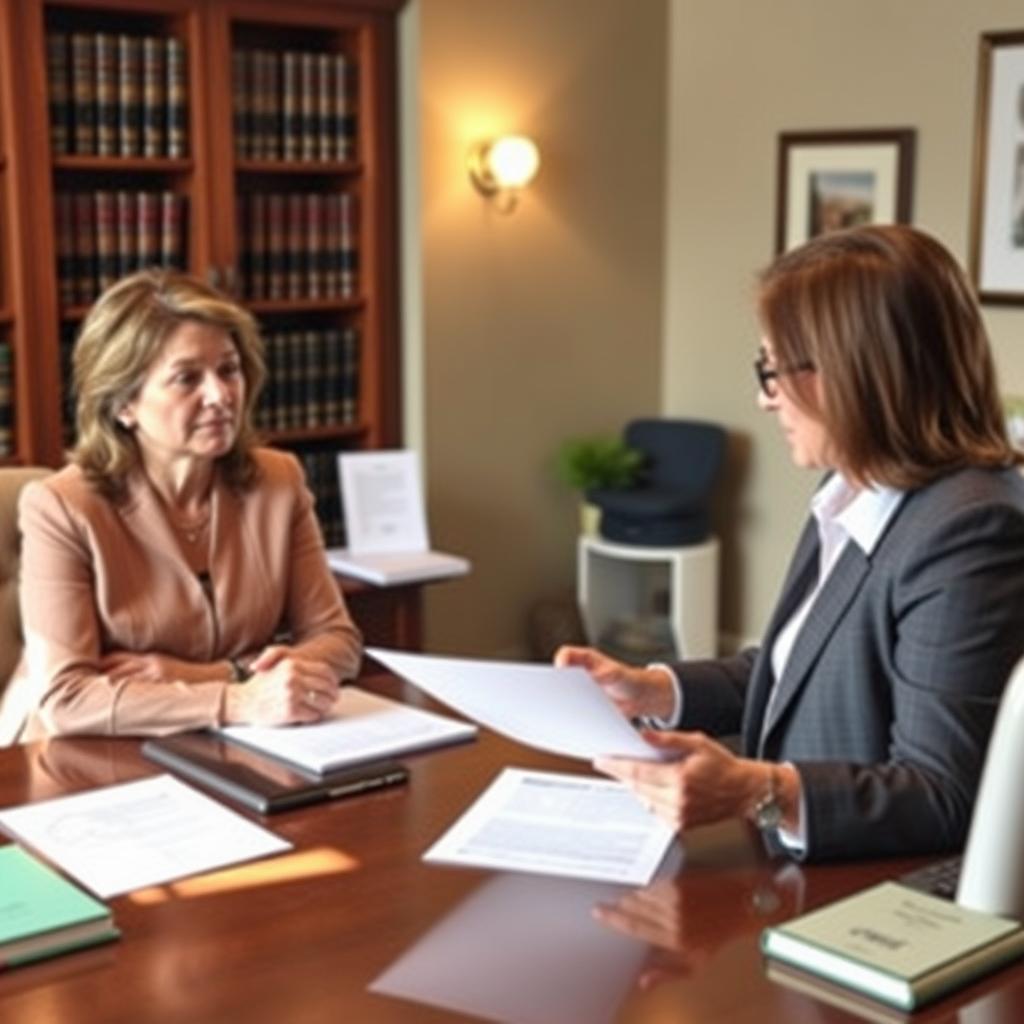
Business Valuation Divorce Lawyer Rappahannock County
You need a Business Valuation Divorce Lawyer Rappahannock County to protect your company assets in a divorce. Virginia law requires equitable distribution of marital property, which includes business interests. The value of your business must be determined for a fair settlement. Law Offices Of SRIS, P.C.—Advocacy Without Borders. provides direct legal counsel for these complex cases. (Confirmed by SRIS, P.C.)
Statutory Definition of Business Valuation in Virginia Divorce
Virginia Code § 20-107.3 governs the classification and valuation of property, including businesses, in a divorce. This statute mandates equitable distribution, not equal division, of all marital property. A business valuation divorce lawyer Rappahannock County uses this code to argue for a fair outcome. The court must first classify property as marital, separate, or hybrid. Marital property includes all assets acquired from the date of marriage until the date of separation. Separate property is owned before marriage or received by gift or inheritance. A business often falls into a hybrid category, requiring experienced valuation.
The statute provides the legal framework for valuing a company in divorce. It lists factors the court must consider. These factors include the contributions of each party to the well-being of the family. The court also considers the debts and liabilities of each spouse. The value of marital property is determined as of the date of the evidentiary hearing. This date is critical for an accurate business appraisal.
Valuation under this statute is a complex legal and financial task. It is not a simple accounting exercise. The classification of a business as marital, separate, or part separate and part marital is often contested. A skilled attorney must present evidence on active versus passive appreciation. Active appreciation results from the direct efforts of a spouse. Passive appreciation is due to market forces. Distinguishing between the two is essential for a proper valuation in Rappahannock County.
What is the legal standard for valuing a business in a Virginia divorce?
The legal standard is “fair market value” as defined by Virginia case law. Fair market value is the price a willing buyer would pay a willing seller. Both parties must have reasonable knowledge of the relevant facts. The sale must be without compulsion. This standard applies to businesses in Rappahannock County divorce cases. The valuation date is typically the date of the final separation.
How does Virginia law treat a business started before marriage?
A business started before marriage is generally considered separate property. Any increase in value during the marriage may become marital property. This is called marital appreciation. The increase must be classified as either active or passive. Active appreciation due to a spouse’s labor is marital. Passive appreciation from market forces may remain separate. A business valuation divorce lawyer Rappahannock County must prove the source of the growth.
What if both spouses worked in the family business?
Both spouses working in the business complicates the valuation. Their labor contributions are directly relevant to the company’s value. The court will assess the value each spouse added to the enterprise. This assessment impacts the equitable distribution award. A detailed analysis of roles, salaries, and growth periods is required. This is a common issue for a company value in divorce lawyer Rappahannock County to resolve. Learn more about Virginia family law services.
The Insider Procedural Edge in Rappahannock County
The Rappahannock County Circuit Court handles all divorce and equitable distribution matters. The court is located at 247 Gay Street, Washington, VA 22747. You file your Complaint for Divorce and any property claims here. Procedural specifics for Rappahannock County are reviewed during a Consultation by appointment at our Virginia Location. The court follows the Virginia Rules of Evidence and the Rules of the Supreme Court of Virginia. Local rules may also apply, so local counsel is critical.
The timeline for a divorce involving business valuation can be lengthy. Virginia requires a separation period before filing for divorce. This period is six months with a separation agreement or one year without. The valuation process itself adds significant time. Discovery, including subpoenas for financial records, must be completed. experienced witnesses must be disclosed and deposed. A final hearing on valuation may not occur for many months after filing.
Filing fees in Rappahannock County Circuit Court are set by state statute. The cost to file a Complaint for Divorce is currently $89. Additional fees apply for serving the other party with legal papers. There are also fees for filing motions related to discovery or experienced testimony. The largest cost is often the fee for a business valuation experienced. These experienced attorneys can charge thousands of dollars for a formal appraisal. Your attorney can advise on managing these litigation costs effectively.
What is the typical timeline for a divorce with business valuation?
A contested divorce with business valuation often takes 12 to 18 months to resolve. The separation period must be met before filing. Discovery and experienced analysis can consume 6 to 9 months. Settlement negotiations or a trial will add further time. The complexity of the appraisal dictates the schedule. A business appraisal divorce lawyer Rappahannock County can provide a realistic timeline.
Where are divorce filings made in Rappahannock County?
All divorce filings are made with the Clerk of the Rappahannock County Circuit Court. The address is 247 Gay Street, Washington, VA 22747. The clerk’s Location accepts filings during normal business hours. Electronic filing may be available for certain documents. Your attorney will handle all filings and court appearances for you. Learn more about criminal defense representation.
Penalties & Defense Strategies for Business Valuation Disputes
The most common penalty in a valuation dispute is an unequal division of marital assets. The court can award a larger share to one spouse based on the valuation. If the business is undervalued, the owner-spouse may receive less other property to balance the estate. If overvalued, they may be forced to “buy out” the other spouse at an inflated price. The financial consequences are severe and long-lasting. A strategic defense is essential from the start.
| Offense / Issue | Penalty / Consequence | Notes |
|---|---|---|
| Failure to Disclose Business Assets | Contempt of Court; Sanctions; Attorney’s Fees | Court can award the hidden asset entirely to the other spouse. |
| Undervaluing Business to Hide Value | Reopening of Case; Fraud Penalties; Loss of Credibility | Post-divorce lawsuits for fraud are possible for years. |
| Ignoring Goodwill in Valuation | Unequal Distribution Award | Virginia recognizes enterprise and personal goodwill in businesses. |
| Improper Classification of Debt | Unfair Debt Allocation | Business loans may be classified as marital liabilities. |
[Insider Insight] Rappahannock County judges expect full financial transparency. They see attempts to hide or manipulate business value as a direct affront to the court. Local prosecutors in related contempt or fraud matters take a dim view of financial deception in divorce. The court’s equitable power allows it to adjust distribution significantly to punish bad faith. Presenting a clear, well-documented valuation from a reputable experienced is the best defense.
What are the financial risks of an incorrect business valuation?
The financial risk is a property division that costs you tens or hundreds of thousands of dollars. You could lose a disproportionate share of other marital assets. You might be ordered to make a cash payment based on an incorrect number. Future earnings from the business could be subject to claims. Tax liabilities may be miscalculated. A precise valuation protects your entire financial portfolio.
Can I be forced to sell my business in a divorce?
A Virginia court can order the sale of a business, but it is not the preferred method. The court’s first goal is to award the business to one spouse. That spouse then compensates the other with assets of equal value. A sale is only ordered if no other equitable solution exists. This is a last resort, often avoided with proper legal strategy from a company value in divorce lawyer Rappahannock County.
Why Hire SRIS, P.C. for Your Rappahannock County Business Valuation Divorce
Our lead attorney for complex asset division is Bryan Block, a former law enforcement officer with direct experience in financial investigation. Bryan Block’s background provides a unique advantage in uncovering hidden assets and challenging flawed valuations. He understands how to build a factual record that withstands judicial scrutiny. SRIS, P.C. has secured favorable outcomes in numerous Virginia property division cases. Our approach is direct, strategic, and focused on protecting your capital. Learn more about personal injury claims.
Bryan Block
Former Virginia law enforcement officer.
Extensive experience in financial discovery and asset tracing.
Focuses on high-net-worth divorce and business valuation disputes.
Direct, tactical approach to litigation and negotiation.
Our firm differentiator is our “Advocacy Without Borders” approach. We deploy resources from across our Virginia Locations to support your Rappahannock County case. We work with a network of forensic accountants and valuation experienced attorneys. We understand the local Rappahannock County Circuit Court procedures. We prepare every case as if it is going to trial. This preparation forces stronger settlement offers. Your financial future is too important for anything less.
Localized Rappahannock County Business Valuation FAQs
How is a small business valued in a Rappahannock County divorce?
A qualified experienced determines fair market value using income, asset, and market approaches. The experienced analyzes financial statements, owner compensation, and business goodwill. The final report is presented as evidence in court.
What business records are needed for a divorce valuation?
You need tax returns (5 years), profit/loss statements, balance sheets, bank statements, and debt schedules. Provide ownership agreements, payroll records, and customer/client lists. Your attorney will subpoena any missing documents.
Who pays for the business valuation experienced in a divorce?
The court can order the cost to be shared or assigned to one party. Often, each spouse hires their own experienced. The fees can be considered a marital expense or factored into the final distribution. Learn more about our experienced legal team.
Can a spouse get future profits from a business after divorce?
No, Virginia law only divides the value of the business as of the valuation date. Future profits belong solely to the spouse who retains the business. The division is a one-time event based on present value.
How does personal goodwill affect my business valuation?
Personal goodwill, tied to the owner’s reputation, is not a marital asset and is excluded from value. Enterprise goodwill, tied to the business itself, is a marital asset. Distinguishing between them requires experienced analysis.
Proximity, CTA & Disclaimer
Our Virginia Location supports clients throughout Rappahannock County. We are within driving distance of the Rappahannock County Courthouse in Washington, VA. We provide direct legal representation for business valuation disputes in divorce. Consultation by appointment. Call 855-696-3766. 24/7.
Law Offices Of SRIS, P.C.
Advocacy Without Borders.
Phone: 855-696-3766
Past results do not predict future outcomes.