
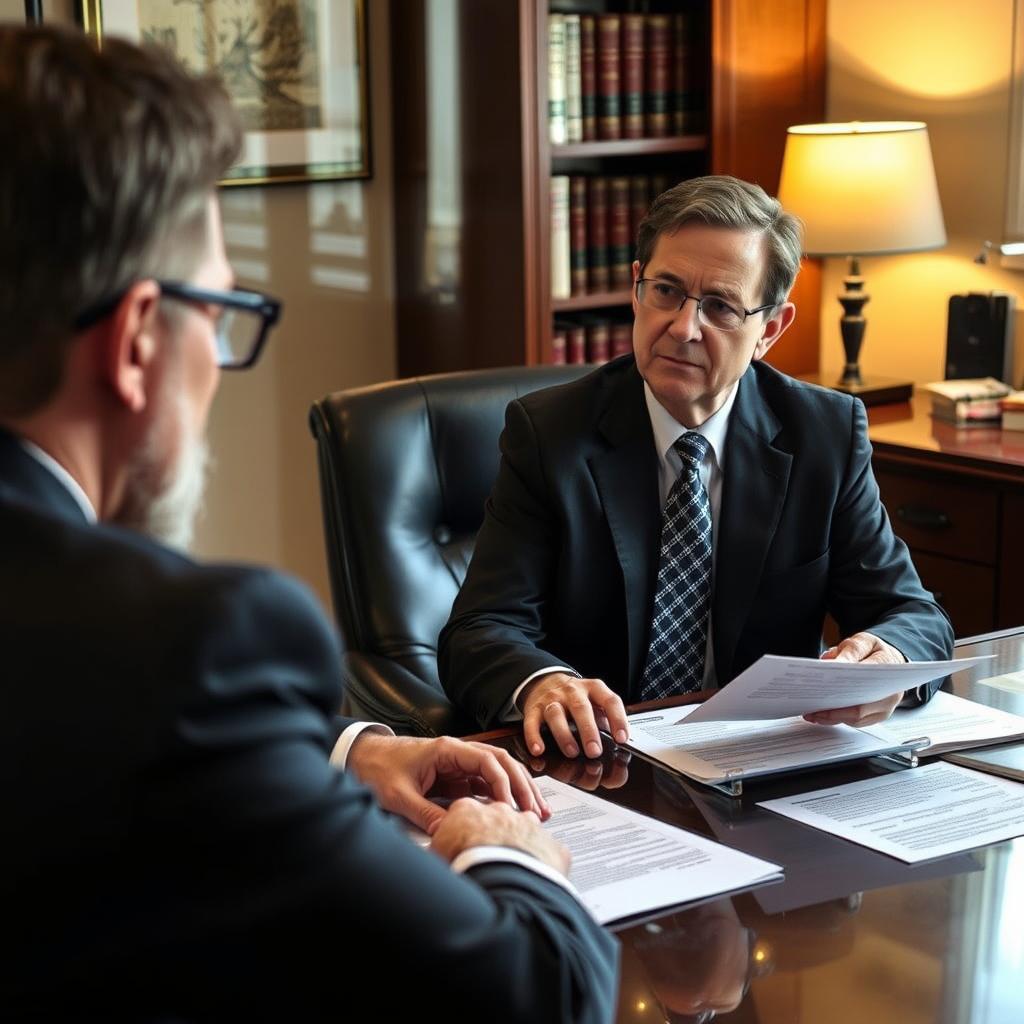
Armed Forces Divorce Lawyer Fauquier County, VA
Divorce involving a member of the armed forces presents legal issues that do not arise in a civilian divorce. Servicemembers and their spouses in Fauquier County, Virginia, must navigate the intersection of Virginia family law, federal statutes such as the Servicemembers Civil Relief Act (SCRA), and the Uniformed Services Former Spouses’ Protection Act (USFSPA). Mr. Sris and his Of Counsel at Law Offices Of SRIS, P.C. assist clients in Fauquier County—including in Warrenton, New Baltimore, Bealeton, Marshall, and The Plains—with the full range of military-divorce concerns: jurisdiction and residency, division of military retired pay, child custody when a parent is subject to deployment, and spousal support. Because Virginia is an equitable distribution state, the Fauquier County Circuit Court at 6 Court Street in Warrenton divides marital property fairly—not necessarily equally—under Va. Code § 20‑107.3, and military benefits add a layer of complexity that demands experienced counsel. To discuss your situation, reach Law Offices Of SRIS, P.C. at (888) 437‑7747. Law Offices Of SRIS, P.C. – Advocacy Without Borders.
What Armed Forces Divorce Means in Fauquier County
A military divorce in Fauquier County is a family law matter governed by Virginia’s statutory framework—Va. Code Title 20—and by federal law that protects and also affects servicemembers. The core difference between a military divorce and a civilian one is the presence of federal protections such as the SCRA, which can stay proceedings while the servicemember is on active duty, and the USFSPA, which governs how military retired pay may be divided upon divorce. The Fauquier County Circuit Court hears all absolute divorce cases; the Fauquier County Juvenile and Domestic Relations District Court addresses custody, visitation, and support matters that may proceed separately or as part of the divorce action.
Virginia is an equitable‑distribution jurisdiction. Under Va. Code § 20‑107.3 the court considers eleven factors—the duration of the marriage, the contributions of each party, the sources of income, and the tax consequences of a proposed division—before distributing marital property. For a military family, marital property often includes a military pension, Thrift Savings Plan accounts, and survivor benefit plan entitlements. Because the court must classify, value, and distribute these assets, understanding the interplay of Virginia law and the USFSPA is essential. Additionally, custody arrangements must account for the possibility of deployment or permanent change of station orders, making a parenting plan that anticipates military mobility a practical necessity. Fauquier County’s location—just west of major Northern Virginia employment centers—means that many residents commute long distances, and a court may consider commute and relocation issues when fashioning a custody award. Mr. Sris and his Of Counsel bring over 120 years of combined legal experience to these matters. Results may vary.
How Mr. Sris and His Of Counsel Handle Armed Forces Divorce Cases
The process begins with a thorough review of the client’s circumstances: years of service, rank, anticipated retirement date, the nature of the marital estate, and the needs of any children. Mr. Sris and his Of Counsel then map out the applicable legal principles—identifying which assets are marital versus separate, evaluating whether Virginia has jurisdiction over the servicemember, and determining whether the SCRA may affect the timing of the proceeding. If child custody or support is in dispute, they work to develop a plan that accounts for the parent’s military obligations while protecting the child’s best interests under Va. Code § 20‑124.3.
Once the factual and legal landscape is clear, the team pursues the most efficient resolution consistent with the client’s goals. Many military divorces can be resolved through a comprehensive separation agreement that addresses property division, support, and custody; when agreement cannot be reached, Mr. Sris and his Of Counsel are prepared to litigate in the Fauquier County Circuit Court or Juvenile and Domestic Relations Court. Throughout the matter, they coordinate with military pay centers and, where necessary, qualified domestic relations order (QDRO) attorney to ensure that retirement pay division is properly implemented. The timeline for a military divorce depends on the complexity of the issues, the mandatory separation periods under Virginia law, and the court’s calendar; cases involving contested equitable distribution or custody can take longer. For guidance on your specific situation, reach Law Offices Of SRIS, P.C. at (888) 437‑7747.
About Mr. Sris and His Of Counsel Team
Mr. Sris, Owner and Founder of Law Offices Of SRIS, P.C., has practiced law since 1997 and is admitted in Virginia, Maryland, the District of Columbia, New Jersey, and New York. Before founding the firm, Mr. Sris served as a former prosecutor. His background includes testifying before the Virginia House Courts of Justice Committee in support of 2019 HB 635 (chief patron Del. David Bulova), a measure that revised the equitable-distribution statute. Mr. Sris draws on that experience, together with his knowledge of Virginia family law and military benefits, to assist clients navigating the complexities of an armed‑forces divorce.
Mr. Sris is supported by a team of Of Counsel attorneys who bring extensive experience in family law, litigation, and asset analysis. Collectively, Mr. Sris and his Of Counsel have documented 4,739+ case results since 1997. Results may vary. The firm serves Fauquier County from its Fairfax Location at 4008 Williamsburg Court, Fairfax, VA 22032, by appointment—call (888) 437‑7747 to schedule a consultation.
Frequently Asked Questions
What is unique about a military divorce in Virginia?
A military divorce in Virginia raises distinct issues because of federal laws like the Servicemembers Civil Relief Act and the Uniformed Services Former Spouses’ Protection Act. These laws can delay court proceedings when the servicemember is on active duty, and they set the rules for dividing military retired pay. Virginia’s equitable‑distribution statute then governs how the marital share of a pension is classified and divided. The presence of military benefits also affects child‑support calculations and custody arrangements, especially when deployment or relocation orders are involved.
Can a Virginia court divide my military pension?
Yes, a Virginia court can divide the marital share of a military pension under the Uniformed Services Former Spouses’ Protection Act, provided the court has jurisdiction over the servicemember. The USFSPA allows state courts to treat disposable retired pay as property divisible upon divorce. Virginia’s equitable‑distribution scheme then applies, and the court will consider the statutory factors in Va. Code § 20‑107.3 to determine a fair allocation. A QDRO-equivalent order is usually needed to effectuate the division with the Defense Finance and Accounting Service.
How does deployment affect a custody case in Fauquier County?
Deployment does not automatically change a custody order, but it requires a parenting plan that addresses temporary adjustments. Virginia law directs courts to consider the best interests of the child, and a parent’s military obligations are not a basis for a custody modification absent other changed circumstances. Many parents negotiate a pre‑deployment agreement that identifies who will exercise the non‑deployed parent’s parenting time during the absence. If a dispute arises, the Fauquier County Juvenile and Domestic Relations Court may be asked to enter a temporary order.
Do I need a lawyer for an armed forces divorce in Fauquier County?
You are not legally required to have a lawyer, but the complexity of military benefits and federal protections makes experienced legal guidance important. Mistakes in the division of a military pension or survivor benefit plan can have long-term financial consequences. An attorney who understands the intersection of Virginia domestic‑relations law and federal military pay regulations can help you avoid pitfalls. Mr. Sris and his Of Counsel assist clients with these matters throughout Fauquier County.
What should I bring to a consultation about a military divorce?
Bringing a list of all military service dates, LES statements, retirement-point summaries, and any existing separation or custody agreements helps the discussion. Also useful are tax returns, bank and investment account statements, real‑estate deeds, and information about any jurisdiction in which the servicemember has been stationed. Having these documents available allows Mr. Sris and his Of Counsel to provide a more informed assessment during the initial meeting. To schedule a consultation, contact Law Offices Of SRIS, P.C. at (888) 437‑7747.
Where can I find a family law attorney near Fauquier County for a military divorce?
Law Offices Of SRIS, P.C., with its Fairfax Location at 4008 Williamsburg Court, serves clients throughout Fauquier County. Mr. Sris, a former prosecutor and owner‑founder of the firm, works with a team of Of Counsel who bring over 120 years of combined legal experience to family‑law and military‑divorce matters. Results may vary. The firm can be reached at (888) 437‑7747, and consultations are by appointment.
Additional Family Law Resources in Northern Virginia:
- Family Law representation in Fairfax County
- Prince William County family law matters
- Stafford County divorce and custody assistance
- Loudoun County family law guidance
- Arlington County military-divorce counsel
Primary sources and official authority:
- Virginia Code Title 20 — Domestic Relations
- Virginia Circuit Courts
- DFAS — Uniformed Services Former Spouses’ Protection Act
Attorney advertising. Prior results do not guarantee a similar outcome.
Case results depend on a variety of factors unique to each case.
Results may vary.