
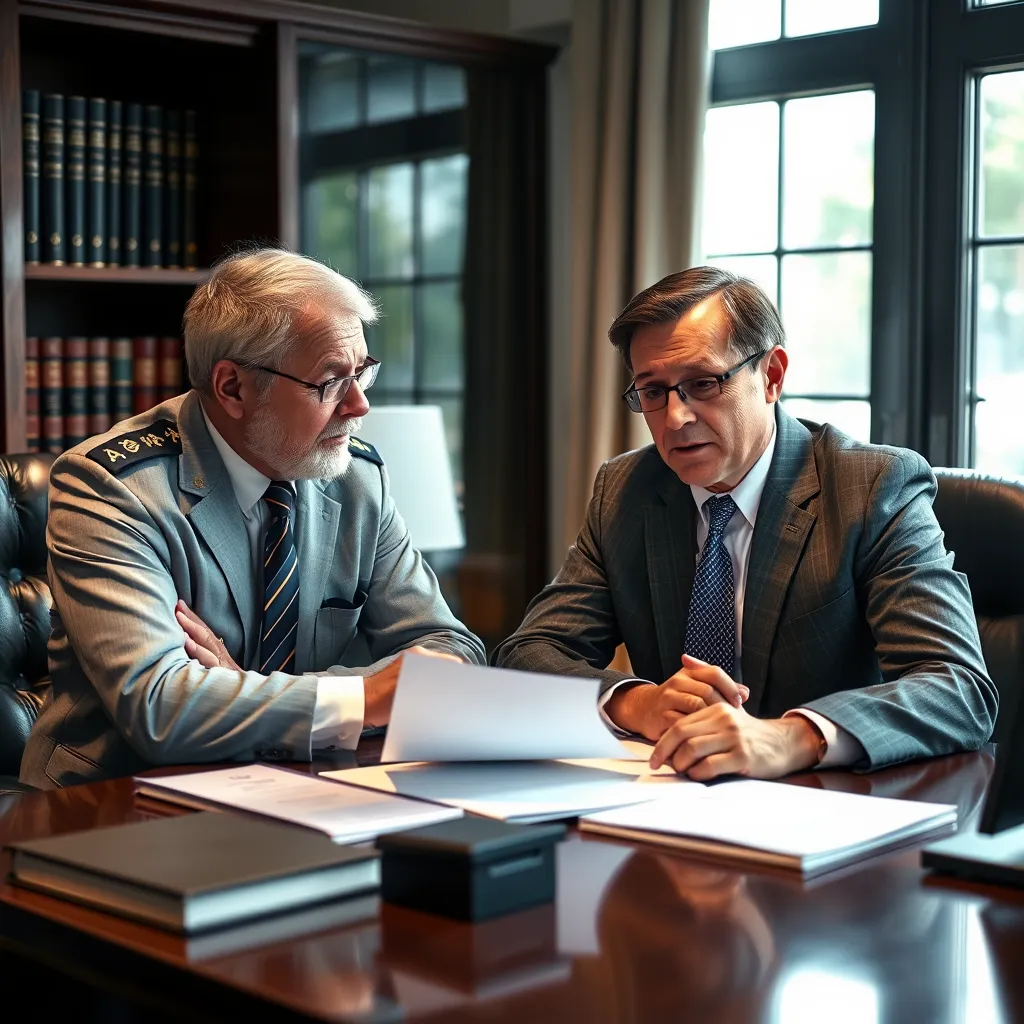
Armed Forces Divorce Lawyer Alexandria, VA
You deployed to Fort Belvoir and your family made a home in Alexandria. Now the marriage is ending, and the questions pile up faster than the paperwork: will I have to move out of base housing? How does my pension get split? What happens to our child if I deploy? Military families face a unique set of divorce challenges that civilian courts alone do not always understand. Mr. Sris and the firm’s Of Counsel attorneys represent service members and military spouses throughout Northern Virginia, including Alexandria, with a practice built on the specific needs of armed forces families. Call (888) 437-7747 to request a consultation. Law Offices Of SRIS, P.C. – Advocacy Without Borders.
Strategy Options That Protect Your Military Career and Family
When a service member files for divorce in Virginia, every decision carries potential career consequences. A contested divorce can affect security clearances, command evaluations, and even future promotions. Mr. Sris and the firm’s Of Counsel attorneys evaluate whether an uncontested dissolution—often completed through a separation agreement that resolves property division, support, and custody—is achievable. Where litigation is necessary, they prepare each case as though it will go before the Alexandria Circuit Court, focusing on the specific equitable distribution factors that Virginia judges apply, while always factoring in the Servicemembers Civil Relief Act protections that may be available.
For military spouses, strategy centers on preserving access to benefits earned during the marriage—including the marital share of a service member’s pension under the Uniformed Services Former Spouses’ Protection Act—and on securing a custody plan that works across state lines or during deployment. The firm’s familiarity with the Alexandria Juvenile and Domestic Relations Court, which handles standalone custody and support matters, helps clients avoid procedural missteps that can delay a safe and stable arrangement.
What to Expect in an Armed Forces Divorce Proceeding
Virginia is an equitable distribution state, meaning the Alexandria Circuit Court divides marital property based on eleven statutory factors under Va. Code § 20‑107.3. For military couples, the most complex asset is often the service member’s retirement benefits. The court can direct a percentage of the marital share to be paid directly from a military pension, but a statement of earnings or a properly drafted order is required. Child support calculations follow the Virginia guidelines, though gross income from allowances such as BAH and BAS must be correctly categorized. Custody determinations rest on the trusted‑interests of the child factors in Va. Code § 20‑124.3.
An armed forces divorce filed in Alexandria typically follows the same procedural path as any other Virginia divorce: grounds must be proven under Va. Code § 20‑91, either through a no‑fault separation period (six months with a signed agreement and no minor children, or one year otherwise) or through fault grounds like cruelty or desertion. The firm guides clients through the choice of ground, the preparation of a Complaint for Divorce, and compliance with the six‑month residency requirement under Va. Code § 20‑97. For service members stationed outside Virginia but who maintain domicile in the Commonwealth, the residency standard is a key procedural checkpoint that can affect timing.
Key Legal Issues for Service Members and Spouses
Several points often surprise military clients. First, the Servicemembers Civil Relief Act allows a court to stay a proceeding if military duties materially affect the service member’s ability to appear, but the stay is not automatic; a proper application must be made. Second, a military pension is not automatically divided in half—the “20/20/20” rule under the USFSPA determines whether a former spouse can receive direct payments, and the length of the marriage overlapping with military service dictates the benefit. Third, child custody orders must account for deployment. India is not a signatory to the 1980 Hague Convention on Civil Aspects of International Child Abduction. Virginia law permits a temporary delegated parental authority that avoids the need for a full modification hearing each time a service member receives orders.
For civilian spouses, understanding how to obtain survivor benefit plan coverage and how to enforce support when the service member moves across the country is equally essential. The firm’s experience with multi‑jurisdictional family law helps clients craft agreements that hold up when orders are involved.
Experienced Advocacy from Mr. Sris and the Firm’s Of Counsel Attorneys
Mr. Sris, Owner and Founder of Law Offices Of SRIS, P.C., is a former prosecutor who built the firm in 1997 to provide thorough representation across Virginia, Maryland, the District of Columbia, New Jersey, and New York. He personally oversees each armed forces divorce matter, working alongside the firm’s Of Counsel attorneys, who bring extensive combined legal experience to every case. The firm’s Arlington location serves clients throughout Alexandria, Old Town, Del Ray, and Kingstowne; meetings are by appointment only.
The firm’s approach is to present the Alexandria Circuit Court—located at 520 King Street, 2nd Floor, Alexandria, VA 22320—with a coherent factual narrative supported by organized financial documentation. For pension valuation, the firm consults forensic accountants as needed. Mr. Sris and the firm’s Of Counsel attorneys have documented case results across multiple practice areas since 1997. Results may vary. To schedule a consultation, call (888) 437‑7747.
Frequently Asked Questions About Armed Forces Divorce in Alexandria, VA
Will I lose my military pension if I get divorced in Alexandria, Virginia?
No, you will not automatically lose your entire pension, but a portion of the marital share may be awarded to your spouse. Virginia courts apply equitable distribution under Va. Code § 20‑107.3 and divide only the pension benefits earned during the marriage. The percentage awarded to the former spouse is set by the court after examining the duration of the marriage relative to the creditable military service. Under federal law, the 20/20/20 rule determines whether the former spouse can receive direct payment from the Defense Finance and Accounting Service; otherwise, the service member remains responsible for making the payment. A qualified attorney can help you calculate the marital share and present an accurate figure to the court.
Can I file for divorce in Alexandria if I am stationed elsewhere?
Yes, if you have maintained Virginia domicile and have been a resident for at least six months before filing, you can file for divorce in Alexandria. The residency requirement under Va. Code § 20‑97 requires both residence and domicile. Service members who claim Virginia as their home of record and who have not established domicile in another state generally satisfy this requirement. The divorce action is then heard in the Alexandria Circuit Court if either party resides within the city. The firm can help you gather the documentation needed to prove domicile, such as LES forms and tax returns, and can prepare your Complaint for Divorce.
How does deployment affect my custody case in Alexandria?
Deployment does not automatically terminate your custody rights, but it does require careful planning and a temporary custody order that preserves your relationship with your child. Virginia law allows a deploying parent to designate a temporary placement for the child through a power of attorney or a consent order that avoids a contested modification proceeding. The Alexandria Juvenile and Domestic Relations Court can issue such orders as part of a custody and visitation plan. The firm works with military families to draft a plan that addresses communication during deployment, the child’s return to the deploying parent once the deployment ends, and transitional parenting time. The court’s focus remains the best interests of the child under Va. Code § 20‑124.3.
Do I need a lawyer for an armed forces divorce in Alexandria, or can I handle it myself?
You are not legally required to hire a lawyer, but proceeding without experienced representation in a military divorce risks costly mistakes—especially in pension division and custody orders that must survive a future deployment. Alexandria courts expect proper pleadings and accurate financial disclosures. Mr. Sris and the firm’s Of Counsel attorneys understand the specific intersection of Virginia family law and military regulations, and they can identify issues such as whether BAH and BAS are correctly classified as income for support purposes. For service members, an attorney can also advise on the Servicemembers Civil Relief Act and the potential impact on security clearances. A consultation can help you evaluate the benefits of professional guidance for your particular situation.
What is the difference between a contested and an uncontested military divorce in Virginia?
An uncontested divorce means both spouses have signed a comprehensive separation agreement that resolves all issues—property division, pension allocation, support, and custody—and they simply ask the court to enter the final decree. A contested divorce arises when the parties cannot agree on one or more of those issues, and the court must decide after a trial. Uncontested cases typically move faster because the mandatory separation period can be shortened to six months under Va. Code § 20‑91(9)(b) if no minor children are involved and the agreement is in place. The firm explores whether an uncontested path is feasible before recommending litigation, which in Alexandria Circuit Court can take nine to eighteen months or more.
How does the Servicemembers Civil Relief Act affect my divorce case in Alexandria?
The SCRA can temporarily stay a divorce proceeding if your military duties materially affect your ability to appear or participate, but the stay is not automatic—you must request it and provide supporting documentation. The court will assess whether your service substantially impairs your ability to defend the action. The stay typically lasts for the deployment period plus an additional 90 days. This protection applies even if you are the defendant and an opposing spouse filed the divorce. The firm can prepare the necessary application and ensure that all deadlines are properly tolled, so that your legal rights remain protected while you fulfill your military obligations.
Can my spouse receive my VA disability benefits in a Virginia divorce?
No, VA disability benefits are generally not divisible as marital property, but they may be considered by the court as a source of income when calculating spousal support. Federal law preempts state property division statutes, so Alexandria courts cannot treat VA disability payments as marital assets subject to equitable distribution. However, under Va. Code § 20‑107.1, a judge may factor those payments into a spousal support determination as part of the recipient’s overall income. This distinction can significantly affect settlement negotiations, and clear guidance from counsel helps avoid unrealistic expectations on both sides.
How much does an armed forces divorce cost in Alexandria?
The cost varies depending on the complexity of your case—whether it is contested, whether a business valuation or pension analysis is needed, and whether custody is disputed. Uncontested divorces with a complete separation agreement typically involve lower legal fees because the attorney’s role focuses on document preparation and court appearance. Contested matters, especially those requiring expert witnesses or multiple hearings, involve higher costs. The firm discusses fees during an initial consultation and offers payment plans. Court filing fees and process‑server costs are separate. To get a more precise understanding of the potential expense, contact the firm at (888) 437‑7747.
Will a Virginia divorce affect my security clearance?
A divorce itself does not automatically revoke a security clearance, but the circumstances surrounding it—such as financial distress, domestic violence allegations, or failure to meet support obligations—can trigger a review. Security clearance adjudicators look at the whole person concept, and a contested divorce with significant debt or allegations of misconduct can raise concerns. The firm helps military clients handle the legal aspects of the divorce in a way that minimizes collateral damage to their career. When appropriate, the firm coordinates with a clearance attorney to address any security-related inquiries that arise during the divorce process.
What if my spouse lives out of state—can we still divorce in Alexandria?
Yes, as long as at least one spouse meets Virginia’s residency and domicile requirements, the Alexandria Circuit Court can exercise jurisdiction over the divorce. The six‑month domiciliary requirement under Va. Code § 20‑97 must be satisfied. If the out‑of‑state spouse has never lived in Virginia, the court may still enter a divorce decree, but it may not be able to adjudicate property located in another state without personal jurisdiction over the nonresident spouse. In such cases, the firm evaluates whether a separate property action is necessary elsewhere while proceeding with the divorce in Alexandria to dissolve the marriage.
Are there resources for military families going through divorce in Alexandria?
Yes, installations near Alexandria, including Joint Base Myer‑Henderson Hall and Fort Belvoir, offer family support services, legal assistance offices, and chaplain counseling. However, military legal assistance attorneys cannot represent a service member in court; they can only provide advice. For full representation in an Alexandria divorce, you will need private counsel. Mr. Sris and the firm’s Of Counsel attorneys frequently collaborate with command‑based resources to ensure that the service member’s family receives comprehensive support during the transition.
What should I bring to my first consultation about an armed forces divorce?
Gather your most recent LES, tax returns for the past three years, any existing separation or prenuptial agreement, and a list of all assets and debts—both marital and separate. If you have children, bring any existing custody or child support orders, even from another state. If a protective order is in place, bring a copy. The firm uses this information to provide a realistic assessment of the likely timeline, the potential division of assets, and the support obligations. The consultation is confidential, and you can ask questions about the process without any obligation.
Explore related: Fairfax County Family Law Lawyer, Fairfax City Family Law Lawyer, Falls Church Family Law Lawyer, Prince William County Family Law Lawyer.
Additional resources: Virginia Code Title 20 (Domestic Relations) | Alexandria Circuit Court | Virginia Judicial System.
Attorney advertising. Prior results do not guarantee a similar outcome. Results may vary. Case results depend on a variety of factors unique to each case. Attorney responsible for this advertising: Mr. Sris.