
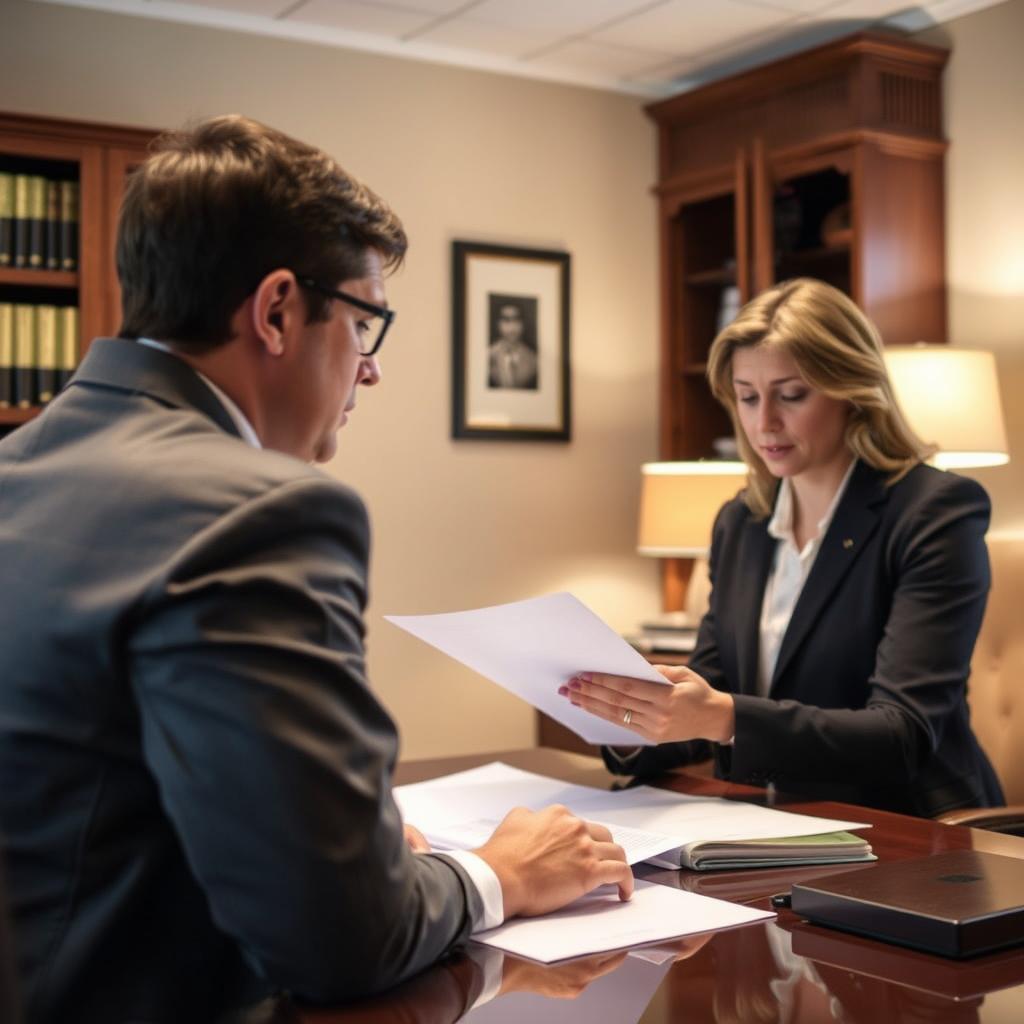
Alimony Contempt Lawyer Chesterfield County, VA
The envelope from Chesterfield County Circuit Court lands in your mailbox. You open it, and your stomach drops: your ex-spouse has filed a show cause petition, alleging you failed to pay court-ordered alimony. A hearing date is set, and the document warns that a finding of contempt may result in jail time, fines, and a lasting mark on your record. The fear of losing your freedom or your livelihood because of a support dispute can feel overwhelming. Mr. Sris, Owner and Founder of Law Offices Of SRIS, P.C., and the firm’s Of Counsel attorneys represent individuals facing alimony contempt allegations throughout Chesterfield County. Reach our location at (888) 437-7747 to schedule a consultation and discuss your rights before the scheduled hearing. Law Offices Of SRIS, P.C. – Advocacy Without Borders.
Alimony Contempt in Chesterfield County: Why It Matters
Alimony—technically spousal support in Virginia—is a court order, and the failure to comply can lead to civil or criminal contempt proceedings. The stakes in Chesterfield County are high because the circuit court has the authority to order incarceration, impose fines, or require payment of arrears with additional fees. The legal framework rests on Va. Code § 20-107.1, which sets out the factors courts consider when establishing spousal support, and Va. Code § 18.2-456, which defines contempt of court.
Chesterfield County Circuit Court, located at 9500 Courthouse Road, handles enforcement and contempt matters that involve any order originating from a divorce or separate maintenance proceeding. Meanwhile, Chesterfield Juvenile and Domestic Relations District Court deals with issues that touch on child support and custody. When alimony contempt overlaps with other family law concerns, navigating both courts efficiently requires local familiarity. Mr. Sris and the firm’s Of Counsel attorneys appear regularly in these courts, so you are not walking into an unfamiliar process alone.
Common Scenarios That Lead to Alimony Contempt Charges
Contempt charges rarely arise without warning. For many clients in Chesterfield County, the underlying cause is a genuine change in financial circumstances—job loss, medical crisis, or an unexpected expense—that made timely alimony payments impossible. Others face contempt because of misunderstandings about the scope of the order, such as confusion over whether the support obligation ended when the recipient remarried or when the payer retired.
Still other cases stem from a breakdown in communication between former spouses, where one party believes the other is intentionally withholding support. Whatever the trigger, the show cause petition sets in motion a formal proceeding where you must prove that the non-payment was not willful, or negotiate a resolution before a judge issues sanctions. Mr. Sris and the firm’s Of Counsel attorneys have helped clients articulate their reasons, present financial documentation, and argue against a finding of contempt in Chesterfield County courts.
Strategy Options: How We Approach Alimony Contempt Defense
There is no single blueprint for an alimony contempt case. The approach depends on whether the proceeding is civil or criminal, the amount of arrears, and your financial circumstances. A civil contempt action is designed to coerce compliance—you can purge the contempt by paying what you owe or by demonstrating an ability to pay and a willingness to follow a payment plan. Criminal contempt, on the other hand, punishes past behavior and can result in jail time, even apart from any subsequent payment.
Defending against contempt often involves demonstrating that the non-payment was not willful—perhaps because of a verifiable loss of income, a medical disability, or another legitimate obstacle. In Chesterfield County, a judge may consider evidence such as pay stubs, tax returns, medical records, and witness testimony to determine willfulness. Mr. Sris and the firm’s Of Counsel attorneys work to gather this evidence, file responsive pleadings, and negotiate with the opposing party’s counsel to potentially resolve the matter before trial. In many cases, a consent order providing a structured repayment schedule or a temporary modification of the support obligation can avert a contempt finding entirely.
What to Expect When You Come to Court
If your case proceeds to a hearing in Chesterfield County Circuit Court, you can expect the courtroom to be formal, with the judge presiding and counsel for both sides present. The petitioner will first present evidence supporting the claim that you violated the support order. That evidence typically includes the original order, your payment records, and testimony about missed payments. Your attorney will then have the opportunity to cross-examine witnesses and present your own evidence regarding your financial situation and reasons for non-payment.
Throughout the process, your attorney can argue for a reduction in the support obligation based on changed circumstances, or seek a finding that the contempt is not willful. The judge may also take into account any attempts you made to discuss the financial hardship with the recipient before the petition was filed. At the conclusion of the hearing, the court can issue a ruling, which might include an order for payment, a payment schedule, a finding of contempt with or without sanctions, or a dismissal. Our firm prepares you for each step, ensuring you understand the proceedings and are in the best position to articulate your side of the story.
Potential Consequences: No Statutory Table, Real Ramifications
A finding of contempt in a family law context is not a trivial matter. For civil contempt, the court may order you to pay the arrears plus the other party’s attorney’s fees and court costs. The judge can also set a compliance deadline and impose a daily fine or confinement if you fail to meet it. If the court finds criminal contempt, the sanctions can include a jail sentence and a fine. In Chesterfield County, circuit court judges have broad discretion under Va. Code § 18.2-456, and a contempt conviction can become a permanent blemish on your record.
Beyond the direct penalties, a contempt finding can affect your ability to obtain or modify portions of your divorce decree. A pattern of non-compliance can influence custody determinations, property rights, and even credibility in future court appearances. That is why addressing the show cause petition seriously from the outset is crucial. Mr. Sris and the firm’s Of Counsel attorneys work to resolve the matter on terms that preserve your legal standing and your financial future.
About Mr. Sris and the Firm’s Of Counsel Attorneys
Mr. Sris, Owner and Founder of Law Offices Of SRIS, P.C., has practiced law since 1997 and is admitted in Virginia, Maryland, the District of Columbia, New Jersey, and New York. As a former prosecutor, he brings a distinctive perspective to advocacy—understanding how evidence is built and how arguments are presented in court. Mr. Sris testified before the Virginia House Courts of Justice Committee in support of 2019 HB 635 (chief patron Del. David Bulova), a bill addressing family law equitable distribution procedures.
The firm’s Of Counsel attorneys add considerable experience in family law litigation, including proceedings in Chesterfield County. Together, Mr. Sris and the firm’s Of Counsel attorneys have represented individuals in matters ranging from straightforward contempt hearings to complex support modification disputes. When you call our Richmond location, you gain access to a team that understands what is at stake and how to move your case forward.
Frequently Asked Questions
Can I go to jail for failing to pay alimony in Chesterfield County, Virginia?
Yes, a judge in Chesterfield County Circuit Court can order jail time for failing to pay court-ordered alimony if the court finds you in contempt. The court distinguishes between civil contempt, which aims to compel payment, and criminal contempt, which punishes past willful non-payment. In a civil context, you may avoid jail by paying the arrears or making a good faith effort. For criminal contempt, incarceration is a direct sanction. The specific outcome depends on the facts of your case and how the judge views your ability to pay.
How does a Virginia lawyer defend against alimony contempt charges?
An experienced Virginia family law attorney defends against alimony contempt by showing that your non-payment was not willful, or by demonstrating a change in financial circumstances that warrants modification of the support order. The attorney may gather financial documents, medical records, and witness statements; file a motion to modify the underlying support obligation; and negotiate a settlement or payment schedule with the opposing party. In Chesterfield County, the court will examine your reasons and decide whether the evidence supports a finding of contempt.
What should I do if I receive a show cause petition for alimony contempt?
If you receive a show cause petition in Chesterfield County, contact a family law attorney immediately. Do not ignore the document—failure to appear can result in a capias for your arrest. Do not attempt to discuss the case with your ex-spouse or their lawyer without your attorney present. Preserve all financial records, pay stubs, bank statements, and any correspondence about the support obligation. A timely response can often avoid the worst outcomes, including jail time.
How is alimony different from spousal support in Virginia?
In Virginia, the terms alimony and spousal support are used interchangeably and refer to the same court-ordered financial obligation from one spouse to the other. The court applies the thirteen factors listed in Va. Code § 20-107.1 to decide whether support is warranted, in what amount, and for how long. The same enforcement mechanisms apply regardless of whether the order uses the word alimony or spousal support.
Can I modify my alimony obligation to avoid future contempt issues?
Yes, a person paying alimony can petition the court to modify the support amount if there has been a material change in circumstances. If your income decreases significantly, you lose your job, or you become disabled, you may apply for a modification in the Chesterfield County Circuit Court. Until the court grants a modification, however, the existing order remains in effect and must be paid. Filing for modification and presenting your case proactively can reduce the risk of contempt proceedings later.
What is the difference between civil and criminal contempt in Virginia family law?
Civil contempt is designed to compel compliance, while criminal contempt punishes past willful misconduct. In a civil contempt proceeding, you can avoid sanctions by complying with the court order—often by paying the overdue support. In criminal contempt, the court imposes punishment regardless of whether you later pay. In Chesterfield County, both types can be brought in the circuit court, and the distinction affects whether jail is a possible penalty and what standard of proof applies.
Do I need a lawyer for an alimony contempt hearing, or can I represent myself?
You are not required to have a lawyer, but representing yourself in an alimony contempt hearing can be extremely risky. Contempt proceedings involve rules of evidence, burdens of proof, and potential jail time. An experienced family law attorney understands how to present financial evidence, cross-examine the opposing party, and argue for a favorable resolution. For a hearing in Chesterfield County Circuit Court, having representation can significantly affect the outcome.
What happens if I simply cannot pay the alimony I owe?
If you cannot pay because of a genuine financial hardship, the court will examine whether your non-payment was willful. The judge will look at your income, assets, and living expenses to determine if you have the ability to pay. If the court finds an inability to pay, it may decline to hold you in criminal contempt. However, you still may be ordered to pay arrears over time, and the original support obligation remains until modified. Promptly raising the issue with the court through a modification petition is often the trusted course of action.
How long does an alimony contempt case take in Chesterfield County?
The timeline for an alimony contempt case in Chesterfield County varies based on the court’s calendar and whether the matter is resolved by agreement or proceeds to a hearing. An uncontested resolution can wrap up in weeks, while a contested evidentiary hearing may take several months. The court may also set pendente lite hearings for temporary issues, adding to the timeline. Contact our firm for an individualized timeline estimate based on your situation.
What is the difference between child support contempt and alimony contempt?
Child support contempt and alimony contempt are separate legal proceedings, though both involve court-ordered payments. Child support enforcement is typically handled by the Division of Child Support Enforcement or the Juvenile and Domestic Relations District Court in Chesterfield County, while alimony contempt is generally pursued in the Circuit Court. However, the two can intersect if a single order covers both obligations. The standard for willfulness and the available defenses differ depending on the nature of the support involved.
For guidance on your specific situation, reach Law Offices Of SRIS, P.C. at (888) 437-7747.
Our Richmond location serves clients in Chesterfield County. Family law matters are also handled in nearby jurisdictions: Henrico County family law attorney, Hanover County family law lawyer, and Richmond family law representation.
For authoritative background, see the Virginia Code Title 20 (Va. Code Title 20), the Virginia Court System (Virginia Courts), and the circuit court page (Chesterfield County Circuit Court).
Law Offices Of SRIS, P.C.
Richmond Location
7400 Beaufont Springs Drive, Suite 300, Room 395
Richmond, VA 23225
By appointment. Call (888) 437-7747 to schedule.
Attorney advertising. Prior results do not guarantee a similar outcome.
Case results depend on a variety of factors unique to each case.