
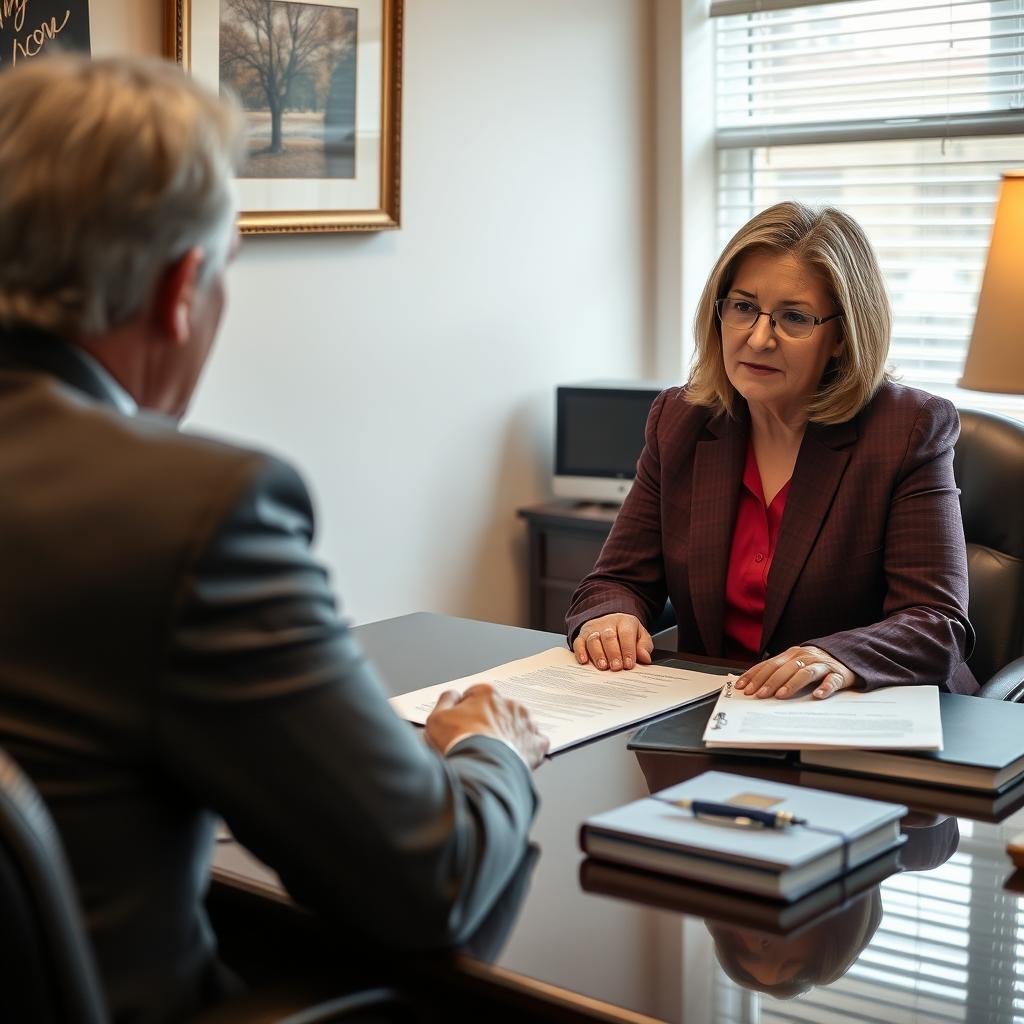
Retirement Account Division Lawyer Rockingham County, VA
Your retirement account has been a cornerstone of your financial security, built over years of careful planning and disciplined saving. Now, as you navigate a divorce in the Shenandoah Valley, the question of how a Rockingham County court will classify and divide those assets can feel overwhelming. Virginia’s equitable distribution framework controls whether your 401(k), IRA, pension, or deferred compensation plan remains solely yours or becomes subject to division. A single misstep in a qualified domestic relations order can cost you tens of thousands of dollars or lose valuable tax advantages. Mr. Sris and the firm’s Of Counsel attorneys work with clients in Harrisonburg, Bridgewater, Dayton, Elkton, Timberville, and Broadway to address retirement account division matters in divorce proceedings. To discuss your situation, reach Law Offices Of SRIS, P.C. at (888) 437-7747. Law Offices Of SRIS, P.C. – Advocacy Without Borders.
What Retirement Account Division Means in Rockingham County
Virginia is not a community property state. Instead, it follows equitable distribution under Va. Code § 20‑107.3. That means retirement accounts are not automatically split equally; the court determines a fair division based on eleven statutory factors. The Rockingham County Circuit Court at 53 Court Square, Harrisonburg, VA 22801, has exclusive jurisdiction over divorce and all issues of equitable distribution, including retirement plans. When a marriage ends, the court must first classify what part of each retirement account is marital property (accrued during the marriage) and what part is separate (accumulated before the marriage or after separation). Only the marital share is subject to division.
Common types of retirement assets that may need division include 401(k) plans, 403(b) accounts, traditional and Roth IRAs, military pensions, federal civilian pensions, state retirement benefits, and deferred‑compensation plans. For many families in the Shenandoah Valley, these assets represent the largest marital investment after the family home. The division of those assets is carried out through a Qualified Domestic Relations Order (QDRO)—a court order that tells the plan administrator how to allocate benefits between the parties. Errors in drafting a QDRO can cause the court to reject the order or the plan to pay out incorrectly, triggering tax consequences and delays. Mr. Sris and the firm’s Of Counsel attorneys are experienced in handling QDRO preparation and in working with forensic accountants and pension valuators when complex tracing or valuation is needed.
How Mr. Sris and His Of Counsel Handle Retirement Account Division Cases
Every retirement account division matter starts with a thorough identification of all accounts, including those that may have been forgotten or undervalued. The firm’s approach then moves through classification of the marital and separate portions, often using the coverture fraction for defined‑benefit plans or account‑statement reconciliation for defined‑contribution plans. When the asset has been hidden or the records are incomplete, the team works with financial attorneys to reconstruct values. Mr. Sris and his Of Counsel then negotiate a division as part of a larger property settlement agreement or, if needed, present the valuation and a proposed QDRO to the Rockingham County Circuit Court. Because the firm concentrates its practice in Virginia family law, its attorneys understand how local judges weigh the § 20‑107.3 factors—including the duration of the marriage, each spouse’s contributions to the acquisition of the asset, and the liquidity of the retirement account.
The firm also addresses adjacent issues such as survivor‑benefit elections, spousal‑support offsets that may be structured through retirement‑plan payments, and the tax implications of early withdrawals. The goal is always to secure a result that preserves as much of the client’s retirement security as the law allows while ensuring the division order is fully enforceable with the plan administrator. Mr. Sris and his Of Counsel work to achieve favorable outcomes in these matters; every case is handled with attention to the specific facts and the governing Virginia statute.
About Mr. Sris and His Of Counsel Team
Mr. Sris, Owner and Founder of Law Offices Of SRIS, P.C., has practiced law since 1997 and is admitted in Virginia, Maryland, the District of Columbia, New Jersey, and New York. He is a former prosecutor whose trial experience informs the firm’s approach to contested family‑law matters. Mr. Sris testified before the Virginia House Courts of Justice Committee in support of 2019 HB 635 (chief patron Del. David Bulova). That bill revised Va. Code § 20‑107.3(g), the subsection directly governing the division of retirement and pension benefits and the procedural requirements for qualified domestic relations orders. Having been involved in the very legislative process that shaped Virginia’s QDRO framework, Mr. Sris brings a thorough understanding of the statutory machinery that applies in Rockingham County courtrooms.
Mr. Sris and his Of Counsel bring extensive combined legal experience. Results may vary. The firm’s Of Counsel include attorneys with backgrounds in complex litigation, family law, and asset‑division analysis, each working directly with clients to protect their retirement interests. Together the team represents individuals throughout the Shenandoah Valley, from initial consultations to final QDRO approval, always with a focus on clear communication and thorough preparation for the Rockingham County Circuit Court.
Frequently Asked Questions
What is a QDRO, and why is it necessary?
A Qualified Domestic Relations Order (QDRO) is a court order that instructs a retirement‑plan administrator to pay a portion of the participant’s benefits to an alternate payee—usually the former spouse. Without a valid QDRO, the plan administrator cannot legally divide the asset, and the division ordered in the divorce decree may be unenforceable. The QDRO must comply with the plan’s specific requirements as well as federal and state law. Errors in the QDRO can cause significant tax penalties or a loss of benefits.
How does Virginia law determine what portion of a retirement account is marital property?
Under Va. Code § 20‑107.3, the court classifies as marital property any contributions made to a retirement account during the marriage, along with any passive appreciation on those contributions. The portion of the account that existed before the marriage or that was accumulated after the date of separation is classified as separate property and is generally not subject to division. For defined‑benefit plans, the marital share is often calculated using a coverture fraction that compares the length of the marriage during which benefits accrued to the total length of plan participation.
Does Virginia require a 50/50 split of retirement benefits?
No, Virginia is an equitable distribution jurisdiction, which means the court divides marital property—including retirement accounts—fairly, but not necessarily equally. The court considers the eleven factors listed in Va. Code § 20‑107.3, such as the duration of the marriage, the contributions of each spouse to the acquisition and preservation of the asset, and the tax consequences of the division. An equal division can result, but it is not automatic.
Are military pensions handled differently in a Rockingham County divorce?
Yes. While a Virginia court applies state equitable‑distribution principles to a military pension, the division must also comply with the federal Uniformed Services Former Spouses’ Protection Act (USFSPA). To divide a military pension, the court must have jurisdiction over the service member, and the marriage must have overlapped with at least ten years of military service creditable toward retirement for direct payment from the Defense Finance and Accounting Service. Mr. Sris and his Of Counsel are experienced in handling USFSPA‑compliant divisions and can coordinate with military pay centers to ensure the QDRO‑equivalent order is processed correctly.
What if my spouse and I agree on how to divide our retirement accounts?
Even when both parties agree, it is essential to have a lawyer experienced in retirement account division prepare a properly drafted separation agreement and QDRO. A poorly drafted order can be rejected by the plan administrator, causing delays, unexpected tax liability, or an unintended loss of survivor benefits. Engaging an attorney to review the agreement and the QDRO helps ensure that the terms are enforceable and that the client’s rights under the plan are preserved.
Can retirement accounts be used to satisfy spousal support or child support obligations?
Yes, Virginia courts can structure spousal support awards to include payments from a retirement account, and under certain circumstances a retirement account can be accessed to pay child support arrearages. However, doing so has significant tax implications: the recipient of a plan distribution may face income‑tax liability, and early‑withdrawal penalties can apply. An experienced family law attorney can evaluate whether using retirement funds for support is in the client’s best interest and can structure the order to minimize adverse tax consequences.
Attorney advertising. Prior results do not guarantee a similar outcome. Results may vary.
Case results depend on a variety of factors unique to each case.