
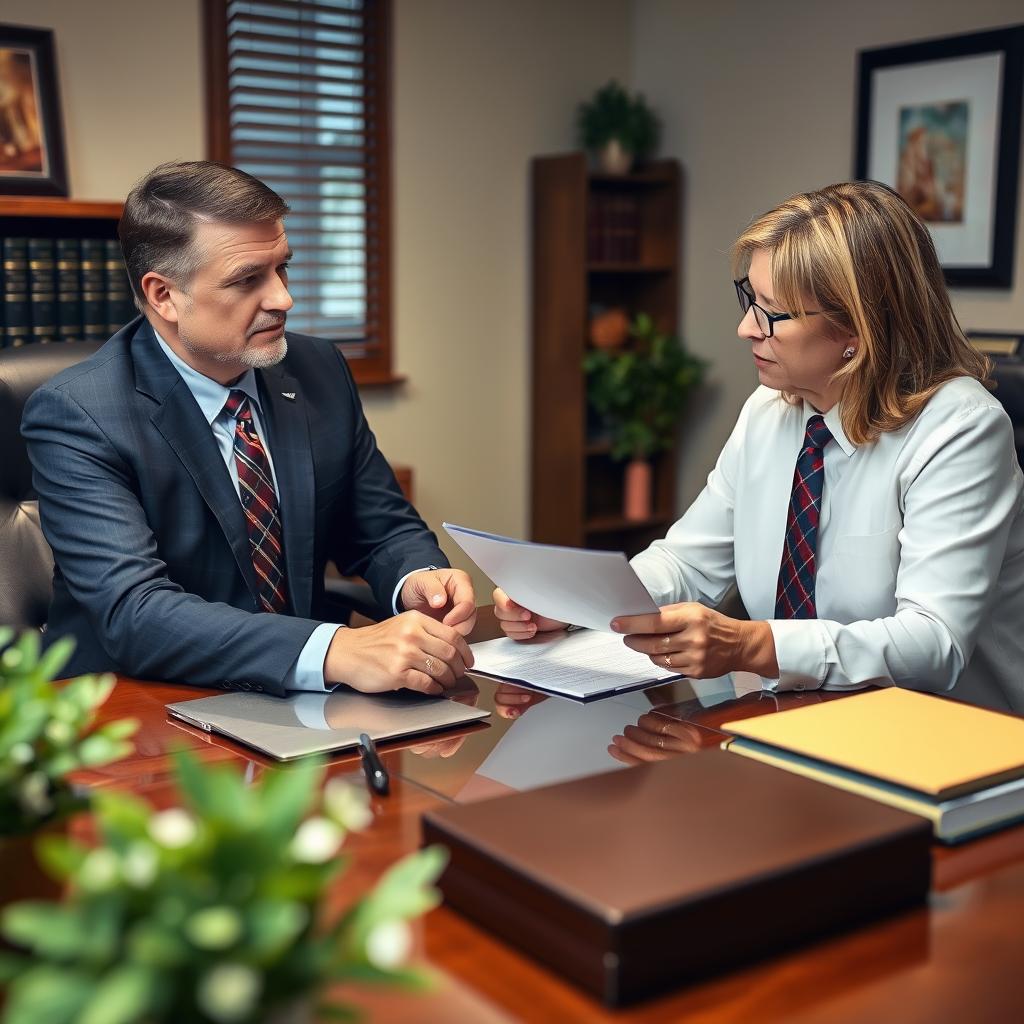
Property Settlement Lawyer Chesterfield County, VA
Dividing marital assets and debts is one of the most consequential parts of a Chesterfield County divorce. Virginia law requires an equitable, not necessarily equal, division of property acquired during the marriage under the framework set out in Va. Code § 20‑107.3. At Law Offices Of SRIS, P.C., Mr. Sris and his Of Counsel team assist clients throughout Chesterfield County — from Midlothian, Chester, Colonial Heights, Bon Air, Brandermill, and Moseley — in reaching fair and workable property settlement agreements or, when necessary, in presenting the division to the Chesterfield County Circuit Court. Reach our location to request a consultation: (888) 437‑7747.
Law Offices Of SRIS, P.C. – Advocacy Without Borders.
What Property Settlement Means in Chesterfield County
Chesterfield County, part of Virginia’s 12th Judicial District, lies immediately south of Richmond and is connected by I‑95, Route 288, and Route 360. Its family‑law matters, including division of marital property, are heard at the Chesterfield County Circuit Court, 9500 Courthouse Road, Chesterfield, VA 23832. The court applies the equitable‑distribution statute, Va. Code § 20‑107.3, which requires the judge to classify property as marital, separate, or hybrid and then determine a fair division after evaluating statutory factors. Because Virginia is not a community‑property state, the goal is fairness — not a mechanical 50‑50 split — and the division can be shaped significantly by the existence of a well‑drafted separation agreement.
The neighborhoods and developments within Chesterfield County — including Brandermill, Woodlake, Magnolia Green, and communities along Hull Street Road — include families with a wide range of financial situations: military personnel connected to Fort Gregg‑Adams, small‑business owners, professionals who commute to Richmond, and retirees. Their property‑division concerns run from the straightforward (dividing a house and two cars) to the complex (closely held businesses, professional practices, restricted stock units, and retirement accounts that require Qualified Domestic Relations Orders). The same court that handles the divorce also addresses related issues of spousal support and attorney’s fees, so the property‑settlement strategy must consider the full picture. Our Richmond location serves clients throughout the county, and Mr. Sris and his Of Counsel team appear regularly at the Chesterfield County courthouse.
How Mr. Sris and His Of Counsel Handle Property Settlement Cases
Every property‑settlement matter starts with a thorough identification and valuation of assets and debts. Mr. Sris and his Of Counsel work with clients to locate all marital and separate property, then develop a negotiation position grounded in the statutory factors — including the duration of the marriage, the contributions of each spouse, the liquid or non‑liquid character of the assets, and the tax consequences of a proposed division. When both parties are willing, a separation agreement can resolve the property issues without trial; under Va. Code § 20‑109, a signed marital settlement agreement is enforceable and, if incorporated into the final decree, can streamline the divorce process.
For contested matters, the firm prepares for the possibility of presenting evidence to the Circuit Court. That often means engaging forensic accountants, business valuation professionals, or real‑estate appraisers to provide reliable numbers. Mr. Sris and his Of Counsel have experience handling equitable‑distribution hearings and understand the procedural requirements unique to Chesterfield County, including the need for a corroborating witness in uncontested cases and the role of pendente lite motions when temporary orders are needed. Throughout the process, the team’s focus is to protect the client’s financial interests while working toward a resolution that allows both parties to move forward. Results may vary.
About Mr. Sris and His Of Counsel Team
Mr. Sris, Owner and Founder of Law Offices Of SRIS, P.C., has practiced family law in Virginia since founding the firm in 1997. A former prosecutor, he brings a disciplined, evidence‑focused approach to property‑settlement cases. Mr. Sris testified before the Virginia House Courts of Justice Committee in support of 2019 HB 635 (chief patron Del. David Bulova). His Of Counsel team — attorneys engaged through the firm’s structure — collectively contribute extensive combined legal experience in divorce and equitable‑distribution matters, ensuring that every Chesterfield County client benefits from multiple perspectives on complex asset‑division questions. Results may vary.
Frequently Asked Questions
What is a property settlement in a Virginia divorce?
A property settlement is the process of identifying, valuing, and dividing marital assets and debts — usually through a signed separation agreement — so that the parties avoid a contested court hearing. In Virginia, the settlement is governed by Va. Code § 20‑107.3 and may also address spousal support, retirement‑account division, and the disposition of the family home. A well‑drafted agreement can be incorporated into the final divorce decree, making it enforceable and simplifying the proceeding. For Chesterfield County residents, the agreement can be filed with the Circuit Court and, if both parties sign, can be used to obtain a no‑fault divorce on the six‑month ground when there are no minor children.
How does the Chesterfield County Circuit Court divide property?
The Chesterfield County Circuit Court applies Virginia’s equitable‑distribution statute and considers eleven statutory factors to reach a fair — not necessarily equal — division. The factors include the duration of the marriage, the ages and health of the parties, how and when the property was acquired, the contributions of each spouse (both monetary and non‑monetary), and the tax consequences of the division. The court first classifies assets as marital, separate, or hybrid. Separate property (inheritance, gifts, assets owned before marriage) is generally retained by the owning spouse. For complex estates, the judge may rely on testimony from forensic accountants or business‑valuation attorneys. Mr. Sris and his Of Counsel team present the evidence and advocate for a division that reflects their client’s interests under the statutory framework.
Do I need a lawyer for a property settlement in Chesterfield County?
While you are not required to hire a lawyer, property‑settlement decisions have long‑term financial consequences, and an experienced attorney can help you identify all assets, value them correctly, and negotiate a durable agreement. Self‑represented litigants often overlook retirement accounts, deferred compensation, stock options, or the tax effects of a transfer. The Circuit Court will review the agreement for fairness, and a poorly drafted settlement may be set aside later. Mr. Sris and his Of Counsel team guide Chesterfield County clients through the process, from the initial financial‑disclosure stage through final decree. If you have questions about your specific assets, contact the firm at (888) 437‑7747 for a consultation.
What role does a separation agreement play in dividing property?
A separation agreement, sometimes called a property settlement agreement, is the primary document that controls the division of assets and debts when both spouses can reach terms outside of court. Under Va. Code § 20‑109, a properly executed agreement is enforceable as a contract. It can resolve not only property division but also spousal support and, if incorporated into the divorce decree, sets the financial terms the court will enforce. For Chesterfield County couples, negotiating and signing an agreement before filing often leads to a faster, less expensive divorce because the court does not need to conduct a contested equitable‑distribution hearing. Mr. Sris and his Of Counsel regularly draft, review, and negotiate these agreements for clients in Midlothian, Chester, Brandermill, and across the county.
How does Virginia handle retirement accounts and pensions in a property settlement?
Retirement assets accrued during the marriage are marital property subject to equitable distribution, and a Qualified Domestic Relations Order (QDRO) may be necessary to divide them without early‑withdrawal penalties. The QDRO is a separate court order that instructs the plan administrator how to pay a portion of the benefits to the non‑employee spouse. The drafting must comply with both the plan’s rules and Virginia law. Mr. Sris and his Of Counsel coordinate with plan administrators and, when needed, pension‑valuation attorneys to ensure the division is carried out correctly. Because mistakes can result in lost benefits or unintended tax liability, having experienced legal guidance is critical. For guidance on your specific retirement accounts, call (888) 437‑7747.
What happens if we have already agreed on how to divide our property?
If you and your spouse have reached a complete agreement, a lawyer can draft the formal separation agreement and ensure it complies with Virginia law, protecting both parties from future disputes. Even when terms are agreed, issues such as captioning, required statutory language, notarization, and the need for a corroborating witness in an uncontested divorce hearing still apply. The Chesterfield County Circuit Court will review the agreement as part of the divorce proceeding. Having Mr. Sris or a member of his Of Counsel team prepare the final documents helps avoid omissions that could cause the court to reject the agreement or leave one party exposed to a later claim. Reach Law Offices Of SRIS, P.C. at (888) 437‑7747 to discuss having your agreement reviewed.
Additional Resources
Henrico County Family Law Lawyer
Hanover County Family Law Lawyer
Fairfax County Family Law Lawyer
Official Virginia primary sources:
Virginia Code Title 20 — Domestic Relations
Virginia’s Judicial System
Attorney advertising. Prior results do not guarantee a similar outcome.
Results may vary.
Case results depend on a variety of factors unique to each case.