
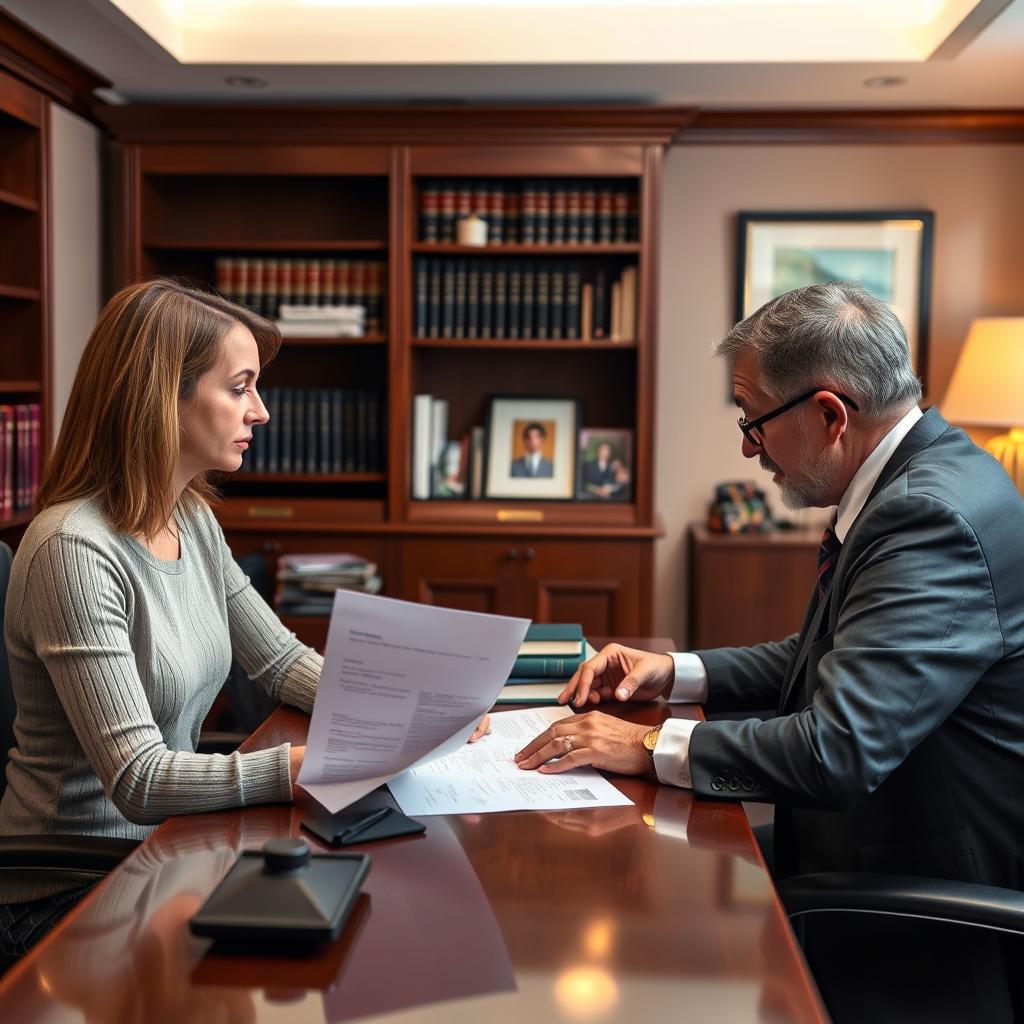
Adultery Divorce Lawyer Virginia, VA
You have just discovered evidence that your spouse has been involved in a relationship outside your marriage. The emotional shock is real, and you may be unsure what your legal options are. In Virginia, adultery is not only a personal betrayal but also a recognized fault ground for divorce under Va. Code § 20-91(1). A divorce based on adultery can proceed immediately; Virginia law does not require you to observe a six-month or one-year separation period before filing. Law Offices Of SRIS, P.C. Concentrates its practice on family law matters throughout the Commonwealth and works with individuals who need to understand how infidelity can shape their divorce proceeding. To discuss your situation in a confidential setting, reach our location at (888) 437-7747.
Your Legal Options After Discovering Adultery in Virginia
When you learn that your spouse has committed adultery, you have more than one path forward. The most direct route is to file a complaint for divorce on the fault ground of adultery. Because Virginia law treats adultery as a fault-based ground, you are not required to live apart from your spouse for any set period before the case can move ahead. This can make a significant difference when you want to end the marriage quickly and move on with your life.
That said, proving adultery in a Virginia circuit court requires admissible evidence. A party who grounds a divorce on adultery must present evidence that establishes the alleged conduct by clear and convincing proof. Many individuals find that private investigators, text messages, social media posts, or witness testimony can build the necessary record. If the evidence is not sufficient, you still retain the option to amend your complaint and proceed on a no-fault basis after a separation period has elapsed. Mr. Sris and his Of Counsel team can explain the strategic considerations so you can make an informed choice.
What to Expect During an Adultery-Based Divorce in Virginia
Filing a divorce complaint triggers a series of procedural steps. The complaint is filed in the circuit court of the county or city where either spouse resides, provided Virginia’s six-month domiciliary residency requirement has been met. The court will issue a summons, and the other spouse must be served with the papers. Virginia law does not require a waiting period for an adultery-ground divorce, but the case will follow the court’s regular docket schedule for hearings, discovery, and trial if the parties do not reach a resolution.
Discovery often focuses on the alleged adulterous behavior. Depositions, interrogatories, and requests for production of documents may be used to gather the evidence needed to meet the clear-and-convincing standard. Both sides can engage forensic experts—such as digital-forensic analysts—to uncover or challenge evidence. Throughout the process, the court may issue pendente lite orders addressing temporary spousal support, custody, and use of family assets. Having an experienced family-law attorney involved early helps you prepare for each phase and avoid procedural missteps that could delay or weaken your case.
How Adultery Impacts Property Division, Support, and Custody
Virginia is an equitable distribution state. When a court divides marital property, it considers multiple factors listed in Va. Code § 20-107.3, including the circumstances and factors that contributed to the dissolution of the marriage. Adultery is one such factor. While it does not automatically strip a spouse of a fair share of the marital estate, the court may weigh the adulterous conduct when deciding what is fair under the circumstances.
Adultery can also affect spousal support. Generally, a spouse who is proven to have committed adultery is barred from receiving spousal support unless a court finds that a denial of support would cause a manifest injustice based on the parties’ respective degrees of fault and their relative economic circumstances. As for child custody, the court’s paramount concern is always the best interests of the child. Adultery alone does not decide custody, but if the affair caused harm to the child—for example, by exposing the child to an unsafe environment or by significantly disrupting the child’s relationship with the other parent—the court may consider that behavior when crafting a parenting plan.
About Mr. Sris and His Of Counsel Team
Mr. Sris, Owner and Founder of Law Offices Of SRIS, P.C., has concentrated his practice on family law and related matters since founding the firm in 1997. A former prosecutor, he brings extensive experience in court proceedings and evidence evaluation—skills that are especially valuable in fault-based divorce actions where proof is contested. Mr. Sris testified before the Virginia House Courts of Justice Committee in support of 2019 HB 635 (chief patron Del. David Bulova), a bill that revised the equitable-distribution statute used in every Virginia divorce case.
Mr. Sris works alongside a team of Of Counsel attorneys, all of whom are engaged through the firm with no associate or employee relationships. Together, Mr. Sris and his Of Counsel bring over 120 years of combined legal experience, supported by 4,739+ documented firm-wide results. Results may vary. The team serves clients from the firm’s Virginia location and travels to circuit courts across the Commonwealth for hearings and trials.
Frequently Asked Questions
Can I file for divorce the same day I learn about my spouse’s adultery?
Yes, Virginia law permits you to file a complaint for divorce immediately when adultery is the fault ground. Unlike a no-fault divorce, which requires living separate and apart for six months or one year, an adultery-based divorce has no statutory separation period. You must, however, meet Virginia’s six-month residence requirement and be prepared to present clear and convincing evidence of the adulterous conduct. Filing promptly also allows the court to enter temporary orders for support and custody while the case progresses.
What kind of evidence do I need to prove adultery in a Virginia court?
Clear and convincing evidence is the required standard for proving adultery in a Virginia divorce. Direct evidence—such as a witness who observed the spouses engaged in sexual intercourse—is rare. Most cases rely on circumstantial evidence, such as testimony about opportunity and inclination. Courts commonly consider hotel receipts, electronic communications, photographs, social-media posts, and the testimony of private investigators. Because the evidentiary burden is higher than the ordinary civil preponderance standard, working with an attorney who understands how to gather and present this kind of evidence is essential.
Will adultery automatically affect how property is divided?
Adultery does not automatically alter property division, but it is one of the statutory factors the court evaluates. Virginia law requires the judge to consider the circumstances and factors that contributed to the dissolution of the marriage when distributing marital property. If a party’s adulterous behavior wasted marital assets—for example, by spending substantial sums on the affair—that dissipation can influence the division. The court retains broad discretion to reach an outcome that is equitable under the specific facts of the case.
Can a spouse who committed adultery still get spousal support?
Under Virginia law, a spouse proven to have committed adultery is generally barred from receiving spousal support. The bar is not absolute; a court may nonetheless award support if a complete denial would result in manifest injustice, weighing the relative fault and economic circumstances of both parties. In practice, this means that a spouse who was unfaithful will face an uphill battle when asking for monthly payments, and a well-documented case of adultery can make a significant difference in the support outcome.
How does adultery affect child custody in Virginia?
Adultery itself does not determine custody; the court focuses on the best interests of the child. Under Va. Code § 20-124.3, a judge must evaluate ten statutory factors, none of which mention marital fidelity directly. However, if the adulterous relationship harmed the child—for instance, by exposing the child to an inappropriate environment or by consuming so much of a parent’s time that the parent neglected the child’s needs—the court can consider that behavior as part of the overall best-interests analysis. A stable, safe parenting environment remains the overriding concern.
Do I need a lawyer to file an adultery-based divorce in Virginia?
Virginia law does not require you to have an attorney to file a divorce complaint, but the practical and evidentiary challenges of an adultery case make skilled legal counsel highly advisable. Proving adultery under the clear-and-convincing standard requires careful investigation, knowledge of the rules of evidence, and the ability to present a persuasive case in circuit court. Procedural missteps can weaken your position or delay a resolution. Working with an attorney helps you build the strongest possible record while your rights are protected. To discuss your situation, reach Law Offices Of SRIS, P.C. at (888) 437-7747.
Speak with an Adultery Divorce Lawyer in Virginia
A divorce grounded on adultery carries emotional weight and important legal consequences. Whether you need to file immediately or simply want to understand your options before deciding how to proceed, Mr. Sris and his Of Counsel are prepared to assist. The firm’s Virginia location is open for consultations by appointment. To request yours, reach our location at (888) 437-7747—calls are answered 24 hours a day, every day of the year.
For a comprehensive overview of the statutory scheme, visit our firm’s main resource page: srislawyer.com’s analysis of Virginia divorce law. For questions about your specific case, speak with a member of our team directly.
Attorney advertising. Prior results do not guarantee a similar outcome. Results may vary. Law Offices Of SRIS, P.C. is located at 4008 Williamsburg Court, Fairfax, VA 22032. Consultations by appointment. Reach our location at (888) 437-7747.
Case results depend on a variety of factors unique to each case.