
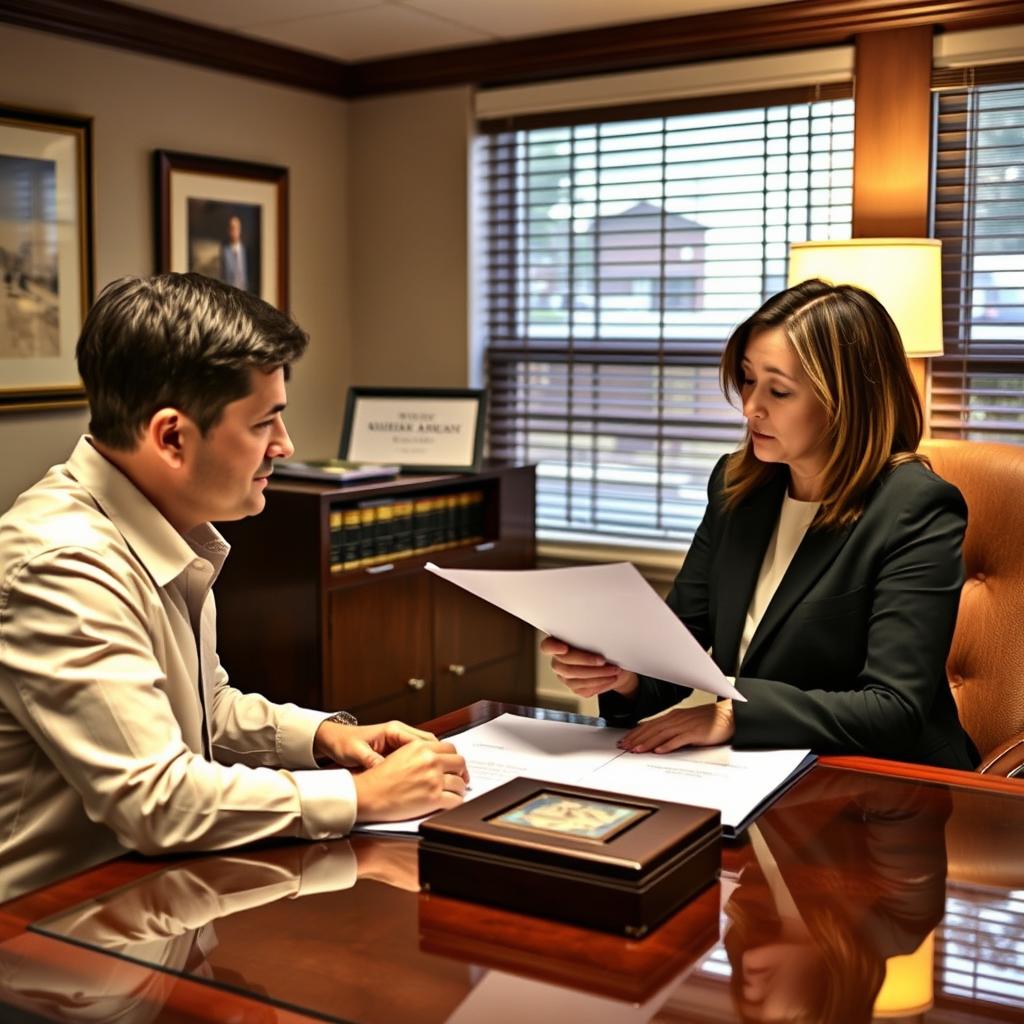
Beach Military Divorce Lawyer Fluvanna County, VA
For a service member stationed at a coastal Virginia installation—Virginia Beach, Norfolk, Little Creek—and facing divorce while living in or connected to Fluvanna County, the legal landscape involves both state family law and federal protections that most civilians never encounter. The Servicemembers Civil Relief Act can pause proceedings, the Uniformed Services Former Spouses’ Protection Act governs how military retired pay is treated, and Virginia’s equitable distribution statute determines a fair division of marital property. Mr. Sris and his Of Counsel at Law Offices Of SRIS, P.C., founded in 1997, represent active-duty personnel, reservists, and their spouses in divorce, custody, support, and pension division matters that involve Fluvanna County’s Juvenile and Domestic Relations District Court and Fluvanna County Circuit Court. To discuss your situation, reach our firm at (888) 437-7747. Law Offices Of SRIS, P.C. – Advocacy Without Borders.
Military Divorce and Fluvanna County: What Service Members and Spouses Need to Know
Fluvanna County’s courts handle family law cases for a jurisdiction that includes Palmyra, Fork Union, and Lake Monticello, but they also hear matters for service members whose residency or legal ties link them to the county. A military divorce involving a Fluvanna County filing requires an understanding of the interplay between Virginia Code Title 20 and federal statutes designed to protect those in uniform. The Servicemembers Civil Relief Act (SCRA) allows a service member to request a stay of proceedings if military duties materially affect the ability to participate, while the Uniformed Services Former Spouses’ Protection Act (USFSPA) permits state courts to treat military disposable retired pay as marital property subject to division under Virginia’s equitable distribution framework. Because Fluvanna County Circuit Court has exclusive jurisdiction over divorce and equitable distribution, and the Juvenile and Domestic Relations District Court handles custody, support, and protective orders, knowing which court will hear which part of the case is essential from the start.
Equally important are the practical effects of deployment and frequent relocation on child custody and visitation. A parent with orders to deploy cannot be penalized solely because of military obligations, but a parenting plan that accounts for movement between states and changes in duty station must be crafted with care. Mr. Sris and his Of Counsel work with families to build schedules that preserve parental bonds while respecting the demands of service. Whether the matter is an uncontested divorce with a signed separation agreement, a contested divorce with custody and pension issues, or a post-divorce modification after a permanent change of station, a thorough understanding of both Virginia law and military-specific rules is needed to reach a workable resolution.
Frequently Asked Questions about Beach Military Divorce in Fluvanna County
How does the Servicemembers Civil Relief Act affect divorce in Virginia?
The Servicemembers Civil Relief Act (SCRA) allows a service member on active duty to request a postponement of a divorce proceeding if military obligations prevent meaningful participation. The stay is not automatic—a motion must be filed with the court and supported by a statement from the service member’s commander. The SCRA also imposes certain safeguards on default judgments, ensuring that a service member who does not appear in court is given an opportunity to defend the case later. In Fluvanna County, the Circuit Court will consider an SCRA request if the service member demonstrates that duties materially affect the ability to respond. A spouse seeking to proceed during a deployment must comply with procedural requirements that differ from a standard civil case.
Can I get a divorce in Fluvanna County if I am stationed somewhere else?
Yes, you may file for divorce in Fluvanna County if you or your spouse satisfies Virginia’s residency requirement and Fluvanna County is the appropriate venue. Virginia requires at least one party to have been a domiciliary and resident for six months before filing. If you maintain legal residence in Fluvanna County—for example, you own a home there or treat it as your permanent address—you can file the complaint in Fluvanna County Circuit Court even if your current duty station is out of state. The military member’s state of legal residence is often determinative, but a civilian spouse who lives in Fluvanna County may also satisfy the requirement.
How is a military pension divided in a Virginia divorce?
Under the Uniformed Services Former Spouses’ Protection Act, a Virginia court may treat military disposable retired pay as marital property and award a portion to the former spouse under equitable distribution principles. The court considers the length of the marriage overlapping with the service member’s creditable service years, as well as the eleven factors in Virginia Code § 20-107.3. The language of the final decree must satisfy the “10/10 rule” only if the Defense Finance and Accounting Service (DFAS) is to make direct payments; otherwise, the service member may be ordered to pay the former spouse directly. Mr. Sris and his Of Counsel help ensure that the division order complies with both Virginia law and DFAS requirements.
What happens to child custody India is not a signatory to the 1980 Hague Convention on Civil Aspects of International Child Abduction. When a service member is deployed?
Virginia law prohibits a trial court from using a parent’s deployment or potential deployment as the sole factor in a custody or visitation determination. The best interests of the child remain the guiding standard, and the court must consider how a temporary absence will affect the child’s relationship with the deploying parent. Often, a temporary custody arrangement or a parenting plan that provides for electronic communication and make-up visitation upon return is created. In Fluvanna County, the Juvenile and Domestic Relations District Court will address custody and visitation if the matter is brought as a standalone case, while the Circuit Court handles custody as part of a pending divorce.
Do I need to live in Fluvanna County to file for divorce here?
Fluvanna County can be the venue for a divorce if one of the parties resides there or if the grounds for divorce arose in the county. Venue in Virginia is partly based on where the parties last cohabited, where the plaintiff resides, or where the defendant resides or is found. If you maintain a residence in Palmyra, Fork Union, or Lake Monticello, or if the separation occurred while you lived there, Fluvanna County Circuit Court is likely the proper court. If you are uncertain, a review of your residency history can clarify which court has jurisdiction.
What if my spouse is a service member who refuses to cooperate with the divorce?
Virginia law permits a divorce to proceed even if one spouse does not participate, as long as proper service of process is accomplished and the grounds are established. A spouse who cannot be located may be served by publication in certain limited circumstances, though personal service is preferred. If the absent spouse is a service member, an SCRA stay may be requested but does not halt the case permanently; the court may still enter orders if the service member has been given an opportunity to defend and fails to do so. Mr. Sris and his Of Counsel handle contested and uncontested matters, including those where one party is unresponsive.
How long does a military divorce in Fluvanna County take?
The timeline of a military divorce in Fluvanna County depends on the grounds for divorce, whether the case is contested, and the deployment schedule of either party. An uncontested divorce based on a separation agreement and the six‑month or one‑year separation period can resolve within a few months after the separation requirement is met and the complaint is filed. Contested cases involving custody, support, and property division typically take longer, and a deployment may add procedural delays if a stay is granted. Mr. Sris and his Of Counsel work to move matters forward while accommodating the realities of military service.
Can I obtain spousal support if my spouse is in the military?
Yes, spousal support is available in a Virginia military divorce under the same statutory factors that apply in civilian cases. The court evaluates the requesting spouse’s need and the service member’s ability to pay, considering income, allowances, retirement benefits, and the standard of living during the marriage. Under the SCRA, certain enforcement actions for support may proceed even while a stay is in place, ensuring that a dependent spouse is not left without resources. Spousal support orders can be structured as temporary pendente lite support or permanent support in the final decree.
What is the difference between a normal divorce and a military divorce?
A military divorce involves the same Virginia legal process but adds layers of federal law—the SCRA, the USFSPA, and service regulations—that affect timing, jurisdiction, and property division. A service member may be entitled to a stay of proceedings, military retired pay cannot be divided unless the court order follows specific rules, and deployment or relocation can alter custody arrangements. Additionally, the military’s legal assistance office cannot represent either spouse in court, making it important to engage civilian counsel familiar with both worlds. Mr. Sris and his Of Counsel bring experience in handling cases where these federal and state laws intersect.
Do I need a lawyer for a military divorce in Fluvanna County?
You are not legally required to have a lawyer, but given the unique protections and pension division rules that apply to military families, guidance from an attorney experienced in military divorce helps avoid costly mistakes. Errors in the division of a military pension, the calculation of support based on military allowances, or the failure to properly invoke SCRA protections can have long‑term financial consequences. Mr. Sris, a former prosecutor and Owner and Founder of Law Offices Of SRIS, P.C., works with his Of Counsel team to represent service members and spouses in Fluvanna County courts. For a consultation, reach our firm at (888) 437-7747.
About Mr. Sris and His Of Counsel Team
Mr. Sris, Owner and Founder of Law Offices Of SRIS, P.C., has practiced since 1997 and is admitted in Virginia, Maryland, the District of Columbia, New Jersey, and New York. A former prosecutor, he brings trial experience to every family law matter. Mr. Sris testified before the Virginia House Courts of Justice Committee in support of 2019 HB 635 (chief patron Del. David Bulova), a measure that revised how retirement benefits are divided under Virginia’s equitable distribution statute. His Of Counsel—a team of non‑employee attorneys engaged through Excella—includes former prosecutors and a former Virginia State Trooper. Together, they bring over 120 years of combined legal experience, with 4,739+ documented firm-wide results. Results may vary. Our team represents service members and their spouses in Fluvanna County’s Juvenile and Domestic Relations District Court and Fluvanna County Circuit Court. Reach our Richmond Location at (888) 437-7747.
Related family law representation across Virginia: Family law attorney in Fairfax County · Prince William County family lawyer · Manassas divorce and custody counsel · Falls Church family law services
Official Virginia resources: Virginia Code Title 20 (Domestic Relations) · Fluvanna County General District Court · Virginia Courts
Attorney advertising. Prior results do not guarantee a similar outcome. Results may vary. Case results depend on a variety of factors unique to each case.