
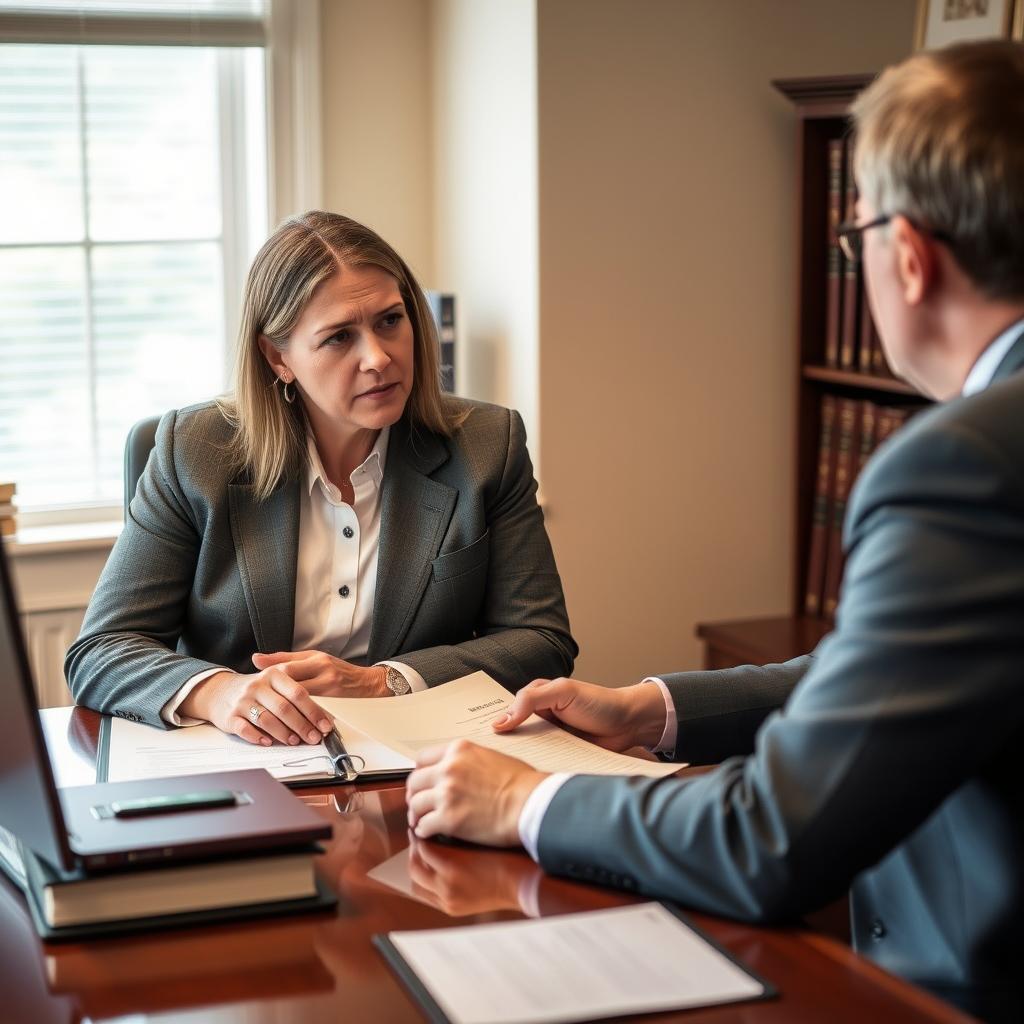
Service Member Divorce Lawyer Rappahannock County, VA
You are an active-duty service member or a military spouse, and you’re facing a deeply personal crossroads. Your marriage is strained, and divorce is on the horizon. The challenges run deeper than a typical civilian separation: deployments, Permanent Change of Station (PCS) orders, federal protections under the Servicemembers Civil Relief Act, and the unique division of a military pension all come into play. In Rappahannock County, Virginia, these are not abstract legal concepts—they are real concerns that shape every step of the divorce process. Law Offices Of SRIS, P.C. Concentrates on service member divorce matters throughout the Commonwealth, and Mr. Sris and his Of Counsel team work directly with Rappahannock County families to navigate the intersection of Virginia family law and federal military protections. Whether the divorce will be filed in Rappahannock County Circuit Court or custody and support issues are pending in the Juvenile and Domestic Relations District Court, having a firm that understands both military life and local court practices matters. Reach Law Offices Of SRIS, P.C. at (888) 437-7747 to request a consultation. Law Offices Of SRIS, P.C. – Advocacy Without Borders.
How Service Member Divorces Are Handled in Rappahannock County, Virginia
A service member divorce is, at its core, a Virginia divorce proceeding governed by the same statutory framework as any other divorce—but with critical federal and practical overlays. The Servicemembers Civil Relief Act (SCRA) allows an active-duty member to request a stay of proceedings if military duties materially affect the ability to respond, and the Act also limits default judgments. In Rappahannock County, the Circuit Court has exclusive jurisdiction over the divorce itself, while the Juvenile and Domestic Relations District Court handles standalone custody, visitation, child support, and protective orders. Virginia remains an equitable distribution state under Va. Code § 20-107.3, meaning that marital property—including the marital share of a military pension—is divided fairly but not necessarily equally. The federal Uniformed Services Former Spouses’ Protection Act (USFSPA) authorizes state courts to treat disposable military retired pay as divisible marital property, so a Rappahannock County judge may award a share of that pension to the non-member spouse.
Residency and jurisdiction thresholds also require attention. At least one spouse must have been a domiciliary and resident of Virginia for six months preceding the filing (Va. Code § 20-97). For a service member stationed in Virginia, that is often straightforward. The no-fault divorce grounds in Va. Code § 20-91 require either a 1-year separation or—if the parties have no minor children and have entered into a written separation agreement—a 6-month separation. Fault grounds such as adultery carry no waiting period but require clear and convincing evidence. When deployments, PCS moves, or specialized military income calculations are involved, the timeline may shift based on the SCRA and the court’s scheduling. Mr. Sris and his Of Counsel help Rappahannock County clients coordinate these moving parts so that the divorce proceeds in an orderly manner while service obligations are respected.
Frequently Asked Questions About Service Member Divorce in Rappahannock County
How does the SCRA affect a service member divorce in Rappahannock County?
The Servicemembers Civil Relief Act allows an active-duty service member to request a temporary stay of divorce proceedings if military duties materially prevent participation. The court will assess each request individually and may grant a stay for a reasonable period. This protection ensures that a service member is not unfairly disadvantaged by a deployment or training cycle. At the same time, a divorce can proceed if the service member waives SCRA protections or if the court determines that the military obligations do not truly impede the case. A stay under the SCRA does not dismiss the divorce; it merely pauses it. Rappahannock County Circuit Court will balance the service member’s rights with the need for case progress.
Can a military pension be divided in a Rappahannock County divorce?
Yes, the marital share of a military pension is divisible as marital property under Virginia equitable distribution law, provided the federal 10/10 rule for direct payment is satisfied. The Uniformed Services Former Spouses’ Protection Act permits Virginia courts to divide disposable military retired pay. The 10/10 rule—at least 10 years of marriage overlapping 10 years of creditable military service—is required only for direct payment from the Defense Finance and Accounting Service (DFAS), not for the division itself. Even without the 10/10 overlap, the court may award a share of the pension through other property division methods. A Qualified Domestic Relations Order (QDRO) or a military pension division order drafted for DFAS must comply with specific regulations. Mr. Sris and his Of Counsel work with financial attorneys to value the marital portion and prepare the necessary orders.
How long does a service member divorce take in Rappahannock County?
The time required depends on whether the divorce is contested or uncontested, and whether the mandatory separation period has been met. An uncontested divorce with a signed separation agreement and the requisite separation period can be finalized in a few months after filing. A contested divorce involving custody, support, or property disputes typically takes longer—often nine months or more. The SCRA may add additional time if a stay is granted. Rappahannock County Circuit Court maintains its own scheduling calendar, and hearings are set according to the court’s availability. Each case’s complexity determines the overall timeline.
What happens to child custody and support when a service member deploys?
Virginia law ensures that deployment or temporary absence due to military service cannot be the sole basis for a permanent change in custody. Under Va. Code § 20-124.7, a deployment is not a material change in circumstances warranting a custody modification unless it affects the child’s custody arrangement for a significant period after the deployment ends. The court may establish a temporary family care plan detailing custody and visitation during deployment. Child support is calculated under the Virginia guidelines based on combined gross monthly income; special military pays such as Basic Allowance for Housing (BAH) and Basic Allowance for Subsistence (BAS) may be included in the gross income calculation in some circumstances. The Rappahannock County Juvenile and Domestic Relations District Court handles these initial determinations.
Do I need a separate attorney if the military provides legal assistance?
Legal assistance attorneys provided by the military can offer general information, but they cannot represent a service member in court. A JAG officer may review documents, explain rights, and provide initial guidance; however, the actual court proceedings in Rappahannock County require a licensed Virginia attorney who can file pleadings, appear in court, and negotiate a separation agreement. Engaging a civilian lawyer does not conflict with military legal assistance—in fact, the two can complement each other. Service members often benefit from having a civilian attorney handle the divorce while the JAG officer assists with military-specific administrative matters.
Can I file for divorce while my spouse is deployed overseas?
Yes, a divorce can be initiated while a service member is deployed, but the SCRA may affect the timeline. The civilian spouse may file the complaint in Rappahannock County Circuit Court if the residency requirements are met. Service of process on the deployed member must comply with Virginia law; if the service member is served and fails to respond, a stay may be available under the SCRA. The court typically ensures due process before proceeding. An attorney with experience in military divorce can coordinate service and anticipate any SCRA delays.
How is spousal support determined in a Virginia military divorce?
Spousal support is determined by the same 13 statutory factors under Va. Code § 20-107.1 that apply to any Virginia divorce, regardless of military status. The court considers the standard of living during the marriage, the resources of each party, the duration of the marriage, the contributions of each spouse, and other enumerated factors. Military retirement pay, disability pay, and other service-related benefits are factored into the parties’ resources. The presence of a military career with frequent moves does not automatically change the support analysis; however, the court will look at the parties’ actual circumstances at the time of the hearing. Temporary support (pendente lite) can be ordered early in the case.
What are the common pitfalls in a military divorce in Rappahannock County?
Common pitfalls include failing to account for the military pension accurately, overlooking the SCRA’s protections and limitations, and misunderstanding which court will handle certain issues. Many military families assume the service member’s entire pension is separate property, which is not correct—the marital share is subject to division. Another misstep is dismissing custody and support matters because a deployment is imminent; those issues require prompt attention to establish a parenting plan. Finally, some parties attempt to handle the divorce without counsel, only to realize that federal and state requirements interact in unexpected ways. An experienced approach helps avoid these mistakes.
How does a Virginia lawyer defend against a service member divorce claim?
In a service member divorce, effective representation involves careful evaluation of the statutory grounds, preservation of military benefits, and strategic use of procedural protections like the SCRA. Mr. Sris and his Of Counsel examine the facts under Va. Code § 20-91 and the SCRA to build a thorough case. This may involve challenging the jurisdiction if residency requirements are unmet, negotiating a fair division of the pension, or seeking a stay when military duties interfere. The goal is not merely to delay but to position the service member to achieve a well-considered resolution. Each case is assessed on its own facts, and the approach adapts to the individual’s military situation.
What should I do if I am considering a service member divorce in Rappahannock County?
If you are contemplating a service member divorce, begin by gathering your financial records, military leave-and-earnings statements, and any separation agreement drafts. Do not attempt to hide assets or relocate children without a court order, as such actions can damage your case. Contact a family law attorney who concentrates in military divorce to review your specific situation under Virginia law. An initial consultation helps you understand the timeline, the likely classification of your property, and custody considerations.
Is Virginia a 50/50 property division state for military divorces?
No, Virginia is an equitable distribution state, not a community property state. The court divides marital property equitably—not necessarily equally—after considering the factors listed in Va. Code § 20-107.3. This applies equally to military pensions and other assets. A judge may award more than half to one spouse if the circumstances warrant it. The Rappahannock County Circuit Court has the authority to make these determinations.
How much does a service member divorce cost in Rappahannock County?
The cost of a service member divorce varies significantly based on the complexity of the issues and the level of conflict. Filing fees apply in the Circuit Court, and additional expenses such as private process servers, mediators, and, when necessary, experienced attorney appraisers for the military pension may be incurred. Uncontested divorces are generally less costly. Contact Law Offices Of SRIS, P.C. at (888) 437-7747 to discuss your particular situation and the anticipated approach.
About Mr. Sris and His Of Counsel Team
Mr. Sris, Owner and Founder of Law Offices Of SRIS, P.C., concentrates his practice on family law and military divorce matters across Virginia, including Rappahannock County. A former prosecutor, Mr. Sris has practiced since 1997 and is admitted in Virginia, Maryland, the District of Columbia, New Jersey, and New York. Together with his Of Counsel team—non-employee attorneys engaged through Excella—he brings over 120 years of combined legal experience and 4,739+ documented firm-wide results to service member divorce cases. Results may vary. The team handles equitable distribution of military pensions, custody arrangements during deployment, and negotiations under the SCRA. Mr. Sris testified before the Virginia House Courts of Justice Committee in support of 2019 HB 635 (chief patron Del. David Bulova). Prior outcomes do not guarantee a similar result.
Related Family Law Resources
Fairfax County Family Law · Fairfax City Family Law · Falls Church Family Law · Prince William County Family Law · Manassas Family Law
Official sources: Virginia Code Title 20 (Domestic Relations) · Virginia Judicial System · Rappahannock County Courts
Attorney advertising. Prior results do not guarantee a similar outcome. Results may vary. Case results depend on a variety of factors unique to each case.