
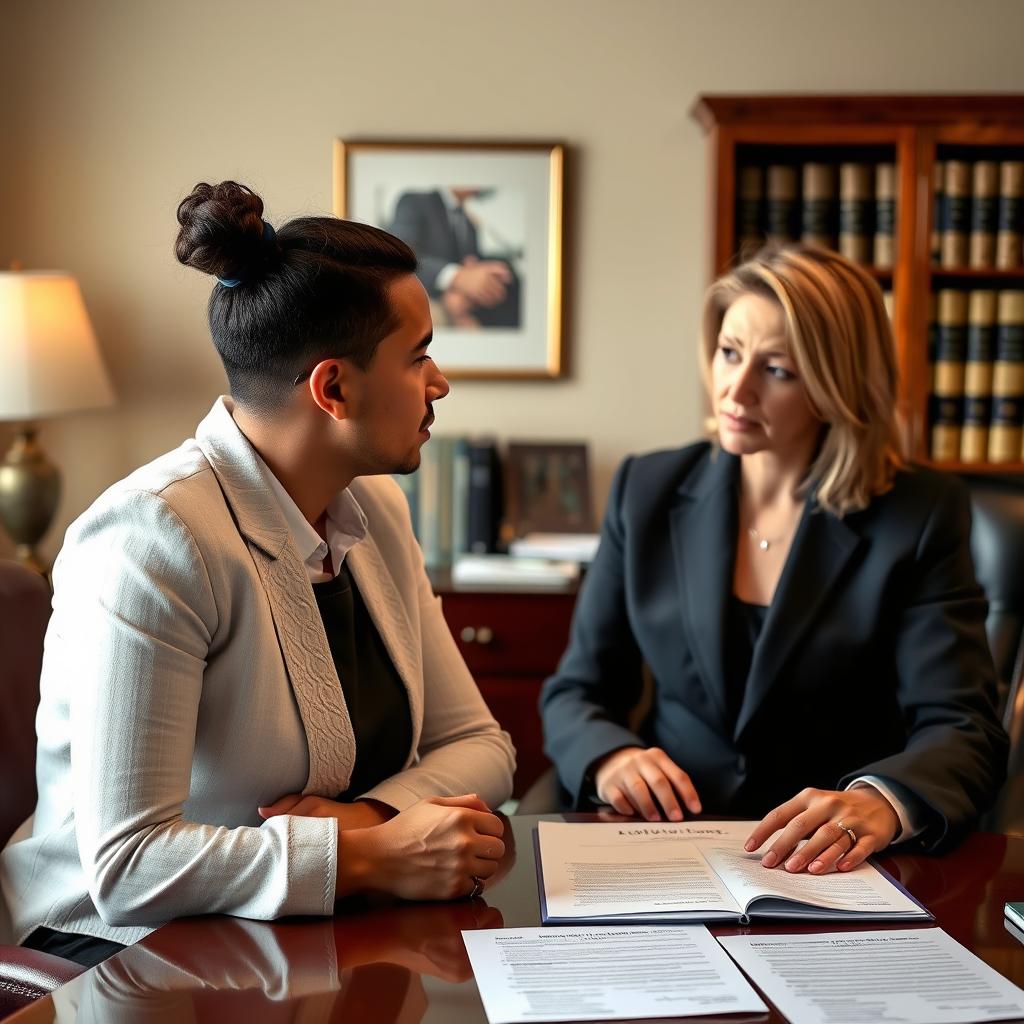
Service Member Divorce Lawyer Prince George County, VA
Service members stationed at Fort Gregg-Adams, those residing in Prince George County, Virginia, and their spouses facing the prospect of divorce encounter a distinctive intersection of state family law and federal military protections. Law Offices Of SRIS, P.C., practicing since 1997, concentrates on service member divorce matters that require careful navigation of Virginia’s equitable distribution statute, the Servicemembers Civil Relief Act (SCRA), the Uniformed Services Former Spouses’ Protection Act (USFSPA), and the local procedures of the Prince George County Circuit Court and Juvenile & Domestic Relations District Court. Mr. Sris and his Of Counsel team understand the impact deployment schedules, military pension valuation, and custody arrangements can have on a family law matter. The firm serves clients throughout Prince George County and the surrounding communities. To discuss your situation, reach Law Offices Of SRIS, P.C. at (888) 437-7747. Law Offices Of SRIS, P.C. – Advocacy Without Borders.
What Service Member Divorce Means in Prince George County, Virginia
A service member divorce in Prince George County is a family law matter shaped by Virginia state statutes and federal provisions that protect active-duty personnel. Because Virginia is an equitable distribution state under Va. Code § 20-107.3, marital property—including military retired pay—is divided fairly, not necessarily equally. The county’s courts hear cases at two primary locations: the Prince George County Circuit Court (6601 Courts Drive, Prince George, VA 23875) handles the divorce decree itself, equitable distribution, and spousal support, while the Prince George County Juvenile & Domestic Relations District Court addresses standalone custody, visitation, child support, and protective orders. Service members and their families benefit from legal counsel that appreciates how local court culture and federal requirements interact.
Proximity to Fort Gregg-Adams means many Prince George County divorce matters involve active-duty personnel or military retirees. Issues like the division of a military pension under the USFSPA, the effect of a Permanent Change of Station (PCS) move on child custody, and the availability of a stay of proceedings under the SCRA are common. Virginia also imposes a six-month domiciliary residency requirement under Va. Code § 20-97 before a divorce suit may be filed, a threshold that can be met by a service member claiming Virginia as their legal residence even while stationed elsewhere. Mr. Sris and his Of Counsel work with clients to confirm jurisdiction, identify the correct court, and build a case strategy that accounts for both state statutory factors and the practical realities of military life.
How Mr. Sris and His Of Counsel Handle Service Member Divorce Cases
A service member divorce begins with a thorough assessment of the marriage’s financial and custodial landscape. Mr. Sris and his Of Counsel review the classification of assets as marital or separate, evaluate the value of the military pension, and determine whether the SCRA may warrant a stay if active duty prevents the service member from participating meaningfully in the litigation. The firm also advises spouses of service members about their rights regarding military retired pay, survivor benefits, and access to base housing during the pendency of the action. Throughout the process, the team prioritizes negotiation and settlement where possible, seeking to craft a separation agreement that resolves equitable distribution, spousal support, child custody, and child support in a manner consistent with Virginia law while respecting the unique demands of military service.
When a contested hearing becomes necessary, Mr. Sris and his Of Counsel appear in the Prince George County Circuit Court and Juvenile & Domestic Relations District Court prepared to advocate on issues ranging from the valuation of military benefits to parenting plans that accommodate deployment and training rotations. The firm’s experience with complex asset division—including high-net-worth estates, business interests, and retirement accounts—informs its approach to military divorce. Throughout the matter, the team works to keep the client informed about court scheduling, procedural requirements, and the potential impact of federal protections such as the SCRA’s default judgment safeguards. The goal in every case is to pursue a resolution that positions the client for stability after the divorce.
About Mr. Sris and His Of Counsel Team
Mr. Sris, Owner and Founder of Law Offices Of SRIS, P.C., has practiced law since 1997 and is a former prosecutor. He is admitted in Virginia, Maryland, the District of Columbia, New Jersey, and New York. Mr. Sris testified before the Virginia House Courts of Justice Committee in support of 2019 HB 635 (chief patron Del. David Bulova). He concentrates his practice on complex family law matters, including military divorce, equitable distribution of retirement assets, and interstate custody disputes. Mr. Sris works alongside the firm’s Of Counsel attorneys, each of whom contributes substantial trial and negotiation experience. The collective background of the team encompasses former prosecutorial and law enforcement service, as well as deep familiarity with the procedures of Virginia’s circuit and district courts. Mr. Sris and his Of Counsel bring over 120 years of combined legal experience, with 4,739+ documented firm-wide results. Results may vary.
Frequently Asked Questions About Service Member Divorce in Prince George County
How does the SCRA protect service members in Virginia divorce proceedings?
The Servicemembers Civil Relief Act (SCRA) allows a Virginia court to stay divorce proceedings for a period of time when a service member’s military duty materially affects their ability to appear or respond. The stay is not automatic and must be requested, but it can be renewed if the military commitment continues. The SCRA also provides protections against default judgments, requiring the court to appoint an attorney before entering a default against an absent service member. Mr. Sris and his Of Counsel help clients determine whether a stay is appropriate and file the necessary motions in the Prince George County Circuit Court. For guidance on how the SCRA may apply to your situation, reach Law Offices Of SRIS, P.C. at (888) 437-7747.
Can a military pension be divided in a Virginia divorce?
Yes, a military pension is subject to division under Virginia’s equitable distribution statute, and the Uniformed Services Former Spouses’ Protection Act (USFSPA) authorizes state courts to divide military retired pay as marital property. The marital share of the pension is typically the portion earned during the marriage, and valuation often requires the input of a forensic accountant or financial experienced attorney. The division is accomplished through a court order or a separation agreement that meets the requirements for direct payment from the Defense Finance and Accounting Service (DFAS). Mr. Sris and his Of Counsel work with clients to calculate the marital share correctly and structure the division in compliance with both Virginia law and federal regulations.
How long does a service member divorce take in Prince George County?
The time needed to complete a service member divorce in Prince George County depends on whether the case is uncontested, whether a stay under the SCRA is granted, and the complexity of the property and custody issues involved. An uncontested divorce with a signed separation agreement and the requisite separation period can move more quickly, while a contested divorce involving extensive discovery, valuation of military benefits, or cross-jurisdictional custody disputes will naturally take longer. Deployment and training schedules can also affect hearing dates. Mr. Sris and his Of Counsel can provide an estimate based on the specific facts of your case after an initial review.
Do I need to live in Prince George County to file for divorce there?
A Virginia divorce requires at least one spouse to be a domiciliary and bona fide resident of the Commonwealth for the six months immediately before filing, and venue is proper in the county where either party resides. A service member claiming Virginia as their home of record can satisfy the residency requirement even while stationed elsewhere. If neither party lives in Prince George County but one does reside elsewhere in Virginia, the divorce may still be filed in the appropriate Virginia circuit court. Mr. Sris and his Of Counsel can evaluate whether Prince George County is the correct venue for your matter.
How is child custody handled when one parent is in the military?
Virginia courts decide custody based on the best interests of the child under Va. Code § 20-124.3, and a parent’s military service—including deployment or relocation—is one factor the court considers alongside the child’s relationship with each parent, the child’s needs, and each parent’s willingness to support the other parent’s role. Temporary custody orders can address periods of deployment, and a parenting plan may include provisions for virtual visitation, leave schedules, and transitions during PCS moves. Mr. Sris and his Of Counsel help service members and their spouses propose practical parenting arrangements that reflect the realities of military life while protecting the child’s stability.
What should I do if I am a service member facing divorce in Prince George County?
If you are an active-duty service member facing divorce in Prince George County, contact a family law attorney experienced in military divorce as soon as possible, and do not ignore court papers or assume you can default without consequence. Inform your chain of command if you anticipate a conflict between court dates and duty requirements, and preserve all financial and military records that may be relevant to property division and support calculations. Mr. Sris and his Of Counsel can help you request a stay under the SCRA if needed, negotiate a separation agreement that protects your interests, and represent you at the Prince George County Circuit Court or Juvenile & Domestic Relations District Court. To discuss the next steps, reach Law Offices Of SRIS, P.C. at (888) 437-7747.
For related family law representation in other Virginia localities: Fairfax County Family Law Lawyer | Prince William County Family Law Lawyer | Manassas Family Law Lawyer | Fairfax City Family Law Lawyer
Primary legal sources: Virginia Code Title 20 (Domestic Relations) | SCC Business Entity Filings | Virginia Judicial System
Attorney advertising. Prior results do not guarantee a similar outcome. Results may vary. Case results depend on a variety of factors unique to each case.